Stradisphere — July 31, 2026
Edition #159 · Friday, July 31, 2026
Editor's Brief
Four ways a legacy gets transferred today: through a teaching lineage (Esa-Pekka Salonen closing Tanglewood with the composers who came up alongside him in a 1970s Helsinki apartment), through laboratory proof (a new study finally settles a century-old argument about whether a pianist's touch really changes tone), through a publisher's contest rules (Umberto Giordano's lost first opera, newly recorded, reveals verismo as an engineered format rather than a spontaneous movement), and through the strange afterlife of a death anniversary (Franz Liszt, born a showman, died an abbé, in the town his own daughter built into a shrine to someone else's music).
Newsbag
Salonen at Tanglewood Curates the Nordic Modernist Lineage
Sequenza21
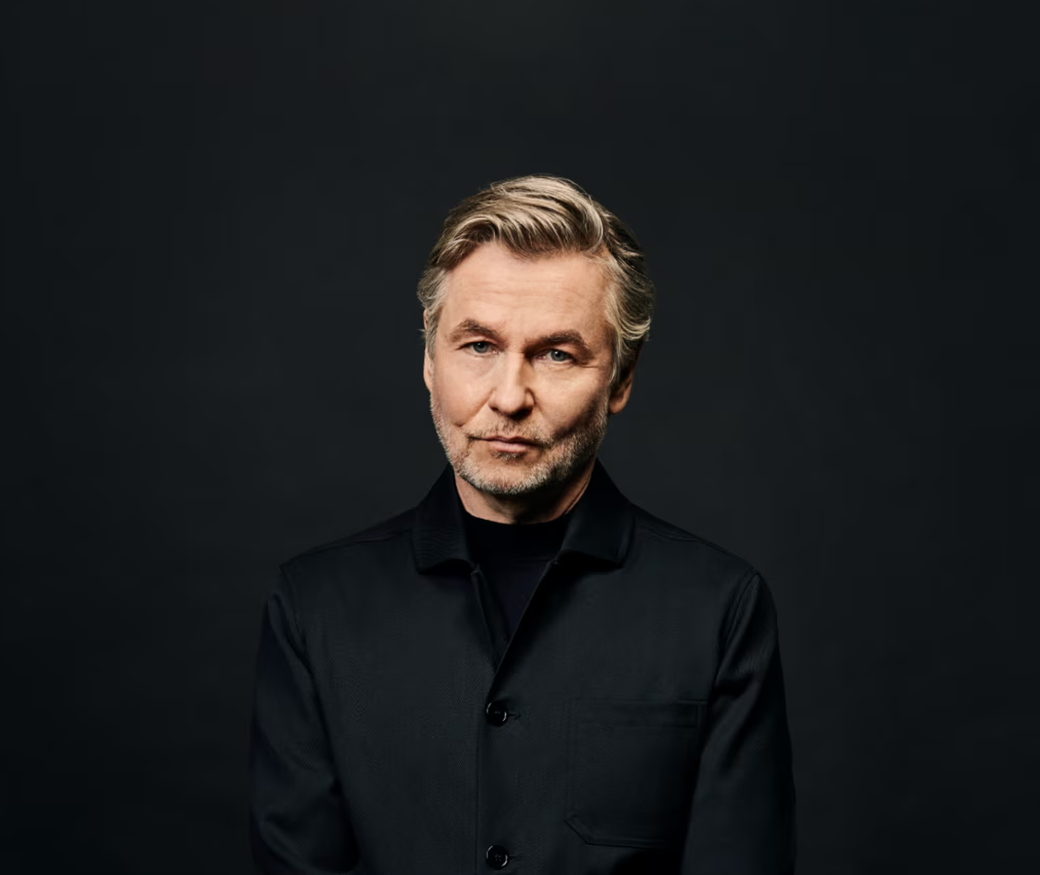
Esa-Pekka Salonen closed the Tanglewood Festival of Contemporary Music not with a survey of his influences but with a portrait of his own classmates -- a program built entirely from composers who came up alongside him in Helsinki in the late 1970s, when Finland's new-music scene was small enough to fit in one apartment.
That apartment scene had a name: Korvat auki, "Ears Open," a society founded in 1977 by a handful of Sibelius Academy students -- Salonen among them, alongside Kaija Saariaho, Magnus Lindberg, and Jouni Kaipainen -- explicitly to smuggle contemporary European music into a conservatory culture still organized almost entirely around the shadow of one man, Jean Sibelius. Ears Open ran seminars, imported scores from Darmstadt and Paris, and eventually spun off performing ensembles built to play the music no established Finnish institution would program.
What's striking, decades later, is how little of that youthful radicalism ended up sounding radical. The group absorbed the fragmented, pointillist rigor of the Continental avant-garde but kept something distinctly Sibelian underneath it: long melodic lines that grow organically rather than accumulate in shards, and an orchestral palette built outward from winds and brass rather than strings. Salonen's own Wing on Wing is as good an example as any -- written for the 2004 opening of Walt Disney Concert Hall, its two soprano lines drawn in part from recordings of a plainfin midshipman fish, the whole piece unfolding with an almost old-fashioned patience for how a musical line grows.
None of this would have been possible without money that didn't have to answer to a box office. Finland funds composers the way most countries fund infrastructure -- as a long-term public good rather than a bet on hits -- and that state-funded runway is a large part of why a group of twenty-year-olds with a manifesto became, within a decade, some of the most performed composers of their generation rather than a forgotten student clique.
The Tanglewood program also arrived after Ears Open lost one of its most singular fellow travelers: Leif Segerstam, the conductor and composer who died in October 2024 having written more symphonies than anyone in the history of the form -- past 370 of them, several composed between rehearsals, with subtitles as unpredictable as their numbering. Segerstam wasn't a founding member of the society, but he was one of the first major conductors to take its composers seriously, programming their early scores while Finland's larger institutions were still skeptical.
Framed that way, Salonen's concert reads less like nostalgia than a relay handoff -- the same act of programming insurgency that a handful of students pulled off in a Helsinki apartment in 1977, restaged decades later by the people who once needed someone else to take the risk on them.
Sources
Scientists Finally Prove What Pianists Always Knew About Touch
Proceedings of the National Academy of Sciences

For nearly a century, pianists and the scientists who studied them disagreed about something almost every performer takes on faith: that touch itself — not merely how loud or fast a note is played — can alter its very color. In 1925, Peabody Conservatory researcher Otto Ortmann published The Physical Basis of Piano Touch and Tone, arguing from meticulous physical measurement that once a hammer strikes a string, the resulting sound is sealed by the force and speed of that single collision, full stop. Generations of teachers, steeped in traditions built around "singing tone" and weighted touch, swore the opposite was true. Neither camp possessed the instruments to settle the argument; it survived instead as a kind of professional folklore, passed down but never proven.
This spring, a team led by Dr. Shinichi Furuya of the NeuroPiano Institute and Sony Computer Science Laboratories finally supplied the proof. Publishing in the Proceedings of the National Academy of Sciences, the researchers built a noncontact sensor system called HackKey that tracks all 88 keys at 1,000 frames per second with microscopic precision — fine enough to register motion the naked eye simply cannot follow. Twenty internationally acclaimed pianists were asked to strike identical notes at matched volume and tempo while deliberately chasing opposite sound-worlds: bright against dark, feather-light against leaden. Listeners — including people who had never sat at a keyboard — reliably heard the distinction the pianists intended to produce.
The evidence was hiding in the data's fine grain: only a small cluster of extraordinarily specific movement features tracked with the shift in tone, chiefly minute variations in finger acceleration and the split-second timing between the two hands. Alter a single one of those features and the listener's perception of warmth or brightness shifted with it — proof that touch itself, not some incidental byproduct of loudness or timing, was doing the expressive work. A century of piano teachers had been right about something they could only ever gesture toward in metaphor.
Timbre had always been the holdout. Pitch and loudness reduce cleanly to frequency and amplitude, numbers a machine can read off a waveform without argument. Timbre is stubbornly higher-order — the ear's summary judgment of overtone structure, attack, and decay, built by the brain rather than measured on a dial — which is exactly why it resisted a century of otherwise rigorous acoustic science. Furuya's team didn't solve that problem by measuring the sound at all; they measured the body producing it, on the premise that if two identical notes carry different meanings to a listener, the difference has to originate somewhere upstream of the string.
The researchers place the work inside a young field they call dynaformics — the science of musical movement — and they aren't shy about its reach beyond the concert hall. The same techniques used to isolate a pianist's "warm" touch could sharpen how teachers coach it, replacing vague instruction with a visible target; researchers in rehabilitation medicine and robotics are already circling the same data, curious whether the fine motor control built over decades of practice has something to teach machines, or bodies relearning movement after injury.
It's a rare instance of science arriving to confirm an artist's intuition rather than to puncture it — proof that the gulf between playing beautifully and merely playing correctly was real all along, concealed in movements too small to see and calibrated with just enough precision to be heard.
Giordano’s Marina Restored to the Verismo Canon
Giordano's Marina and the Contest That Manufactured Verismo

For 138 years, Umberto Giordano's first opera, Marina, existed only as a manuscript — written in 1888 by a twenty-one-year-old conservatory student for a high-stakes publishing competition, then quietly shelved. This summer Decca releases the first commercial recording, made after the score's belated stage premiere in Milan. The revival earns its place not as a curiosity but as evidence: a document of the machinery that manufactured an entire operatic style.
In the late 1880s, the Milanese publisher Edoardo Sonzogno, locked in commercial rivalry with the dominant house of Ricordi, launched a series of one-act opera competitions designed to generate exactly one thing: marketable novelty, fast. The rules read less like an artistic prompt than a specification sheet — a complete drama in a single act, legible characters, vivid local color, and a climax violent and swift enough to land before the curtain fell. Those constraints didn't merely favor a certain kind of opera. They manufactured one. The 1888 contest produced Pietro Mascagni's Cavalleria rusticana, whose taut, brutal tragedy of jealousy and honor among Sicilian villagers didn't just win — it solved the format. Verismo's defining features, the sense of unmediated realism, the speed, the violence, read today as an aesthetic choice. They were, more precisely, a structural adaptation: an entire school of composition calibrated to fit inside a publisher's contest rules.
Giordano's Marina was entered in that same 1888 contest. It didn't win, but it impressed Sonzogno enough to secure the young composer a contract and a foothold on the stage. Its plot is a period piece of nationalist tension — Montenegro, Serbia, divided loyalties, a love affair that ends in catastrophe. What the new recording reveals is a composer already fluent in melodic contour and orchestral color, still learning how to compress emotional force into the tight frame the contest demanded; the one-act format often drove sophisticated musical ideas toward rushed, almost mechanical endings, and Marina shows both the promise and the strain of that pressure in equal measure.
Giordano would later refine the same instincts into Andrea Chénier, the opera that made his name. Hearing Marina now is less like discovering a hidden masterpiece than watching a style being assembled in real time, one contest rule at a time. Verismo did not erupt from a sudden national appetite for realism, as later mythology likes to claim. It was engineered — shaped by a prize competition's need for marketable novelty and by the formal discipline of the single act, which rewarded composers who could compress passion into minutes rather than acts. The style survived because it solved a business problem; the artistry came after, fitted to the constraint rather than the other way around.
The Decca recording, with Orchestra I Pomeriggi Musicali under Vincenzo Milletarì, lets listeners hear that negotiation unfold in real time: a young talent testing the edges of a system built to both enable and confine him. Marina is not a lost masterpiece. It is something more useful to have on record — a diagnostic of the exact moment Italian opera turned toward the grit and speed of the new century, and proof that the turn was designed before it was ever felt as inevitable.
On This Day
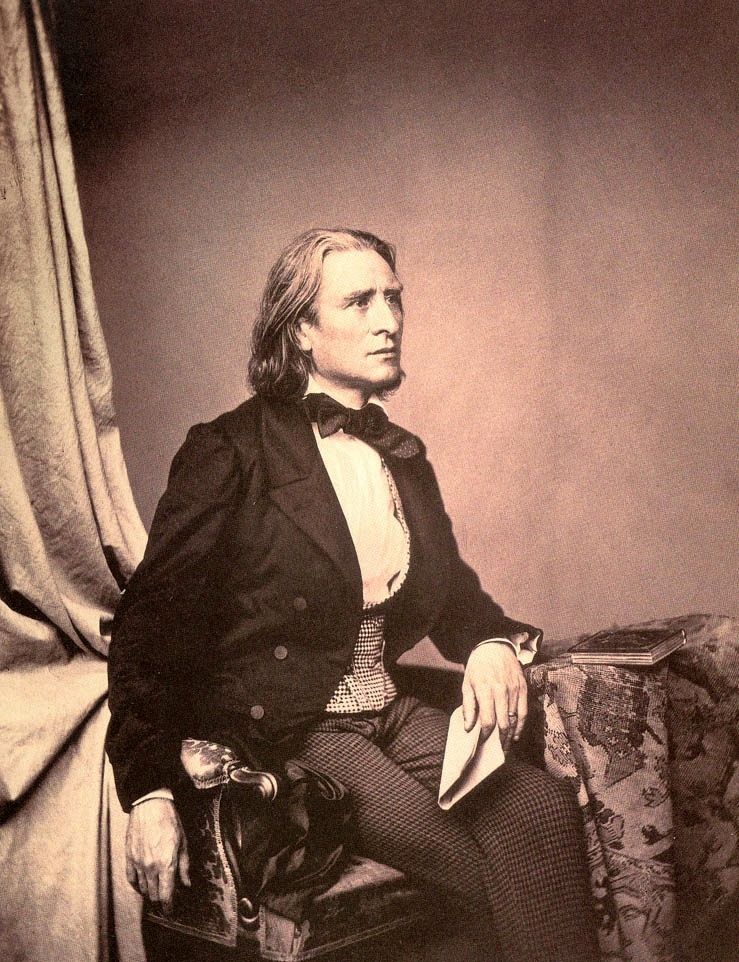
Franz Liszt died in Bayreuth on July 31, 1886, at the end of a life that made "showman" and "composer" sound like the same job. He turned solo piano concerts into events people fainted at, gave away most of the money he earned, spent his final decades as an ordained cleric, and left behind a family tree so tangled that his own best friend became his son-in-law. No single adjective has ever managed to hold him.
He was born in the Hungarian village of Raiding in 1811 and was in Vienna studying with Carl Czerny -- himself a pupil of Beethoven -- by age eleven. Liszt spent the rest of his life telling a story about what happened next: that Beethoven, by then totally deaf, attended one of his childhood concerts, climbed onstage, and kissed him on the forehead, sealing him as an artistic heir. It's a wonderful story, and it may not be true -- Beethoven's own conversation books, kept because he could no longer hear spoken word, give no clear record he was even in the room that day. What's better than the myth is what actually happened: Liszt's father did take him to meet Beethoven in person, and the meeting was real even if the kiss was legend. Liszt kept telling the more dramatic version anyway. He understood, even as a child, that a good story outperforms a footnote.
By his late twenties he didn't need the story. In 1844 the poet Heinrich Heine coined a word for what was happening in the concert halls of Europe: Lisztomania. Audiences didn't applaud, they came apart -- women fought over his discarded gloves and cigar butts, snapped piano strings were fashioned into bracelets, and at least one fan reportedly kept a lock of his hair in a locket. He broke strings so often that concert promoters started keeping backup pianos in the wings, and crowds grumbled if a performance ended without at least one casualty. Pieces like the Hungarian Rhapsody No. 2 -- a favorite for exactly this kind of spectacle -- routinely left a piano short a few strings by the encore.
He'd also invented the format that made this kind of intimacy possible: the solo recital. Before June 9, 1840, at London's Hanover Square Rooms, pianists shared programs with singers and other instrumentalists. Liszt walked out alone, played an entire evening from memory -- itself a novelty, since performers of the era typically played from the score -- and borrowed a word from poetry readings to describe it. He turned the piano sideways to the audience, too, so people could watch his profile rather than his back, which tells you everything about how consciously he was staging himself.
He didn't hoard what the fame bought him. Once he settled into his post at Weimar in the late 1840s, Liszt stopped charging for lessons and largely stopped charging for concerts, giving the proceeds to flood relief, orphanages, and monument funds instead. Students who showed up got taught, for free, in open group sessions -- he's generally credited with inventing the masterclass as a format, teaching several pianists at once rather than one at a time behind closed doors. It was also in Weimar, amid all this generosity, that he composed the Sonata in B minor, the single-movement, thirty-minute work now regarded as his masterpiece -- dedicated, fittingly, to a composer he admired rather than kept for himself: Robert Schumann.
The strangest turn came in 1865, when Liszt took minor holy orders in the Catholic Church, receiving the tonsure from Cardinal Hohenlohe at the Vatican and adopting clerical dress for the rest of his life. He never became a full priest, but "Abbe Liszt" spent his later years dividing time between a monastery outside Rome and the concert circuit -- the same hands that broke piano strings for hysterical crowds also, by choice, went quiet inside a Franciscan habit.
His family life outdid all of it for drama. Liszt's decade-long affair with the Countess Marie d'Agoult produced three children, including a daughter, Cosima, born in 1837. Cosima grew up to marry the conductor Hans von Bulow -- one of her father's own devoted pupils -- in 1857, with Liszt's blessing. Seven years later she began an affair with Richard Wagner, Liszt's close friend and, by marriage, now also his son-in-law's professional idol; she and Wagner married in 1870, after Cosima and von Bulow finally divorced. Which meant that by his final decade, Liszt was simultaneously Wagner's mentor, contemporary, and father-in-law, and that the festival he was traveling to when he caught his final illness -- the Bayreuth Festival, in the theater Wagner built with Liszt's help -- was being run, after Wagner's death in 1883, by Liszt's own daughter.
He arrived in Bayreuth in July 1886 already unwell, and what looked like a cold turned into pneumonia within days. Cosima, by most accounts, kept his most devoted pupils from his bedside in his final hours -- a last, quiet cruelty from the daughter he'd forgiven everything else. He died on July 31, 1886, in the town his own family had built into a shrine to somebody else's music. It's hard to imagine a better final irony for a man who spent his whole life making sure the room was watching him.
Also Worth Noting
Bard SummerScape Pairs Courtney Bryan and Richard Strauss Through the Lens of Tennessee Williams — Classical Voice America
Legislative Sparring Threatens the Infrastructure of the Stuttgart Opera Sanierung — Neue Musikzeitung (NMZ)
The Jette Parker Programme Marks Twenty-Five Years of Pedagogical Continuity — OperaWire
San Francisco Opera Extends Matthew Shilvock Through 2031 — OperaWire
The Wire
Lara St. John’s Documentary Wins Cinema D’iDEA’s Courage Award — The Violin Channel
3rd Hong Kong International Conducting Competition Announces Candidates — The Violin Channel
Death of Louis Charbonneau, Former OSM Timpanist, Aged 94 — The Violin Channel
Death of Period-Instrument Violinist Gabrielle Lester, Aged 51 — Slippedisc
Christina Nilsson Debuts at Salzburg in Ariadne auf Naxos — OperaWire