Justin Taylor Takes the Harpsichord Out of the Museum
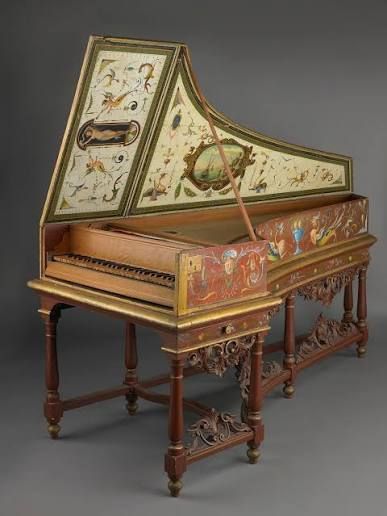
Pluck a guitar string and you get one thing: a fixed little burst of sound that decays the moment your finger leaves it. However hard or soft you pluck, the string doesn't much care — the difference between a gentle pluck and a hard one is real but narrow, nothing like the gap between a whisper and a shout. For nearly three hundred years, that was also the entire expressive ceiling of the harpsichord. Press a key, and a small wedge of wood called a jack pops up and drags a quill or a sliver of leather across a string, plucking it exactly the same way whether you stab the key or barely tip it. Composers wanting a passage louder had to add more notes, or engage a second set of strings with a hand stop, or switch manuals on a two-keyboard instrument — anything except simply pressing harder, because pressing harder did almost nothing. The harpsichord could be terraced, loud here and soft there, but it could not swell. It could not get louder in the middle of a single held note the way a violin, a human voice, or eventually a piano could.
That single mechanical fact is the entire reason the instrument nearly went extinct, and the story of how it happened is really the story of one Italian instrument keeper trying to fix it. Around 1700, in Florence, a harpsichord technician named Bartolomeo Cristofori — employed by the Medici court to look after its keyboard collection — built something that plucked nothing at all. Instead, pressing a key flung a small hammer at the string, hard or soft depending on how hard the key was struck, and then snapped the hammer back out of the way before it could dampen the ring. He called it a gravicembalo col piano e forte: a harpsichord with soft and loud. Within a few decades, everyone was just calling it the pianoforte, then the piano, and the "soft and loud" built into its own name was the entire point — the thing the harpsichord had never been able to do.
It took most of the 18th century for that invention to actually matter, because it took that long for musical taste to start demanding what it offered. The generation after Bach wanted music that sounded like a person feeling something in real time — a style German critics later named Empfindsamer Stil, the "sensitive style," and no one pushed it harder than Bach's own son, Carl Philipp Emanuel Bach. His 1753 treatise on keyboard playing told performers to "play from the soul, not like a trained bird," and he wrote that kind of music himself — abrupt, personal, full of sudden mood swings that a plucked instrument could only approximate by trickery. A hammer that could swell and fade on command was exactly the tool that style needed, and it's not a coincidence that the piano's popularity and the empfindsamer aesthetic rose together.
Johann Sebastian Bach himself lived through the piano's clumsy adolescence and never fully signed on. Around 1732 he tried an early instrument built by the organ maker Gottfried Silbermann and complained, by one contemporary's account, that the treble was too weak and the touch too heavy — criticism Silbermann reportedly took very badly. Fifteen years later, in May 1747, Bach traveled to Potsdam to visit his son at the court of Frederick the Great, who owned several improved Silbermann pianos and delighted in showing them off; Frederick handed Bach a theme on the spot and challenged him to improvise a fugue, which Bach did, on the new instrument, well enough that he finally gave Silbermann's pianos his approval. But approval wasn't the same as adoption. Bach went home and kept writing the way he always had, for harpsichord and clavichord, and nothing in his surviving output — not the Well-Tempered Clavier, not the Goldberg Variations — asks a player to use a hammer's dynamic swell, because Bach never really wrote for one. He met the piano, admired it politely, and composed as though he hadn't.
Wolfgang Amadeus Mozart is the more interesting case, because his career runs right across the handoff. The instrument in the Mozart household in Salzburg was a large harpsichord built around 1750 by Christian Ernst Friederici, and it's what a five-year-old Wolfgang was sitting at in the winter of 1761 when he wrote his first surviving piece, a short minuet catalogued as K. 1. All of his childhood keyboard works were conceived for that instrument's plucked, non-dynamic voice — the same limitation Bach had lived inside his whole life. Then, in October 1777, the 21-year-old Mozart stopped in Augsburg and played the pianos being built there by Johann Andreas Stein, and wrote his father a long, giddy letter about them. What thrilled him specifically was Stein's escapement mechanism — a small refinement that let the hammer fall away from the string the instant after striking it, instead of lingering and buzzing against it, so that "in whatever way I touch the keys, the tone remains always even." Only one maker in a hundred bothered getting that detail right, Mozart wrote, and Stein's instruments cost 300 gulden because of it. From that point on, his own writing changed with the instrument: the sonatas and concertos of the Vienna years lean into exactly the swelling, singing dynamic control his childhood harpsichord could never have given him. Mozart didn't write for the piano's dynamics as a young boy because the piano barely existed yet in his world; once it did, and once he'd heard what a well-built one could do, he wrote for almost nothing else.
By the time Joseph Haydn brought three John Broadwood pianos back to Vienna from London in 1794 — bigger, louder, and more robustly built than the Viennese instruments he'd grown up on — the trajectory was set and it only went one direction. Broadwood kept widening the range and stiffening the frame through the turn of the century; Ludwig van Beethoven, deaf and furious, spent his last years pounding pianos so hard in an attempt to feel the vibrations that he regularly broke their strings, and instrument makers kept building sturdier pianos to survive him. Next to that arms race, the harpsichord wasn't competing for the same audience anymore; it wasn't really competing at all. Makers simply stopped building them. The ones already built didn't get destroyed so much as demoted: 19th-century collectors kept the finest surviving harpsichords as gilded curiosities, having their plain painted cases stripped and redecorated with gold borders and vignettes to match the fashionable fantasy of an aristocratic past, objects to display rather than instruments to play. By 1850 or so, an entire branch of keyboard music-making had gone quiet, and it stayed quiet for the better part of a century.
The person who broke that silence was an eccentric French-born instrument maker named Arnold Dolmetsch, who built the first new harpsichord made from scratch in roughly a hundred years in 1896, working mostly from surviving originals and his own guesswork, in the face of near-total public indifference. Dolmetsch got the instrument playable again. It took another performer to get anyone to write for it.
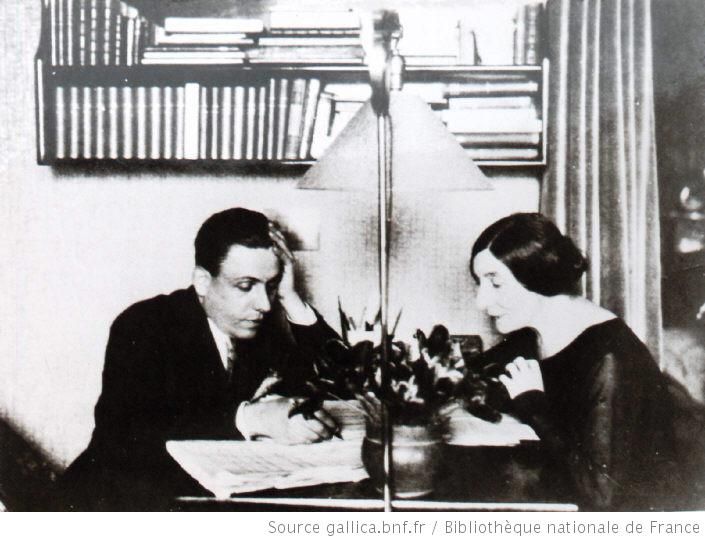
"Le clavecin n'est pas une pièce de musée" ("The harpsichord is not a museum piece"), Wanda Landowska liked to say, and unlike Dolmetsch, she wasn't content to revive old repertoire — she wanted new music written for the instrument she'd rebuilt her career around. She founded her own school, the École de Musique Ancienne, at Saint-Leu-la-Forêt outside Paris in 1927, and talked two of the era's biggest composers into taking the instrument seriously again: Manuel de Falla wrote his Concerto for harpsichord and five instruments for her in 1926, and Francis Poulenc wrote his Concert champêtre for her two years after that. Then, in September 1940, the Nazi looting unit Sonderstab Musik emptied her library of more than 10,000 annotated scores and shipped her custom-built instruments to Berlin. Landowska and Denise Restout, her longtime companion and fellow harpsichordist, fled France on foot, through Banyuls-sur-Mer and Lisbon, and reached the United States in 1941 with none of it. Some of the collection surfaced again in 1946; most never did.
Justin Taylor — a 34-year-old harpsichordist from Angers who won the Bruges International Musica Antiqua Competition at 23 and records exclusively for the label Alpha — has just released an album that picks up Landowska's argument exactly where she left it, three generations later. Clavecin XX plays the Falla and Poulenc concertos she commissioned alongside music she never lived to hear written for the instrument she saved: a 2019 piece by the French composer Stéphane Gassot modeled on György Ligeti's Continuum, Henryk Górecki's tense 1980 concerto for harpsichord and strings, and — closing the record, deliberately — a Scott Joplin rag, just to settle whether an instrument built to be terraced rather than swelled can still swing. Taylor recorded all of it on a single modern harpsichord built in the 1970s, with the Orchestre National de Lille under conductor Chloé Dufresne.
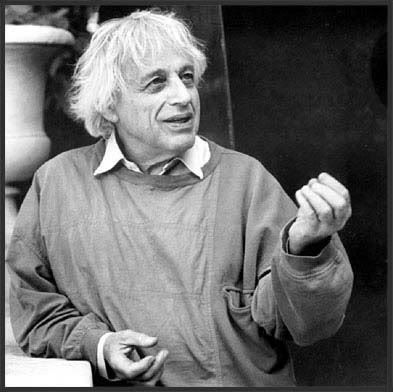
The Górecki is the record's hinge. Composed in 1980, as the composer was turning toward the stark, repetitive language that would make his Third Symphony a surprise bestseller a decade later, the concerto runs barely eight minutes and drives a single motif toward what French critics reviewing the record called an almost violent finish — not the courtly, decorative register audiences still associate with continuo parts, but the same terraced, all-or-nothing instrument Landowska rescued, put through paces neither she nor Cristofori's original critics could have imagined for it. Górecki wrote the harpsichord the identical relentless minimalism he wrote for full orchestras, treating its lack of swell not as a limitation to work around but as a feature to exploit.
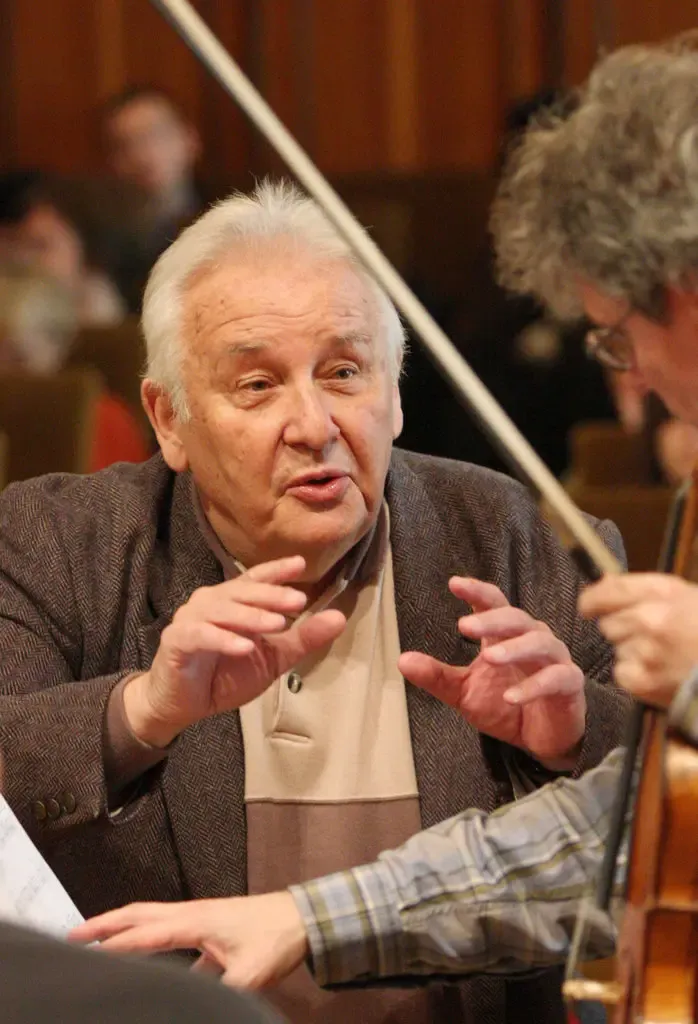
The Falla concerto — the piece that arguably started the whole revival — is where the record's argument wobbles a little: reviewers who've heard it note that its knotty, almost cubist chamber writing wants more edge than Taylor and his ensemble give it. An album built to prove a three-hundred-year-old argument still holds doesn't need every track to land the same way, though; it needs the argument itself to hold, and closing on ragtime right after Górecki's violence is the argument holding.