Stradisphere — August 3, 2026
Edition #162 · Monday, August 3, 2026
Editor's Brief
Today's edition is about the gap between the story you're handed and the one that's actually there. A production stages a fictional Freud session to explain Mahler, when the real 1910 encounter — decades later, for different reasons — is sharper than anything invented. A newsletter dossier files Swedish sea-composers under "ecological engagement" when the real story is centuries of Vikings, herring, and a body of water strange enough to freeze solid. An "On This Day" entry gets one composer's death date and another composer's biography stitched together. And two women — Caccini, out-earning her own famous father, and Lutyens, erased not by the market but by the institutions that came after it — show that progress for women in music was never the straight line it's assumed to be. Every piece today rewards checking the frame before trusting what's inside it.
Analytical Piece
Francesca Caccini and the Formal Logic of Early Florentine Opera
Classical Music Daily

Francesca Caccini was the daughter of Giulio Caccini, whose 1602 songbook Le nuove musiche helped define early Baroque opera. She outearned him. By 1614 her Medici salary was 240 scudi a year — the highest of any musician at court, man or woman — because Grand Duchess Christina of Lorraine wanted a virtuosa embodying her own idea of female excellence on display. Caccini wrote at least fifteen stage works; only one survives complete: La liberazione di Ruggiero dall'isola d'Alcina (1625), the earliest opera by a woman composer to come down to us whole.
She wasn't an isolated case. In Venice a generation later, the soprano Anna Renzi earned enough from the stage to die financially independent, no husband or patron. A century after that, Faustina Bordoni's salary at the Dresden court was double that of Johann Adolph Hasse — the court's own music director, and her husband.
The university system is generally credited with having opened professional life to women; in music, it did closer to the reverse. What became, functionally, a university system for musicians began with the Paris Conservatoire in 1795, the first major music academy in Europe; Vienna's followed in 1817, and the model spread across the continent through the century, replacing apprenticeship and court patronage with curricula, examinations, and credentials. Beethoven, born in 1770, was formed entirely outside that system — private study with Haydn and Albrechtsberger in Vienna, not enrollment anywhere — because there was barely an institution yet to enter. Composers who did pass through the conservatories often did so at war with them. Debussy, admitted to the Paris Conservatoire at ten, called it "that gloomy, dirty place where the dust of bad habits clings to one's fingers" and told one exasperated professor, asked what rule he followed, "my own pleasure." Rachmaninoff's formation was disciplined to severity under Nikolai Zverev , and the arrangement broke down specifically over composition, which Zverev regarded as a waste of a pianist's talent and refused to support. The same institutions that produced this friction, once open to women in large numbers, routed nearly all of them toward teaching and accompanying rather than the composing and conducting that built reputations and fortunes. Fourteen of Caccini's fifteen operas are lost, not for lack of pay in her own lifetime, but because two centuries later, within that later system, nobody thought them worth keeping once she wasn't there to defend them.
Vache Baroque (footnote: a UK period-performance ensemble founded in 2019, known for staging rarely performed Baroque opera in intimate venues.) closed its second Buxton Festival residency this summer with La liberazione, the only work in its program by a woman. It played the Pavilion Arts Centre in Buxton on 19 July, directed by Eloise Lally and designed by Zahra Mansouri, with support from the Continuo Foundation.
Lally and Mansouri set the sorcery plot — Alcina holding Ruggiero captive on her island while the rival sorceress Melissa comes to free him — in an unplaced present-or-future: Neptune in a naval officer's uniform, Alcina's chorus of natural Elements turned into an ecological set-piece, a rescue staged with a handgun rather than a sword. Classical Music Daily's Mike Wheeler found "contemporary resonances in the libretto's background of war and environmental degradation." Read one way, the choices indict Western military and environmental power — a navy commanding the sea, a rescue resolved by force rather than virtue. Read against the venue, the irony sharpens: a Western institution, funded by Western foundations, staging a critique of the West for a Western festival audience, in the same art form that once existed to affirm a culture's idealized image of itself rather than indict it. Baroque opera served court and civic pride; a good deal of contemporary staging does closer to the reverse, treating self-scrutiny as the serious register and populist affirmation as beneath the form. Whether that's opera maturing past its propagandistic origins or narrowing itself into an elite, fatalistic mode a broad audience no longer recognizes as its own is a live argument, not a settled one — and this production sits inside it. In the opera's own ending, meanwhile, Melissa doesn't simply liberate Ruggiero and leave — she claims Alcina's island for herself, a gesture of appropriation the 1625 libretto reaches for on its own, four centuries before any naval uniform was added to underline it.
Vache Baroque's fourteen-piece ensemble played from both sides of the auditorium under harpsichordist-director Jonathan Darbourne, with Jon Stainsby's "warm baritone" Ruggiero, Phoebe Rayner's "authoritative" Melissa, and Camilla Seale's "beguiling and threatening" Alcina. Wheeler's verdict: given the 1625 date, "both the vocal and instrumental music are reminiscent of Monteverdi (footnote: Claudio Monteverdi, 1567–1643, the dominant composer of the early Baroque; his Orfeo, from 1607, is generally credited as the first canonical opera.)... But Caccini is in no way derivative." Score on IMSLP
Sources
The Dodecaphonic Rigor of Elisabeth Lutyens
Crescendo Magazine
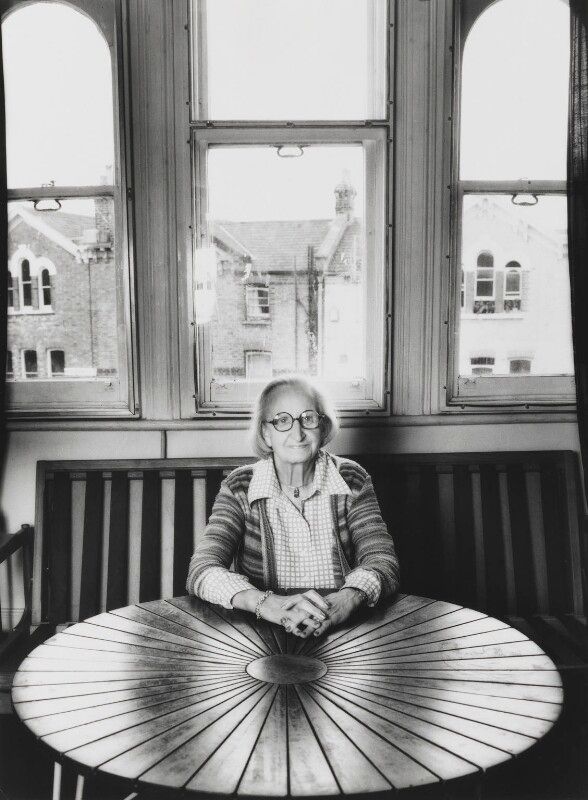
She signed her letters and answered to "Betty" her entire life, which makes it stranger that history remembers her, when it remembers her at all, by a jeering nickname. Elisabeth Lutyens (1906–1983) wrote the first British serialist work in 1939 — before Humphrey Searle, before any of the other national pioneers of twelve-tone composition — and died with a catalogue running to 160 opus numbers. No Lutyens piece is currently programmed at a single French festival. Crescendo Magazine's summer series on composers "official history didn't retain" put her fourth in line, and the honest answer to why she needed rediscovering at all is that nothing was ever lost. The scores survived. Britain just didn't play them.
She was born into a household split between two kinds of certainty. Her father was Sir Edwin Lutyens, the most celebrated architect of the British Empire — the man who designed New Delhi's government quarter and the Cenotaph on Whitehall, monuments built for an empire that still believed in itself. Her mother, Lady Emily Lytton, was an aristocrat who converted first to theosophy and then to the teachings of Jiddu Krishnamurti — a household of monuments on one side and revelation on the other. Betty decided she'd be a composer at nine. She trained at the École Normale de Musique in Paris in 1922, discovering Debussy, then entered London's Royal College of Music in 1926 to study composition under Harold Darke . There, in a small circle of students committed to modern music, she found the scores of Britten — and, decisively, of Webern.
Her Chamber Concerto No. 1, Op. 8/1 , completed in 1939, is unanimously recognized as the first British serial work. She wrote it in near-total isolation from European currents — she never attended the Darmstadt summer courses that shaped a generation of continental serialists, building her technique instead through solitary reading of Schoenberg and Webern. What resulted was a rigorous chromaticism inside a genuinely lyrical, narrative sensibility — discipline that never curdled into dogma.
Her life outran her catalogue for drama. She married the baritone Ian Glennie in 1933 and had three children, including twins; five years later she left him for Edward Clark , who soon lost his own BBC post, leaving Lutyens the family's main earner into the late 1950s. She wrote to order — for radio, advertising, and above all film, becoming the first British woman composer to score a feature. She left roughly thirty film scores, split between Hammer and its rival Amicus, work that sharpened her orchestration to a fearsome precision and left her, by her own account, exhausted and bitter — a bitterness alcohol didn't touch.
The postwar concert scores are where the nerve is. O Saisons, O Châteaux (1946) sets Rimbaud for soprano and small ensemble with an almost unaccountable vocal beauty. The Excerpta Tractati Logico-Philosophici (1952), an a cappella motet on Wittgenstein's Tractatus , is inflexibly rigorous. Quincunx (1959) is a large-orchestra summit; four operas followed, including Infidelio, written in 1954 but not staged until 1973 — nineteen years between composition and hearing, which is its own small monument to the neglect this piece is trying to correct.
Lutyens didn't help her own cause. She loathed Elgar and the Edwardian symphonists out loud, dismissed Vaughan Williams's pastoralism as "cowpat music" , and called out what she saw as provincialism dressed as a national school. The establishment — Britten included — kept its distance in return, and commissions thinned. But she had at least one moment of vindication she liked to tell on herself: after dedicating her Hommage à Igor Stravinsky (1956) to the composer, she claimed that at a 1959 BBC rehearsal in Maida Vale, Stravinsky stood up, crossed the room, and kissed her on sight, having been sent the score of her 6 Tempi — "That is the music I like!" Recognized by the biggest name in the room, held at arm's length by her own.
The reasons for the erasure compound rather than reduce to one cause: a mid-century Britain suspicious of serialism as continental import; a strictly male new-music establishment that treated a woman composer, let alone a hard-drinking, sharp-tongued one with four children, as a social aberration as much as an aesthetic one; a career spent outside any conservatory post, so that she trained no school of disciples to carry the catalogue after her; a horror-film sideline that calcified into her public identity ahead of Quincunx or The Numbered; and, until very recently, a discography limited to scattered Lyrita and Argo pressings. NMC, Resonus, and Métier have only started the real archival work in the past two decades — nothing on the scale of what ECM did for Kurtág, and nothing at all, still, in French: no monograph, no profile in the major reviews, no recent concert in France or French-speaking Belgium.
Newsbag
Freud Analyzes Mahler, and Gets the Wrong Session
The Guardian

Gustav Mahler and Sigmund Freud really did meet — once. August 1910, a café in Leiden called In den Vergulden Turk, four hours of walking and talking before Freud left for a holiday in Sicily. Mahler had cancelled three times before he went; his marriage was collapsing, Alma had taken a young architect named Walter Gropius as a lover, and it was Alma who'd pushed him toward the consultation. Partway through the walk, Mahler suddenly understood something about his own music: why the most emotionally exposed passages of it kept colliding with cheap, banal tunes. He traced it to one memory — a violent fight between his parents when he was a small child, and a hurdy-gurdy grinding out "Ach, du lieber Augustin" on the street outside as he fled the house. High feeling and light music, welded together in one moment, and never separable again. It's exactly the kind of detail that explains something real and specific: the third movement of the First Symphony is a funeral march built on a minor-key "Frère Jacques," repeatedly interrupted by a klezmer band, tragedy and vulgarity refusing to stay in separate rooms. That's the actual biographical key to a real musical fingerprint.
None of that made it into Aurora Orchestra's staged prelude at the Proms on 1 August. Instead, actor Sarah Twomey played a fictional Dr. Freud interrogating Jack Bardoe's Mahler in an invented consulting-room scene, extracting a generic inventory — a cruel father, eight lost siblings, a failed love affair — as the explanation for the First Symphony specifically, a piece written in 1888, when Mahler was 28 and Freud hadn't yet published a word of psychoanalytic theory (The Interpretation of Dreams came out in 1899, eleven years later). The real Mahler-Freud encounter exists, on the record, with a real and specific insight attached to it. The show didn't use it. It built a different, invented one, dressed in the same vocabulary, and applied it to the wrong piece of music entirely.
The idea underneath this — that a symphony's psychology is worth digging for, that biography can genuinely explain a compositional choice — is a good one, and the cuckoo call proves it can be done honestly. Mahler's cuckoo motif in the first movement sings a falling fourth, not the bird's actual interval of a falling minor third, and generations of critics filed it as one of his small deliberate distortions of nature. It isn't. Cuckoos call a third early in the breeding season, but the interval widens to a fourth or fifth as summer goes on — Mahler wrote the ornithologically correct call for high summer, not the more familiar one for spring. That's real, checkable, and specific: a piece of information that actually changes how you hear four bars of the piece. It's the one moment in the evening, per the Guardian's Clive Paget, where the preparatory lecture and the symphony itself were doing the same work rather than competing.
Everywhere else, the format worked against itself. Paget's review is blunt about the cost: an hour of preparation meant the material "arrived like a familiar friend" rather than as discovery, and the finale's modulation from C major to D — one of the most electric key changes in the piece — landed "strangely rushed," spent before the orchestra played it. Aurora's stated mission is genuine outreach — creative director Jane Mitchell has spent two decades building school programs and young-audience series specifically to widen who gets access to this repertoire, which answers one half of the fair question here: this isn't a private joke for people who already love Mahler, it's aimed at people who don't yet. But accessibility and accuracy aren't the same achievement. An audience walked out having felt something real about grief and inheritance. What they were told explained that feeling was invented — a fictional session standing in for a real one that would have made the same emotional case with the facts intact.
Mahler's First Symphony, full score on IMSLP

ResMusica
Most people picture Vikings raiding westward — England, Normandy. Swedish Vikings mostly went east instead, down Baltic rivers as far as Byzantium and Baghdad, trading and raiding along the way. Archaeologists have pulled tens of thousands of Arab silver coins out of the ground on Gotland, payment from a route that, at its far end, touched India and China. Birka , Sweden's first real town, existed because of that route. The sea was the road, not the wall.
It's also a strange sea. The Baltic is nearly landlocked, brackish — about a fifth the salinity of the open ocean — and barely tides. In a hard winter it freezes solid enough to walk across: Stockholm has a long-distance ice-skating culture dating to a club founded in 1901, skaters today checking satellite ice maps before heading out across miles of archipelago that's open water every summer. A sea that periodically stops being liquid isn't the one Debussy or Britten grew up next to.
It could also kill you fast. In August 1628 the warship Vasa sailed from Stockholm harbor, guns loaded for a ceremonial salute, and sank twenty minutes later — too top-heavy to survive a gust of wind, thirty dead within sight of the dock. The wreck sat on the harbor floor for 333 years until it was raised in 1961, and 95 percent of the wood came up intact, sailors' sea chests still packed with food and clothes — the same cold, brackish, low-oxygen water that makes the Baltic hostile to normal sea life also kept the rot away. The sea that sank the ship preserved it whole.
Underneath all of it was herring — Baltic fisheries going back to the Viking age, then the money behind the Hanseatic League from the 1200s on. The archipelago wasn't scenery; it was a shipping lane, a fishing ground, and a border you had to read correctly.
Composers inherited all of that layered history when they started writing the coastline directly. Hugo Alfvén's Symphony No. 4, Från havsbandet ("At the Outer Edge of the Skerries"), is the sharpest example: he spent several weeks alone in the archipelago in 1918 before writing a note, then built the piece around a doomed love affair from his own youth — a declaration, a woman waiting through moonlit calm, a brief happy dawn, then a storm that ends it, the weather doing the emotional work a libretto usually does. It premiered in 1920 and reached Paris, Vienna, and Berlin within the year. Stenhammar, Atterberg, Nystroem, Rangström, and Wirén all returned to the same water in smaller ways — Wirén literally summered on an island in Alfvén's own archipelago decades later — but Alfvén's is the one that trusted the sea to carry the whole plot.
Why water keeps doing this for composers, across cultures with nothing else in common: it has no fixed pitch or beat, so there's no "correct" way to notate it, which frees a composer to invent a vocabulary and call it accurate. Tremolo strings and rolling arpeggios sit naturally under the hand, so it's technically easy to write as well as symbolically loaded — a shape with no fixed shape, ready to carry whatever the composer actually wants to say without saying it directly. Alfvén didn't write a piece about a breakup. He wrote a piece about the sea, and let the audience do the rest.
full score on IMSLP
The Wire
On This Day: Giannis Papaioannou — Stradisphere