Stradisphere — August 18, 2026
Edition #167 · Monday, August 17, 2026
Editor's Brief
Tuesday's issue keeps returning to the same fact from different angles: what survives of a life's work is rarely a matter of merit alone. A conductor's discography outlives the man; a composer's forgotten scores wait eighty years in a national library for someone to go looking; four Renaissance panels that survived an earthquake in 1908 vanish from a museum wall in a single night; and a violinist's 1982 audition gets remembered as history only because someone, eventually, wrote it down. None of it stays found by itself.
Analytical Piece
Bruno Campanella, Bel Canto's Rigorist, Dies at 83
OperaWire
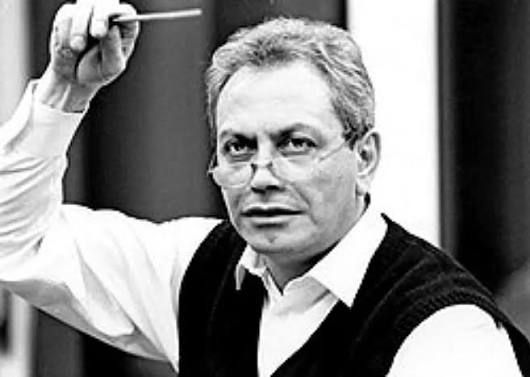
Bruno Campanella, the Italian conductor who spent five decades restoring rigor to a repertoire most of his peers were content to sentimentalize, died in Florence on August 4 at 83, following a long illness. Slippedisc and others described it as throat cancer and reached for a comparison to Giacomo Puccini — except Puccini's own death, as a reader corrected within hours, came from a heart attack after throat-cancer surgery, not the cancer itself. Campanella's precise cause has not been stated more exactly by his family.
He was born January 6, 1943, in Bari — eleven months before the city became the site of one of the war's stranger disasters. On December 2, 1943, a German air raid sank seventeen Allied ships in Bari's harbor, among them the John Harvey, a Liberty ship secretly loaded with two thousand mustard-gas bombs. Its cargo detonated in the chaos; more than a thousand servicemen and civilians died, and Allied doctors treating survivors noticed something odd in their blood work — a finding that fed directly into the earliest research on chemotherapy drugs. Campanella grew up in the Bari that had to be rebuilt around that scar, and paid it a quiet tribute decades later: in 2002 he recorded an opera by Niccolo Piccinni, the city's other native composer of note, a homage nobody had asked him to make.
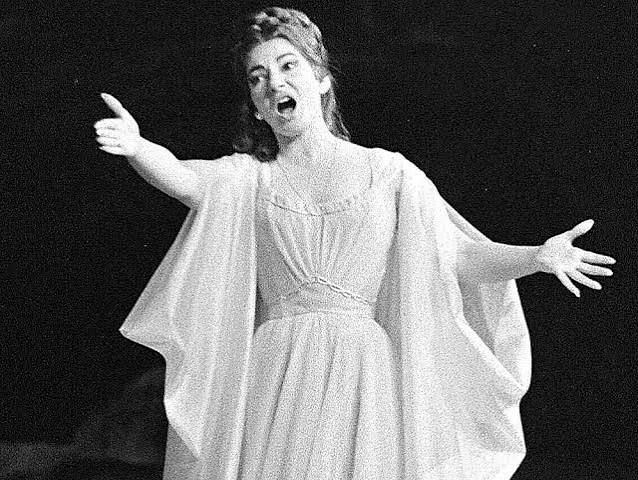
His training ran wide before it narrowed: composition with Nino Rota and Luigi Dallapiccola, conducting with Hans Swarowsky and Thomas Schippers, and, improbably, a philosophy degree finished with a thesis on Buddhism. None of it pointed toward bel canto specifically — but the timing did the pointing for him. Campanella's career took off in the late 1970s, exactly as Italian opera was rediscovering Rossini, Bellini, and Donizetti as serious composers rather than decorative ones. Conductor and musicologist Alberto Zedda had spent the 1960s returning to Rossini's autograph manuscripts, stripping out a century of performance-tradition accretion that publishers had quietly layered on; by 1980 that scholarship had a permanent home in the Rossini Opera Festival at Pesaro, anchoring what's now remembered as the Rossini Renaissance. Campanella built his own reputation inside that same rigor — treating bel canto as a technical discipline with real stakes, not pretty tunes for singers to coast through.
He served as principal conductor of the Teatro Regio di Torino from 1992 to 1995 and remained its principal guest conductor afterward, while guesting at La Scala, the Metropolitan Opera, the Royal Opera House, the Vienna State Opera, and the Opera National de Paris. France named him Officier de l'Ordre des Arts et des Lettres in 2002. His discography runs from a Bel Canto Arias recital with Kathleen Battle to a Macbeth from Barcelona's Liceu with Maria Guleghina, by way of a La Fille du Regiment pairing June Anderson with Alfredo Kraus.
La Scala's own tribute, issued the day of his death, credited him with helping "restore vitality and prestige to a repertoire that today occupies a central place in the life of opera theaters" — a repertoire he'd found half-embalmed and left, by most accounts, alive.
Eighty Years Late, Yvonne Loriod Finally Gets Her Premiere
Berliner Festspiele / Musikfest Berlin
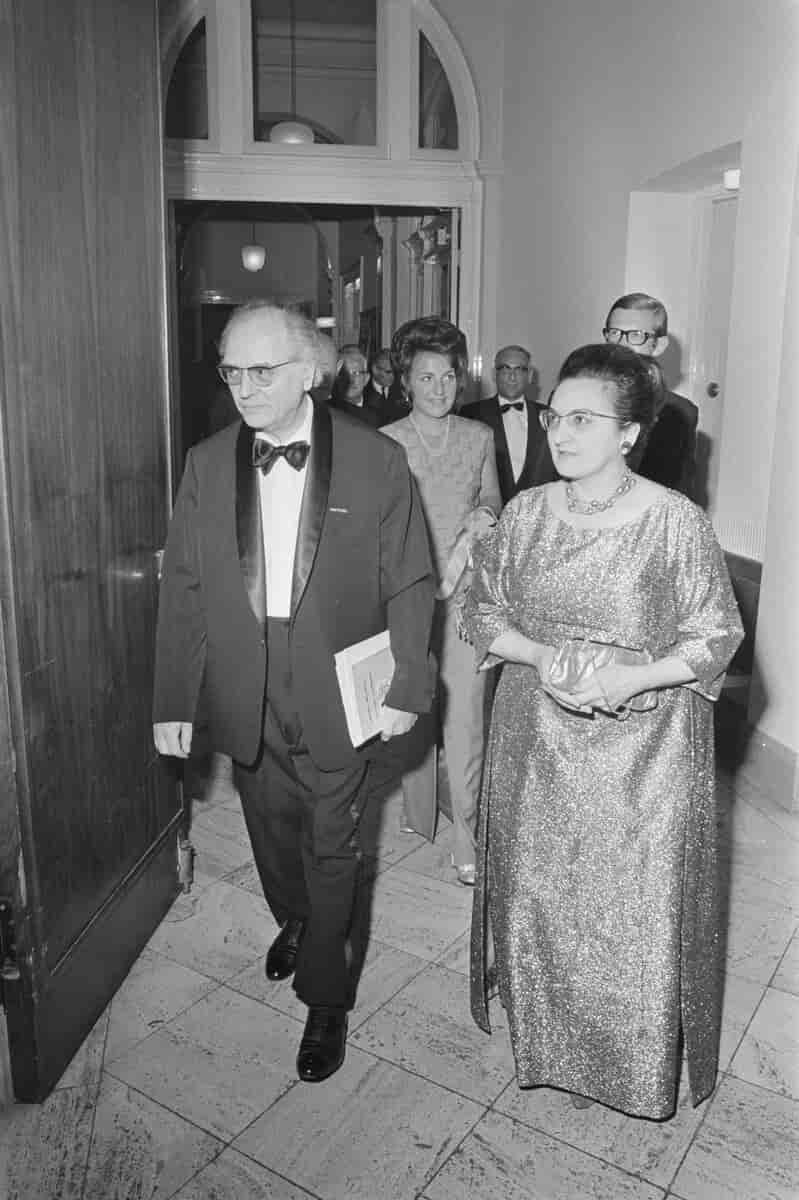
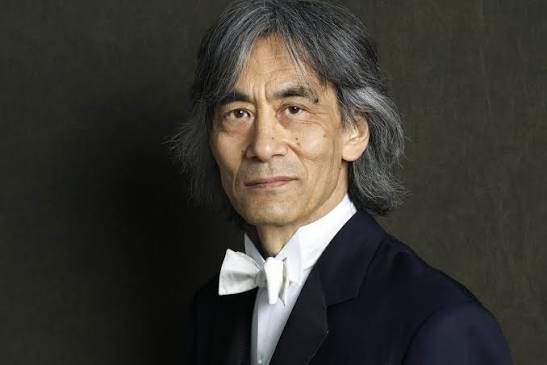
Eighty years after Yvonne Loriod wrote it, and eleven years after she died still known mostly as somebody else's wife, her orchestral song cycle La Sainte Face will finally be heard. Kent Nagano and the WDR Sinfonieorchester give the world premiere at Musikfest Berlin on September 5, with soprano Sarah Aristidou taking the vocal line, a piece nobody living had heard until Nagano found the manuscript himself.
Loriod wrote La Sainte Face in 1945, at 21, for a scoring nobody would choose on commercial grounds: solo soprano, eight flutes, a full brass and percussion complement, two harps, celesta, piano, a modest body of strings, and two ondes Martenot, the wavering electronic instrument that would later define the sound of her second husband's orchestral music. The manuscript runs 280 handwritten pages across fifteen movements. The festival's own program note describes her, at the time, as a student of Darius Milhaud, though her real formation over the two prior years had come from someone else.
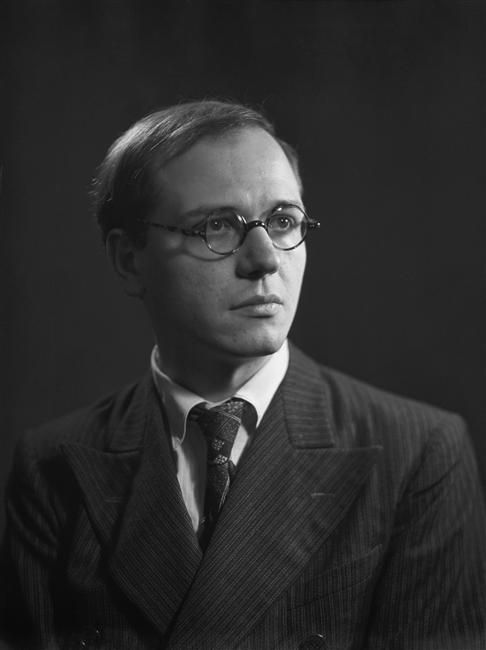
That formation happened inside occupied Paris. Loriod's teachers at the Conservatoire had been deported by the Nazis in the war's early months; her harmony class reopened in May 1941 under a new instructor freshly released from a German prisoner of war camp, his fingers still swollen from the cold: Olivier Messiaen. Messiaen recognized what he had in the seventeen year old almost immediately. By early 1943 he'd written her a piano showcase, Visions de l'Amen, and premiered it with her at the keyboard on May 9, 1943, Paris still under German occupation, more than a year before Liberation. La Sainte Face, composed two years after that premiere and one year after the Germans left, was the work of a young composer who had just spent her entire conservatory education inside an occupied city, writing devotional music in a scoring nobody else was using.
She spent most of the rest of her life not writing. Loriod became one of the century's defining interpreters of Messiaen's piano music, and after their 1961 marriage largely folded her own compositional voice into his. Nagano has said he found La Sainte Face alongside a number of her other large-scale scores sitting unpublished and unperformed in the Bibliotheque nationale de France. He's now working through them with the WDR Sinfonieorchester one at a time, restoring a compositional catalogue that existed the entire time; it just needed someone to go and open the folder.
The September 5 program pairs La Sainte Face with Mendelssohn's Reformation Symphony and a 2025 companion piece by Argentine composer Alex Nante built from the same Bach chorale Mendelssohn used, a program constructed almost entirely from music that took decades or centuries to be heard the way its composer meant it.
The Berlin Philharmonic's First Woman, and the Clarinetist Who Came Next
Berliner Philharmoniker
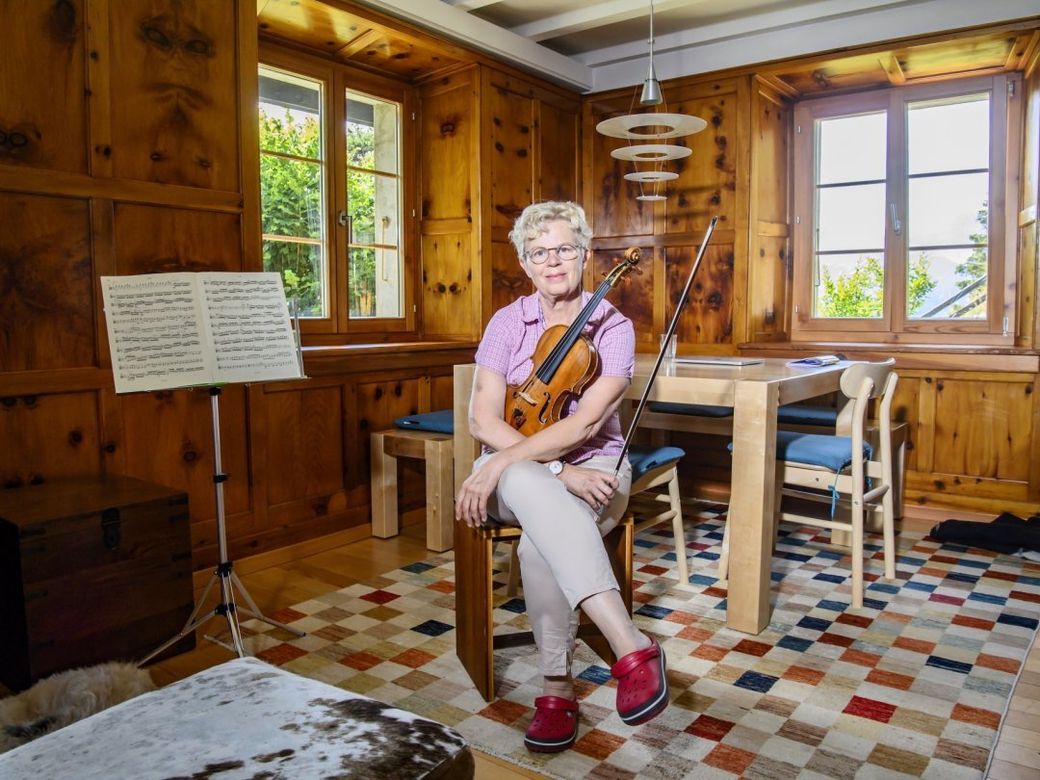
On September 1, 1982, the Berlin Philharmonic seated a woman for the first time in its hundred-year history. Madeleine Carruzzo had beaten twelve male rivals at a June 23 audition to win a place in the first violins, a section that had never included a woman since the orchestra's founding in 1882.
The Swiss violinist, born in Sion in 1956, had not set out for Berlin. She trained under Tibor Varga at the Hochschule fur Musik Detmold and had applied for the concertmaster post at the Zurich Chamber Orchestra, in her own country, only to be turned down explicitly because a woman was not wanted in the chair. Berlin, of all places, took her.
Karajan's orchestra was not finished making history that year. Weeks after Carruzzo's audition, the conductor personally pushed to bring in a second woman: the clarinetist Sabine Meyer, whom he wanted as principal. Where Carruzzo had won her seat through the orchestra's normal audition process, Meyer's appointment came from Karajan overriding it, and the players never forgave the method. The German press called the resulting feud the Klarinettenkrieg.
After Meyer's probationary period ended, the orchestra's musicians voted 73 to 4 that she should leave, citing a tone that did not blend with the section, though Karajan and much of the press suspected the real objection was simply that she was a woman following Carruzzo into the ensemble. Meyer departed nine months later and rebuilt her career as a soloist, a path that made her far more famous than she would likely have become as a rank-and-file member.
Carruzzo, by contrast, stayed. She built a decades-long career in the first violins, quietly, without the controversy that trailed Meyer out the door. It took the orchestra another forty years to hand a woman its most visible chair: in 2023, the Latvian violinist Vineta Sareika-Volkner became the Berlin Philharmonic's first female concertmaster in its 141-year history, a title Carruzzo's 1982 audition made thinkable in the first place.
Newsbag
Four Antonello da Messina Panels Vanish From the City He Was Born In
CBS News (AFP)
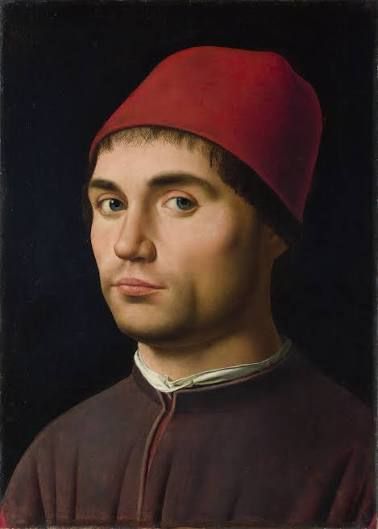
Late on Saturday, August 15, while Messina marked the feast of the Assumption, thieves broke into the Regional Museum of Messina and took three panels of the Polittico di San Gregorio along with a two-sided panel of the Madonna and Child, all painted by the city's most influential master, Antonello da Messina.
The thieves removed five wooden panels in total but abandoned two outside the museum during their exit. Commissioned in 1473 for the convent of Santa Maria extra moenia, the polyptych was the sole major Antonello commission that had never left the city where he was born around 1430, surviving even the 1908 earthquake that leveled the monastic house that originally housed it.
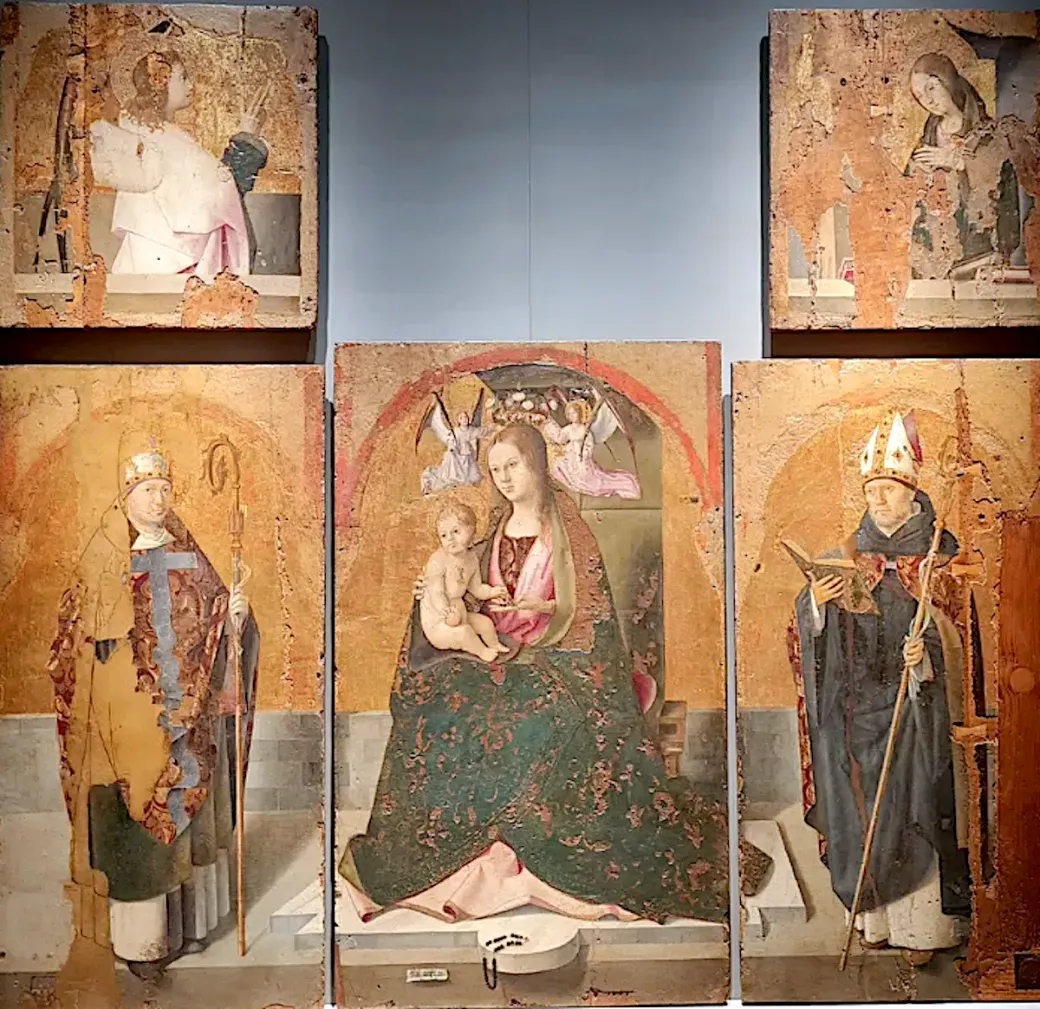
The 1473 altarpiece belongs to a precise moment of cross-European aesthetic fusion. Antonello's breakthrough—applying Flemish translucent oil glazing and tactile micro-realism over Italian geometrical perspective—mirrored the transformation of sacred music across Italian court chapels in the 1470s. As the masterworks of Guillaume Du Fay, Johannes Ockeghem, and Antoine Busnois circulated across Italian networks, Neapolitan court figures such as Johannes Cornago and theorist Johannes Tinctoris integrated intricate Northern linear counterpoint and **cantus firmus** scaffolding with Italian melodic clarity and resonant, triadic vertical harmony. The layered structural transparency of four-part polyphony directly paralleled the spatial depth and optical luminosity Antonello engineered on Sicilian poplar panels.
Art historian Alberto Fiz estimated the value of the stolen panels between 70 and 80 million euros. The theft follows the Italian state's recent 15 million dollar acquisition in New York of Antonello's Ecce Homo, a purchase that highlighted the global market value of a master whose surviving Sicilian works remained concentrated in a single provincial collection.
On This Day
On This Day: Mahler Completes the Architecture of His Eighth Symphony
Mahler Foundation
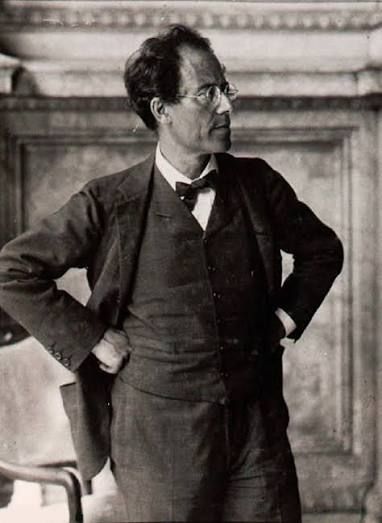
For most of his working life, Gustav Mahler was forced to be a seasonal composer. His grueling responsibilities as director of the Vienna Court Opera consumed the winter calendar, leaving only the summer recess for compositional work. In June 1906, arriving at his lakeside composing hut in Maiernigg on the Wörthersee, Mahler experienced a surge of creative momentum that yielded the complete draft of his Eighth Symphony in approximately eight weeks. On August 18, 1906, he wrote to conductor Willem Mengelberg to announce the breakthrough, describing a work where the entire universe begins to ring and resound not with human voices, but with planets and suns revolving in their orbits.
The score marked a decisive structural departure from the purely instrumental canvas of his Fifth, Sixth, and Seventh symphonies. Instead of relying on orchestral forces alone to carry the symphonic architecture, Mahler constructed an entirely vocal-symphonic edifice across two monumental movements. Part I sets the ninth-century Latin Pentecostal hymn Veni Creator Spiritus within an expansive sonata-allegro framework driven by a rigorous double fugue counterpoint. Part II bridges liturgical Latin with German humanism, setting the mystical closing scene of Johann Wolfgang von Goethe's Faust, Part Two as a continuous dramatic cantata unified by shared thematic transformations.
By the time the work received its premiere on September 12, 1910, at the **Neue Musik-Festhalle** in Munich, impresario Emil Gutmann had mobilized 858 choral singers and an enlarged orchestra of 171 players. Gutmann branded the spectacle the "Symphony of a Thousand," an aggressive promotional moniker that Mahler openly detested, fearing the commercial billing would reduce architectural polyphony to sensationalist circus display. The performance proved to be the greatest public triumph of Mahler's life, generating a twenty-minute ovation and prompting novelist Thomas Mann to send an homage dedicating his admiration to the artist who expressed the profoundest spirit of the age.
Also Worth Noting
A New Martinu Work Surfaces in Jerusalem — Strings Magazine
Jerusalem Symphony Names Emergency Music Director — Slippedisc
Major Labels Push to Ban AI Songs From the Charts — Technology.org
Ed Gardner Heads to Chicago and Pittsburgh — 21C Media Group
Yuja Wang Cancels Tanglewood, Turns Up in Edinburgh Jazz — Slippedisc
McDonald's Classical Music Strategy Spreads to the US — The Mirror
Arcadia Quartet Completes Its Weinberg Cycle — The Strad
Rossini's Le Siege de Corinthe Turns 200 — Gramilano
Barrie Kosky the Frontrunner to Lead Salzburg — Slippedisc
Ruth Crawford Seeger Would Have Turned 125 This Year — Wikipedia