Bruno Campanella, Bel Canto's Rigorist, Dies at 83
OperaWire
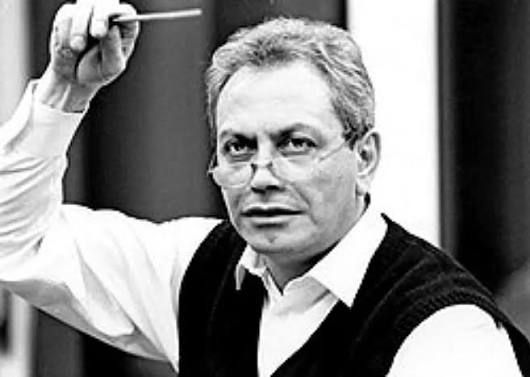
Bruno Campanella, the Italian conductor who spent five decades restoring rigor to a repertoire most of his peers were content to sentimentalize, died in Florence on August 4 at 83, following a long illness. Slippedisc and others described it as throat cancer and reached for a comparison to Giacomo Puccini — except Puccini's own death, as a reader corrected within hours, came from a heart attack after throat-cancer surgery, not the cancer itself. Campanella's precise cause has not been stated more exactly by his family.
He was born January 6, 1943, in Bari — eleven months before the city became the site of one of the war's stranger disasters. On December 2, 1943, a German air raid sank seventeen Allied ships in Bari's harbor, among them the John Harvey, a Liberty ship secretly loaded with two thousand mustard-gas bombs. Its cargo detonated in the chaos; more than a thousand servicemen and civilians died, and Allied doctors treating survivors noticed something odd in their blood work — a finding that fed directly into the earliest research on chemotherapy drugs. Campanella grew up in the Bari that had to be rebuilt around that scar, and paid it a quiet tribute decades later: in 2002 he recorded an opera by Niccolo Piccinni, the city's other native composer of note, a homage nobody had asked him to make.
His training ran wide before it narrowed: composition with Nino Rota and Luigi Dallapiccola, conducting with Hans Swarowsky and Thomas Schippers, and, improbably, a philosophy degree finished with a thesis on Buddhism. None of it pointed toward bel canto specifically — but the timing did the pointing for him. Campanella's career took off in the late 1970s, exactly as Italian opera was rediscovering Rossini, Bellini, and Donizetti as serious composers rather than decorative ones. Conductor and musicologist Alberto Zedda had spent the 1960s returning to Rossini's autograph manuscripts, stripping out a century of performance-tradition accretion that publishers had quietly layered on; by 1980 that scholarship had a permanent home in the Rossini Opera Festival at Pesaro, anchoring what's now remembered as the Rossini Renaissance. Campanella built his own reputation inside that same rigor — treating bel canto as a technical discipline with real stakes, not pretty tunes for singers to coast through.
He served as principal conductor of the Teatro Regio di Torino from 1992 to 1995 and remained its principal guest conductor afterward, while guesting at La Scala, the Metropolitan Opera, the Royal Opera House, the Vienna State Opera, and the Opera National de Paris. France named him Officier de l'Ordre des Arts et des Lettres in 2002. His discography runs from a Bel Canto Arias recital with Kathleen Battle to a Macbeth from Barcelona's Liceu with Maria Guleghina, by way of a La Fille du Regiment pairing June Anderson with Alfredo Kraus.
La Scala's own tribute, issued the day of his death, credited him with helping "restore vitality and prestige to a repertoire that today occupies a central place in the life of opera theaters" — a repertoire he'd found half-embalmed and left, by most accounts, alive.