Stradisphere — July 27, 2026
Edition #153 · Monday, July 27, 2026
Newsbag
The Gardner model and the export of British clarity
NYT Music
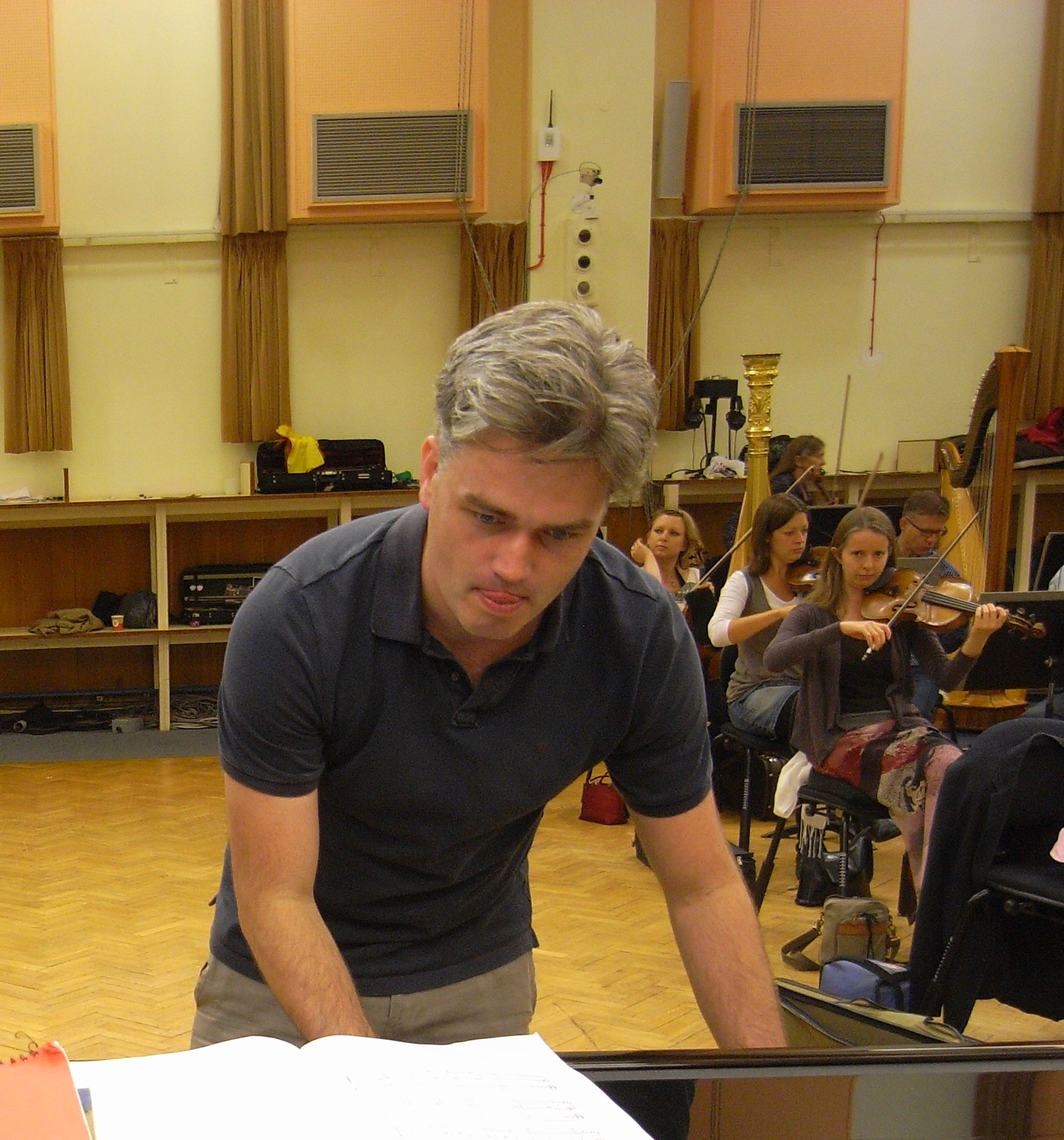
Edward Gardner is the primary contemporary exponent of the British institutional apprenticeship. His tenure as Principal Conductor of the London Philharmonic Orchestra produces a sound world defined by the lean textures and rhythmic motorism of the English choral tradition. This aesthetic is a direct byproduct of the English National Opera’s mandate for linguistic intelligibility; Gardner’s syntax is built on the necessity of projecting text through a thick orchestral fabric. The resulting clarity mirrors the transformative overhaul Georg Solti brought to the Royal Opera House in the 1960s, replacing late-Romantic opulence with a strict, vertical precision. When Gardner exports this approach to international stages, he validates a specific pedagogical lineage. The success of this model illustrates that the British pipeline remains capable of producing a consistent, high-value export through rigorous institutional immersion, even as the funding structures that support these training grounds are systematically dismantled.
The Turin Rediscovery: How Vivaldi Became a Titan
Serenade Magazine

The massive popularity of Antonio Vivaldi today is a direct result of the 1926 discovery of the Foà and Giordano collections at the National Library in Turin. The monumental recovery began when a boarding school in San Martino endeavored to liquidate ecclesiastical manuscripts to finance urgent structural renovations to its buildings, an initiative that prompted Alberto Gentili, a professor of music history at the University of Turin, to identify an extensive private archive comprising 450 of Vivaldi’s compositions.
The library served as an impartial vault for these scores, preserving centuries of history regardless of the prevailing political climate. This neutral stance stands in sharp contrast to the modern rise of generations of activists who utilize the destruction or defacement of art as a primary vehicle for social criticism. From the splashing of soup on Van Gogh’s Sunflowers and mashed potatoes on Monet’s Meules to the gluing of hands to the frames of Botticelli masterpieces, these tactics raise a critical question: are these personalities helping to preserve our cultural heritage, or are they active hindrances to the survival of art? Furthermore, we must ask if cultural institutions are now blindly bowing to pressure from ideological groups who may not actually care for classical music or the fine arts, but rather view them as convenient stages for protest. If the mandate of such an institution shifts to prioritize immediate political utility or social activism, the justification for housing hundreds of specialized, ecclesiastical scores from a single Baroque composer becomes less clear, potentially altering which parts of the past are deemed worthy of space and resources.
Before these manuscripts surfaced in the dust-choked library of the Collegio San Carlo, Vivaldi was a shadowy figure, known to most through J.S. Bach’s keyboard transcriptions. While Felix Mendelssohn famous 1829 revival of the St. Matthew Passion had already restored Bach to the status of a Teutonic deity, Vivaldi remained a curiosity of the past—the man who had provided the harmonic models in which Bach recognized a distinct and compelling genius. Bach was drawn to Vivaldi’s work at a time when other German contemporaries looked elsewhere;he recognized a technical shift in the Venetian’s application of the circle of 5ths and the ritornello form. While many of his peers dismissed these techniques as unsubtle,Vivaldi used descending 5ths to create a new forward momentum that challenged traditional voice-leading constraints.
This sense of drive helped clear the path toward a musical home base, making it obvious to the listener when a piece was reaching its destination. This clarity opened up the music's structure, a kind of liberation that later composers like Haydn and Mozart would turn into an art form. At the time, strict German theories often cautioned against overusing repetitive harmonic sequences, as they could lead to a mechanical predictability that risked undermining the independence of the voices. While Bach was careful to vary his textures by integrating these sequences into complex contrapuntal webs, Vivaldi leaned into the momentum of the cycle of 5ths to sustain a relentless energy—a bold approach that his critics often dismissed as a flashy, superficial Italian style.
https://ks15.imslp.org/files/imglnks/usimg/8/84/IMSLP779693-PMLP1234697-RV_594_Dixit_Dominus.pdf
Robert Levin and the Restoration of Improvisatory Mechanics
Crescendo Magazine
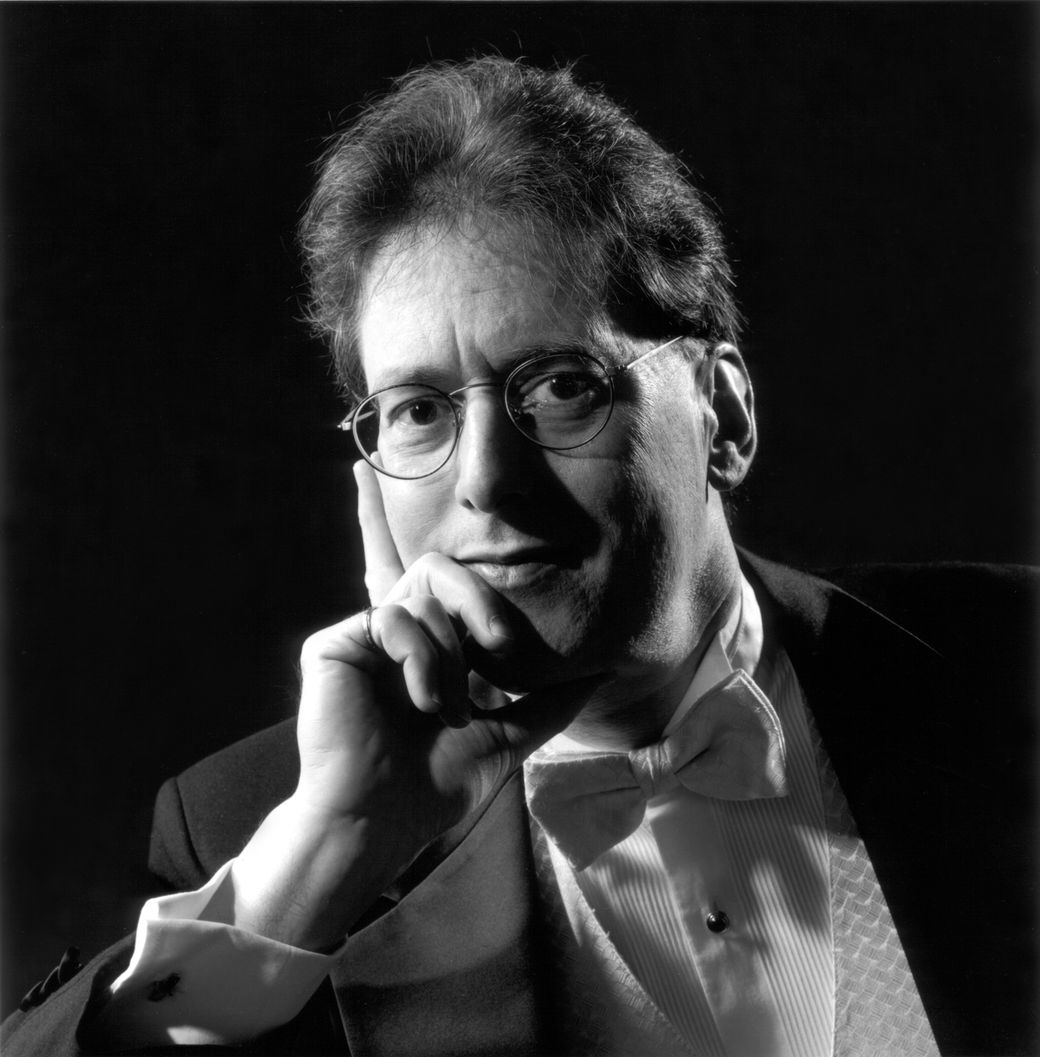
Robert Levin’s recordings of the Mozart sonatas with violinist G rard Poulet document how the performer has been displaced as a structural agent—an interlocutor who realizes the music’s latent form and texture rather than merely executing its surface.
This approach invokes the core tenets of Historically Informed Performance, questioning whether the score is an immutable monument or a fluid blueprint. By extemporaneously bridging harmonic voids and ornamenting sequences, the performer resumes their historical role as a co-creator, validating the eighteenth-century expectation that a musician must actively assemble material in real time to realize the composition’s intrinsic logic.
The modern conservatory treats the printed score as a closed system, a standard that solidified through the precision-focused recording culture of the late twentieth century. Levin identifies the requirement for note-perfect execution as a symptom of the performer’s diminished agency. Such rigidity in modern aesthetics stems - at least partially - from a retrospective projection of the Arnold Schoenberg legacy; though frequently cast as a revolutionary, Schoenberg had fondness toward a staunch classicist understanding of the past. Idealism demanded an unsentimental, anti-romantic fidelity to his text, but not so to the composers who have now been distorted under that scope. This has resulted in a treatment of Mozart’s work with a reverence for the ‘frozen’ page that would have been alien to the composer, who also improvised sections of his own scores himself.
In the eighteenth century, the printed page functioned as a template for improvisatory intervention rather than a static decree. In Mozart’s Violin Sonata K. 379, the sparse texture of the first movement is an occasion for the keyboardist to supply chordal fillers, a practice that restores the physical resonance and harmonic weight intended by the composer. Without these additions, the sonority remains a skeletal reduction. Levin identifies the decline of this craft in the transition from the era of C.P.E. Bach to the nineteenth-century rise of the immutable text. In the contemporary model, the performer is a curator of fixed events; in the Mozartian model, the performer is a collaborator in the musical invention. By reintegrating spontaneous ornamentation, Levin reinstates the necessity of stylistic literacy—a mechanic that the frozen museum model of current institutional training has largely excised.
Sony Music SME initiates legal boundary for generative synthesis
The Violin Channel

Sony Music’s lawsuit against Udio is an institutional firewall against the liquidation of the human architect. At its core, the dispute is about whether a high-fidelity archive is a library of art or a quarry for raw material. Imagine a master baker who spends thirty years perfecting a sourdough starter; a generative model does not buy the bread, it steals the starter, breaks it down into chemical components, and uses a machine to print millions of identical loaves that sell for half the price. Historically, the music industry functioned on the distinction between the composition and the phonogram. AI models bypass this by treating timbral and harmonic data as statistical probability, ignoring the compulsory and master use licensing mechanisms that have sustained labels since the mid-century. This is not traditional sampling, where a specific snippet of a waveform is licensed; it is the extraction of an artist's identity to create its own competition. The litigation focuses on the unauthorized ingestion of proprietary datasets—the scraping of multitrack recordings and metadata—to train systems that replicate specific vocal textures and instrumental resonance. This process reduces creative labor to mere training weights for an algorithmic replacement. If the court validates this ingestion as fair use, it nullifies the concept of sovereign ownership over the recorded performance. It would be like allowing a furniture company to chop up a Stradivarius to study its wood grain so they can mass-produce plastic violins that look and sound just enough like the original to saturate the market and starve the maker. The outcome will determine whether the digital archive remains a site of controlled intellectual property or becomes fuel for recursive training loops that erase the human source.
On This Day
On This Day: Enrique Granados

Enrique Granados, the Spanish pianist and composer born July 27, 1867, met a tragic end in 1916 when the SS Sussex was torpedoed by a German U-boat. Returning from the New York premiere of his opera Goyescas, Granados drowned in the English Channel while attempting to rescue his wife—a heartbreaking conclusion to a career that had just achieved global acclaim. His death was more than a personal tragedy; it silenced a key architect of modern Spanish music. Unlike his contemporaries who focused on local folk tunes, Granados built his sound from the heart of the piano itself.
His masterwork, Goyescas, transforms the visual textures of Goya’s famous tapestries into a rich musical tapestry of its own, blending old-world elegance with the lush, emotional harmonies of the Romantic era. The music makes the piano mimic the delicate strumming of a vihuela (a Spanish renaissance guitar) through intricate layers and shifting rhythms, avoiding clichés in favor of genuine depth. By the time of his death, Granados was moving away from the light salon pieces of his youth toward a grander, more complex style of storytelling. While his colleague Isaac Albéniz was exploring misty, Impressionist colors in Paris, Granados stayed rooted in a Catalan modernism that bridged the gap between 18th-century courtly grace and the bold new sounds of the early 20th century.
This balance between history and innovation is best heard in his piano writing, which swaps the heavy, dense sound typical of German composers for a crystalline transparency that requires absolute rhythmic precision. Larrocha’s definitive performance captures the "rhythmic elasticity" of the work—the way the music seems to breathe and sway like an improvisation while maintaining a rigorous structure. In the 1910s, Granados stood at the crossroads of a vanishing European aristocracy and a sun-drenched Mediterranean spirit that would soon define Spanish culture for the century to come.
Also Worth Noting
Edison Denisov thirty years on: The survival of the Soviet avant-garde — Crescendo Magazine
The complete piano works of Carl Nielsen on disc — MusicWeb International
Gloucester hosts an exuberant launch for the Three Choirs Festival — The Guardian
A monograph on the interpretive legacy of Carlos Païta — Pizzicato
LA Opera founding member Bernard A. Greenberg dies — OperaWire
The Wire
Trending
Following Kuhnau: Bach’s Partita No. 3 in A Minor, BWV 827 — Interlude
Chinese Composer Chen Gang has Died, Aged 91 — The Violin Channel
Nachruf auf Jürgen Kesting, den „Stimmen-Papst“ von Dieter David Scholz — Neue Musikzeitung (NMZ)