Stradisphere — July 17, 2026
Edition #133 · Sunday, July 19, 2026
Editor's Brief
Today's issue reads the industry through its ledgers and its governing documents as much as its performances. Our lead follows the Kennedy Center naming fight, where a federal appeals court let the removal of a president's name stand — a story less about one politician than about who holds the deed to a national institution's identity. From Boston, the Symphony's new accounts show a record endowment shadowed by a warning that its money is increasingly locked where it cannot be spent. In Denver, Opera Colorado and the American Guild of Musical Artists have signed the company's first contract, quietly rewriting how an American opera house is run. We set the critics against each other on Giulio Prandi's lean new recording of Pergolesi's L'Olimpiade, and highlight the baritone Trevor Haumschilt-Rocha, who went from elimination to a €50,000 prize in a single competition — his full story lives on our new News page. Members get our essay on the apprentice system that made him. And on this day in 1717, the Thames became a concert hall. — The Editors
Analytical Piece
Who Holds the Deed? The Kennedy Center Name Ruling
NPR
The John F. Kennedy Center for the Performing Arts, the federally chartered institution that has stood on the Potomac since 1971 as the nation's living memorial to a president, spent this month defending a different president's name on its walls — and lost. On 8 July a three-judge panel of the U.S. Court of Appeals for the D.C. Circuit declined to halt the removal of President Trump's name from the Center, as NPR reported, leaving in place a May district-court order that followed a lawsuit by Representative Joyce Beatty of Ohio. The panel's reasoning deserves the attention of anyone who runs an arts organization: it turned not on politics but on institutional interest. The board, the judges found, had produced no "specific facts and evidence" that fundraising would suffer if the name came down.
Strip away the noise and a governance question remains, one this publication has watched gather for a year: who holds the deed to an institution's identity? A name on a facade is not decoration. It is a claim about whose stewardship the building represents — the architectural equivalent of a signature on a painting. When that signature can be added by one administration and scraped off by the next, what erodes is the institution's autonomy: its ability to look more permanent than the political weather outside its doors. The Center's own filings now report the name already gone, the signage behind tarp and scaffolding since June.
Stradisphere takes no side in the underlying dispute. Our interest is narrower and, we think, more durable. An institution whose identity can be rewritten by decree is one governed from outside its own hall. The court asked the board to prove the institution would be harmed. That it could not is an answer of its own.
Boston's Reserves, and the Catch Inside Them
Slippedisc
The Boston Symphony Orchestra, the oldest of the American 'Big Five' and long the most financially unflappable, has filed accounts that read at first like a boast and, on a second look, like a warning. For the year ending 31 August 2025 the orchestra took in a record $155 million and posted a $27 million surplus — its largest, as Slippedisc notes, since the James Levine era — while the endowment reached a new high of $603 million. Set against a field bracketed by hiring freezes and shortened seasons, Boston looks less like a peer of the New York Philharmonic than a household on higher ground while the neighbours bail out their basements.
The revealing figure is not the total but what sits inside it. An analyst's read of the filings notes that illiquid private-equity and venture partnerships now make up about a fifth of the endowment, up from six percent in 2019 — money locked away for years and subject to capital calls the orchestra cannot refuse. Since 2009, by that measure, the fund has trailed a plain index fund in all but three years.
This is the more honest portrait of institutional health: reserves ample enough to underwrite artistic risk, held in a form that quietly narrows the room to move. An endowment is a tool, not a trophy, and a tool is only worth what you can lift when you need it. Tanglewood and the commissioning budget are safe. The question the numbers put to the board is whether the fortress is being fitted with doors, or only with walls.
OperaWire
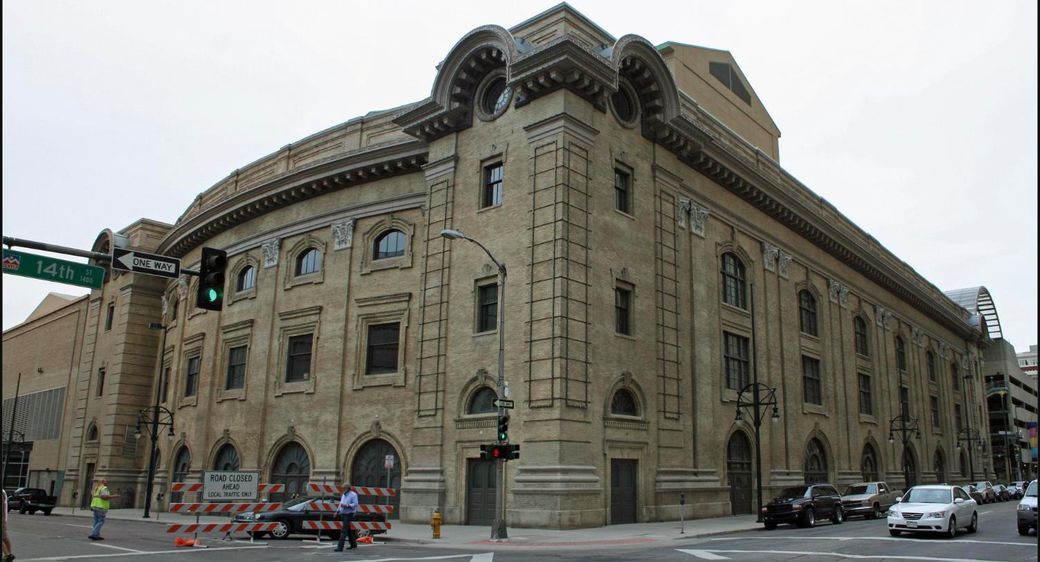
Opera Colorado, the Denver company founded in 1983 and the largest opera producer between Chicago and the West Coast, has signed the first collective bargaining agreement in its history — and, in the process, done something no American opera house has done in decades. Announced on 15 July and reached after roughly two and a half years of talks, the three-year contract with the American Guild of Musical Artists covers not just the principal singers but the chorus, the dancers, the staging crew and the artisans backstage, as OperaWire reports. It is, in other words, a single agreement for everyone who makes a production, from the tenor at the footlights to the carpenter who built them.
The significance is structural, not theatrical. American opera has spent a decade managing scarcity — shortened seasons, cancelled titles, companies going dark — and in lean years the reflex is to convert permanent staff into freelance line items, hired per show and released after the final curtain. A collective agreement runs the other way. It writes obligations down: who is paid, under what conditions, with what protections. Denver's vote, which followed a 2023 unionization drive, reverses that drift toward improvisation.
There is a warmer reading here, and it deserves to be taken seriously: a company that fixes its people in a contract is declaring them a permanent feature of its institutional life rather than a cost to be shed when the box office dips. But it is worth sitting with what two and a half years of resistance to writing that down actually represents. A chorus does not spend that long organizing and negotiating to be handed something an employer was eager to give; it does that to extract something an employer was reluctant to put in writing. The gap between those two stories — generosity offered versus stability won — is the gap the announcement itself doesn't measure.
There is an irony in the arrangement worth naming, since Taruskin himself pointed at a version of it: the "free" market artist, unshackled from any patron's leash, is largely a nineteenth-century story — one the era told about itself to justify selling tickets instead of drawing a salary from a prince's household. What Opera Colorado has just signed is, in structure, the older arrangement wearing modern paperwork: income decoupled from whether the house fills on a given Tuesday, guaranteed rather than earned show to show. That is not a knock on the contract — guaranteed income is exactly what a working chorus needs. It is a quiet admission that the pure market never actually paid for opera, in Denver or in Esterháza: some floor under the artist's income has always had to come from somewhere other than the box office, whether that somewhere was a prince's ledger or a ratified agreement. Denver didn't invent the floor. It only just got around to signing its name to one.
The open question — the one the announcement doesn't answer — is why it took two and a half years and a formal union vote to reach an arrangement this basic, and what else on the company's ledger was easier to fund than the people who make its stages run. Whether other regional houses follow will come down to whether they can afford the same honesty. But the direction Opera Colorado has chosen — toward written obligation, away from the handshake — is the direction organizations take when they mean to still be here in twenty years, whether they arrived at it willingly or not.
Two Recordings, One Opera: Pergolesi's L'Olimpiade
The Guardian

Giovanni Battista Pergolesi finished L'Olimpiade in 1735 and was dead within the year, at twenty-six, of causes his admirers have spent three centuries wishing had waited. That leaves every recording of the opera doing a job beyond the one printed on the libretto. Yes, it has to stage the plot — disguised athletes, mistaken lovers, a mix-up at the ancient Games that nobody watching would mistake for actual sport — but it also has to argue, on a dead man's behalf, for a career that never got the chance to prove itself. Two recordings are making that argument right now, from opposite ends of a stopwatch, and the ninety minutes between them is the entire fight.
Alessandro De Marchi's account is the one you'd hand a scholar: a patient four hours that lets the opera breathe at something like its original scale, recitative and all. Giulio Prandi's new recording with the Orchestra Ghislieri — taped live last year in Jesi, Pergolesi's hometown — takes a knife to that runtime and gets out in two and a half hours, and the critics who've sat through both agree on roughly what got cut and why. Reviewing De Marchi for BBC Music Magazine, Berta Joncus admired the drama but flagged its 'long stretches of secco recitative' — the sung-speech connective tissue between arias that, stretched too far, turns a baroque opera into a story told in instalments. Prandi's edit goes straight at that complaint and removes it.
What that buys is momentum, and the Guardian's Clive Paget hears it: he calls the conducting 'ideally pacy,' the orchestra 'sinewy and tightly sprung,' and rates Carlotta Colombo's Aristea and Theodora Raftis's boyish Megacle without a single reservation. What it costs is body — Paget himself concedes the set 'lacks the sonic depth' of De Marchi's studio sound, and the live source comes with stage noise and the odd burst of applause bleeding through the mix. Neither recording is wrong; they're answering different questions. De Marchi is the version for someone who already loves this opera and wants to live inside it. Prandi is the version that makes a stranger fall for it in the first place — and since most listeners meeting L'Olimpiade for the first time haven't earned De Marchi's patience yet, Prandi is the one to buy first. You can always go back for the other three centuries' worth of secco recitative once you're hooked.
Pizzicato
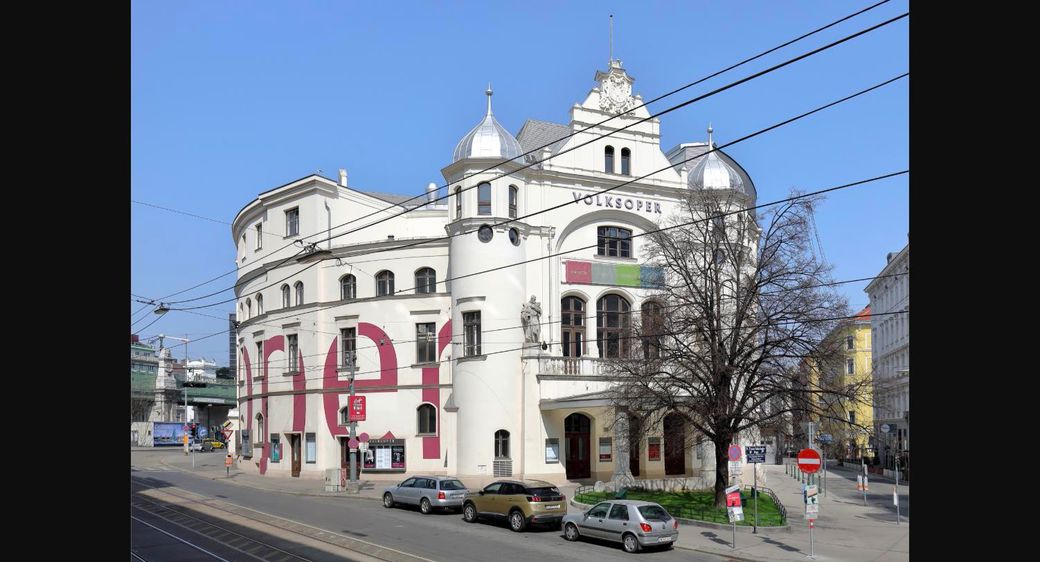
Trevor Haumschilt-Rocha's prize in France is a fine result for one baritone. It is also a small piece of evidence in a much older argument — about how an art form replaces itself — and that argument is why the win is worth more than a line in a results column.
Haumschilt-Rocha was trained inside the Volksoper Vienna's Opernstudio, the European house's oldest and least glamorous institution: the apprentice tier, where a young singer is bound to a working theatre for two or three seasons and learns the trade by doing it. Covering roles. Waiting in the wings. Absorbing an entire repertory in performance until technique stops being something you think about and becomes something you have. It is the operatic equivalent of the guild workshop, where a painter ground pigment for years before he was trusted near the master's canvas — slow, unglamorous, and unmatched at producing people who can actually do the work.
Which raises the uncomfortable question of why almost no American company still runs one.
Members get the rest of this essay — the American contrast, and the institutional lesson it points to. Unlock with membership → (stradispheremusic.com/blog-1/how-singers-are-made)
Newsbag
Read the full feature on Stradisphere
Trevor Haumschilt-Rocha's week resists a tidy summary. Cut before the final round of the Sumi Jo International Singing Competition in France, the young Mexican-American baritone was called back to sing only because the jury's president refused to let the voice go — and then won it outright, taking the €50,000 first prize. Slippedisc, reporting the result, filed him under the obvious word: 'rescued.'
The near-miss is the hook; the training is the substance. Haumschilt-Rocha spent 2024 to 2026 in the Volksoper Vienna's Opernstudio, made his Zurich Opera debut this past season, and next season joins the Troupe Lyrique of the Paris Opera — a baritone being built the slow way, in public, inside institutions that still believe singers are made rather than found.
We've written the full story — how he nearly went home, and what his path says about the way great voices are actually made — as the first feature on our new News page.
On This Day
On This Day: The Thames Becomes a Concert Hall, 1717
Britannica
On this day in 1717, the concert hall was a river. At about eight in the evening on 17 July, King George I stepped onto a royal barge at Whitehall and was carried up the Thames toward Chelsea on a rising tide; a second barge, provided by the City of London, held some fifty musicians playing music written for the occasion by a German newcomer to London named George Frideric Handel. So many Londoners rowed out to follow that, by one contemporary account, the whole river was in a manner covered with boats.
What drifted across the water was the Water Music — not one piece but a set of suites, dances strung together the way a good evening is: a stately French overture to open the proceedings, then the bright, skipping triple time of a hornpipe, a country dance dressed up for a king. Handel scored it to carry in open air, letting horns and trumpets call and answer over the current, brilliance engineered for a room with no walls.
The King liked it enough to demand it three times over, upstream and back, until he stepped ashore again near eleven. There is a lesson tucked inside the extravagance, and it is a cheerful one: three hundred years before anyone coined the phrase 'audience development,' an institution grasped that music meets its public best when it goes out to find them — even if that means loading the orchestra onto a boat.