Stradisphere — July 29, 2026
Edition #155 · Friday, July 31, 2026
Editor's Brief
Today’s edition opens with the new tonal and expressive possibilities emerging through transgender voices, examined in Tobias Picker’s opera for Lucia Lucas. We then turn to how the convergence of residual social-democratic funding and late-capitalist market logics is disrupting established financial models for the arts, as seen in Ruth Mackenzie’s appointment at Whitehall. Against that background we consider two approaches to legacy—the recovery of Carl Nielsen’s solo piano works and an AI trained on Bayreuth’s reception history—and how infrastructure itself continues to dictate the sound of musical life.
Analytical Piece
Santa Fe's 'Lili Elbe' keeps its transgender heroine's voice a baritone's.
OperaWire
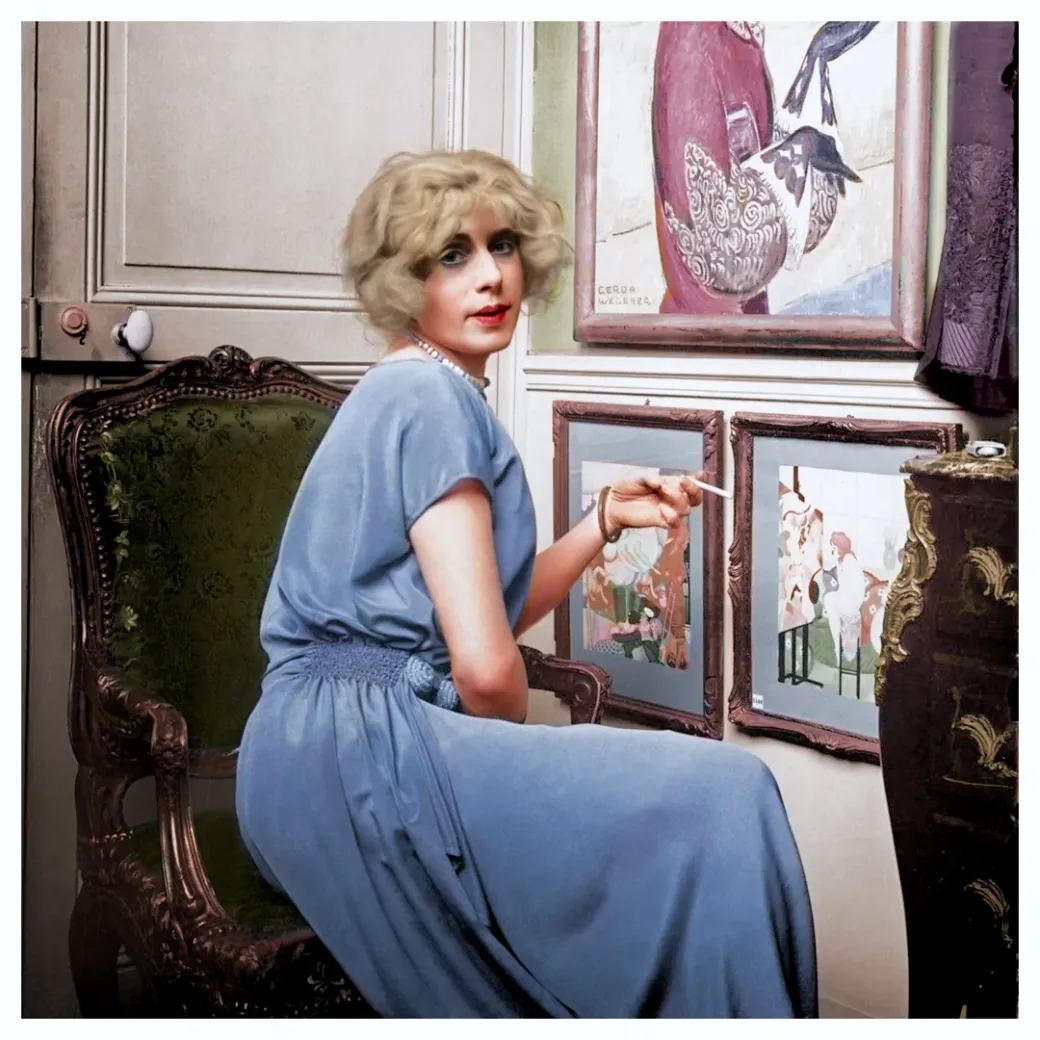
Lili Elbe was a Danish painter — born Einar Wegener in 1882, married to fellow artist Gerda Gottlieb since 1904 — who lived increasingly as a woman through the 1920s before traveling to Germany in 1930 for one of history's first sex-reassignment surgeries, overseen in part by Magnus Hirschfeld. She died in 1931, three months after a fourth operation, when her body rejected a transplanted uterus — rejection immunosuppressants might have prevented decades later. She never lived to see herself become a symbol.
Composer Tobias Picker had this voice in mind for years before he had the story. He'd known Lucia Lucas, a transgender baritone, since 2018, and by the time he cast her as Don Giovanni at Tulsa Opera in 2019, he already planned to write her an opera. Lili Elbe, with librettist Aryeh Lev Stollman, became that opera — drawn from Elbe's own memoir rather than the novel behind The Danish Girl, with Lucas embedded as dramaturg throughout. He wrote for a voice already familiar with traditional male roles — Mozart, Verdi, Wagner — and set himself a different problem: not which voice type to use, but how to make that same instrument carry something expressively apart from the authority figures and villains it usually voices. Lucas has said Picker's music tracks speech patterns closely enough that a shift in the vocal line signals meaning before the words do — that's the tool he reached for to mark Lili as distinct, not a change in Fach. Writing Lili as a baritone is writing honestly for the voice that exists — arguably a voice and character opera hasn't quite heard before, ripe with possibility.

This isn't the first time Lili Elbe's story has reached an audience. The Danish Girl, David Ebershoff's fictionalized 2000 novel, became a 2015 film starring a cisgender Eddie Redmayne as Lili — casting criticized at the time and later regretted by Redmayne himself, though director Tom Hooper defended the choice. Santa Fe Opera's staging lands in a city that leans liberal, one of the state's most reliably progressive pockets — but New Mexico isn't uniform. Conservative currents have repeatedly clashed with Santa Fe's state government over cultural ideologies.
This isn't the first time opera has blurred the line between gender and identity, either — the practice goes back to its very beginning. Cross-gender casting already has a name in opera: a trouser role, a woman playing a man, the way Cherubino and Octavian have been sung for two centuries. The countertenor makes a different kind of point: an adult man whose identity stays male while his voice lives in a register culturally coded female, produced through falsetto rather than any change to the vocal folds themselves — a real blend of male identity and a sound the ear reads as feminine. Hear it in Andreas Scholl singing "Va tacito e nascosto," a Handel showpiece built on wide leaps and rapid coloratura. Lucas's voice sits opposite both: not a woman's voice raised to play a man, not a man's voice reaching for a woman's range, but a documented woman's voice that remains low, cast as a woman without disguise. That configuration is opera's actual first — and because opera fuses text, acting, and voice into one instrument, composing around it meant finding music that lets the register carry that tension rather than smooth it away.
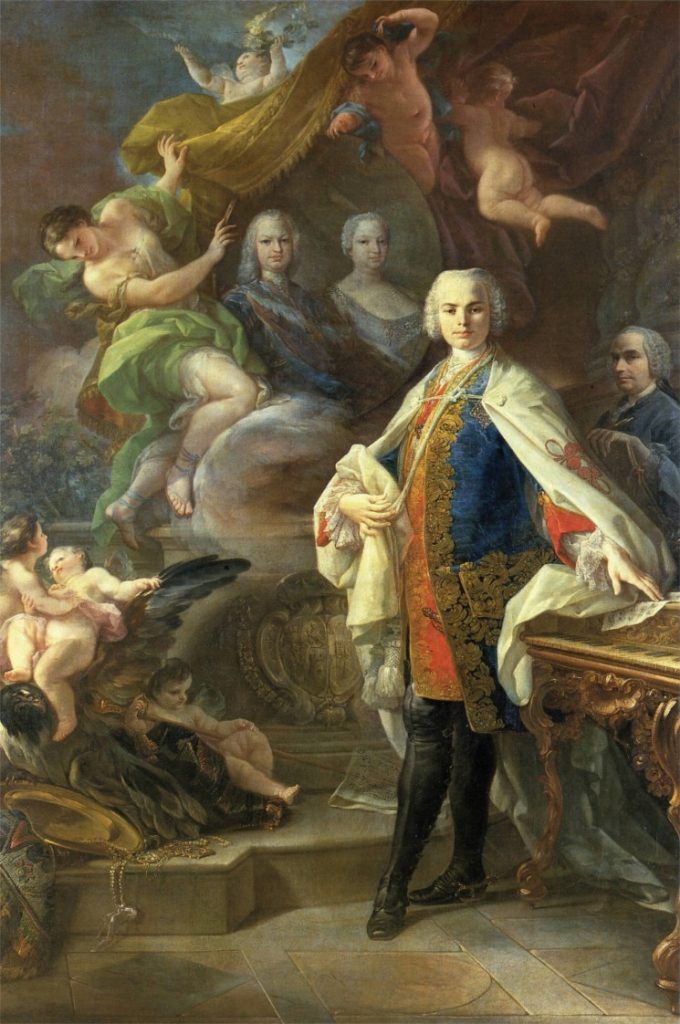
Vocal pitch itself comes down to the vocal folds — their length and mass. Testosterone acting on the larynx during puberty thickens and lengthens them and enlarges the cartilage around them. The castrati were a class of singers developed by the Catholic Church to provide female voices where biological females were not permitted to sing. As the name implies, this was done by castrating a boy before puberty, blocking the testosterone surge that would otherwise deepen the voice, so a child soprano's dazzling upper brilliance survived intact into an adult body — producing an almost impossible range, over three and a half octaves in singers like Farinelli, along with dazzling agility and colors no other voice can reach without physiological interpolation. By the early 1900s, ethical objections to operating on children who couldn't consent closed the door on castrati, and much of the training and repertoire built around that voice went with it. The castrati lived a version of alienation that closely resembles transgender people's struggle for acceptance within culture today: celebrated on stage, unwelcomed off it.
Medicine can now produce something like the same effect chemically instead of surgically: puberty blockers, started early enough, halt that same laryngeal growth in transgender girls before it starts, and the measured result is a voice already closer to the female range, no later correction needed. A generation of singers who transition early enough to skip the pitch drop altogether wouldn't just be trans sopranos — they'd be a voice type opera doesn't have yet. Composers like Picker are already at the forefront of that discovery, and in that sense, this opera marks a first: a scientific development in the human voice that opera hasn't confronted since the early Baroque.
It's genuinely inspiring and exciting to consider the horizon this opens: comparable voice types emerging through a demographic already active in arts communities, and what that could mean for the future of vocal pedagogy and training. A voice that carries a soprano's brightness into a chest built for a baritone's power could ask something genuinely new of composers, the way the castrato once did — new tessituras, new blends of color within a single line, textures nobody has had reason to write for before. It also arrives just as Western composers are increasingly drawn to tuning systems built for microtonal coloration rather than the fixed half-steps of equal temperament, an appetite for pitch that bends and blurs rather than snapping cleanly into place. A voice still finding its own contours under hormone therapy might suit that emerging language unusually well — less a novelty to accommodate than a genuine new instrument arriving right as music starts listening for one. That's a real creative frontier, which is exactly why it deserves an open conversation.
But excitement about what a voice could do isn't separate from how it comes to exist. Proponents argue the arts carry their own share of responsibility for the ethical questions behind a new sound, not just the medicine that makes it possible. The ethics aren't simple here either. Some argue the biological window closes long before a person can legally consent at eighteen; others counter that a child's inability to consent is exactly why such decisions should wait. It elucidates, in our own time, the constant strain between science, aesthetic achievement, and the politics and ethics that are never really separate from it.
Reaction has split. One reviewer, after an October 2025 Guggenheim preview, called it "electrifying" — like hearing a man sing soprano or countertenor. Others pushed back: that comparison still treats Lucas's voice as a novelty rather than a woman's voice on its own terms. A separate complaint, more craft than casting: Lili's lines sometimes carry less dramatically than the music around her.
Whether Picker wrote the score anticipating that split isn't on record. What is: he built the vocal writing around Lucas's actual voice from 2018 on, not as a retrofit. Lucas says she prepared this role exactly like any other — text, then text-and-rhythm, then pitches, twenty-five times each. What differed, by her account, wasn't technique. It was emotional: processing her own history alongside Lili's.
Nielsen’s solo piano works restored to the central repertoire
MusicWeb International

Carl Nielsen’s solo piano music has always sat in the shadow of his symphonies. The new complete collection on OUR Recordings, played by Danish pianist Rikke Sandberg, finally treats it as more than a side-line. Across three discs it gathers every original piece and Nielsen’s own arrangements, including material that has rarely, if ever, been recorded. The result is not once a recovery and a re-introduction.
Nielsen was born in 1865 into a large, poor family on the island of Funen—the same rural Denmark that produced Hans Christian Andersen a generation earlier. He began as a military bandsman, taught himself piano on a second-hand instrument, and only later reached the conservatory in Copenhagen. That outsider path never quite left his music. Even when he became Denmark’s national composer, his keyboard writing kept a rough, physical edge: less salon polish, more the feel of someone thinking with his hands.
The major works sit at the centre of his maturity. The Suite, Op. 45 (1919), written between the Fourth and Fifth Symphonies, is the largest and most ambitious. Nielsen once called it “Luciferian,” not for devilry but for the elemental clash of fire and water. Its six movements move through progressive tonality—keys that do not return home so much as fight their way toward a hard-won destination. Additive rhythms jostle with dense polyphony. The effect is neither late-Romantic nostalgia nor Impressionist haze; it is closer to a private argument conducted at full volume. The Chaconne and the Theme with Variations from the same years share that intensity: formal discipline pressed into the service of restless energy.
What makes the music still surprising is how deliberately it refuses the fashionable currents of its day. While much of Europe was dissolving into colour and atmosphere, Nielsen kept the lines clear and the counterpoint muscular. The piano becomes a place of inquiry rather than decoration. For listeners who come to classical music looking for something that feels alive rather than merely beautiful, these pieces offer a different kind of contact—urgent, sometimes abrasive, always driven by a sense of forward pressure.
Sandberg’s recording arrives with the authority of someone who has lived inside this repertoire since childhood, connected by an unbroken teaching line to the pianists for whom Nielsen originally wrote. The performances treat the music as a living language rather than a historical curiosity. In doing so they make a quiet case: that Nielsen’s keyboard output is not a minor appendix to the symphonies, but one of the places where his most personal thinking took place—between the rural world he came from and the modern century he helped define.
Sources
OUR Recordings – Nielsen: The Ultimate Solo Piano Collection
MusicWeb International review
Hyperion notes on the Suite Op. 45
Carl Nielsen biography and context
Ruth Mackenzie's appointment as Minister for the Arts returns institutional memory to Whitehall
ResMusica

Ruth Mackenzie arrives at the Department for Culture as someone who has already lived the argument.
Britain still runs culture on residual public money held at arm’s length—a late echo of the imperial habit of building institutions meant to outlast governments. America organised itself around a different ideal. Liberty and markets, not public continuity, set the terms. After the inflation crisis of the 1970s the Volcker shock ended the Keynesian cushion and shifted the burden of financial survival firmly onto the practitioners themselves. Artists have succeeded under both systems. One logic still tries to protect the long conditions in which talent can develop. The other tests everything against revenue and attention.
As socialism and capitalism continue to adapt, the ground under arts financing shifts with them. In a globalised sector—where companies tour, co-produce and compete across borders—that instability makes long-term support harder to sustain. Public systems can shelter mediocrity. Market systems can discard the work that does not sell or scale quickly enough. Neither reliably protects the slow conditions in which real talent matures.
Mackenzie has worked both sides. She ran regional houses and national companies inside the British grant system. She also directed the London 2012 Cultural Olympiad, the Holland Festival, the Théâtre du Châtelet and the Adelaide Festival—projects that live by visibility, ambition and returns. She knows how public money can keep serious work alive, and how it can also keep the ordinary comfortable. She knows how the festival model can generate energy, and how it can discard anything that fails to perform on schedule.
Her appointment under Andy Burnham places a practitioner who has already negotiated the fault line inside government. The question is whether that experience will be used to stabilise the conditions in which talent still grows, whether any such stabilisation can be replicated across both systems, or whether the drift toward the more mobile, entertainment-driven model simply continues. In this way Mackenzie becomes a profile of either hope or concern, depending on who you ask.
What she brings is practical knowledge of both logics operating under pressure. What remains open is which one she is prepared to discipline.
Sources
Ruth Mackenzie Wikipedia
Mackenzie named arts minister – Arts Professional
Volcker and the end of the old consensus
UK vs US arts funding models
Fredric Jameson, Postmodernism, or the Cultural Logic of Late Capitalism
2022 Arts Council funding shifts – The Art Newspaper
Bayreuth's Rheingold trains an AI on 150 years of its own reception history
nachtkritik.de

Bayreuth’s new Rheingold, conducted by Christian Thielemann and conceived by Marcus Lobbes and Nils Corte under the project name RING 10010110, tests whether an interpretive tradition can be carried by a trained system rather than by the usual succession of directors and designers. The AI was trained not only on the score but on a century and a half of the Ring’s reception—criticism, program notes, and the political and social history that has gathered around the cycle since 1876. Singers and orchestra performed with trackers feeding the system; the system then ran offline for each performance, generating the visual world through which Michael Volle’s Wotan, Klaus Florian Vogt’s Loge and Jochen Schmeckenbecher’s Alberich moved. The vocal and orchestral performance carried conventional weight. The generated imagery drew mixed responses, including comparisons to consumer display technology and some opening-night boos. The more interesting question is what kind of experiment this actually is.
Wagner built the Festspielhaus—the darkened house, the sunken pit, the continuous sightlines—to dissolve the distance between music and stage and immerse the spectator completely inside the drama. He called the ambition Gesamtkunstwerk, the total artwork. Nietzsche, writing in the early pages of The Birth of Tragedy under Wagner’s direct influence, treated that fusion as a possible rebirth of tragic culture. In the same work he observed that in the dream world every human being is already a consummate artist. The claim is less metaphorical than it first appears. Dreaming remains the one domain in which most people spontaneously generate coherent visual worlds, narrative pressure, and emotional logic without instruction. What Wagner sought in the darkened theatre, and what Nietzsche recognised in the dream, is a state in which the boundary between observer and artwork softens.
That ambition did not remain inside the opera house. Hollywood’s classical scoring tradition, shaped substantially by Vienna-trained composers such as Erich Korngold, carried Wagner’s leitmotif technique into film and gave the total artwork its most commercially successful afterlife. For decades the cinematic soundtrack remained recognisably Wagnerian in method and scale. Only gradually, across nearly a century, did film music begin to develop languages less dependent on that inheritance. The evolution has continued. Video-game engines and the emerging generation of headset and mixed-reality systems treat the participant as someone who moves through a world rather than watches one. AI companions and generative environments push the same logic further: the artwork is no longer a fixed object presented to a seated audience but a responsive space that adjusts to presence and choice.
The word digital itself reaches back further than the computer. From Latin digitus—finger—it originally named the discrete units by which the hand counts and measures. For the Greeks and Romans the digital was a bodily interface, the first technology that turns continuous experience into transferable form. In that older sense, digital systems are already a method of translation between mind, body and world. Contemporary immersive platforms extend the same principle. They do not merely display; they invite occupation.
RING 10010110 remains, for the moment, an experiment still addressed to an audience seated in the dark. Its imagery is generated for looking rather than for inhabiting. Yet the project is less anomalous than it first appears. It sits inside a long migration of the Gesamtkunstwerk from the proscenium toward forms that treat the spectator as a participant. One can argue that an archive of reception can describe what previous stagings looked like and argued, but cannot yet convert that description into the felt provocation a living director produces by instinct. One can equally argue that the experiment has simply located the next necessary question: whether a system trained on an interpretive tradition can generate not only something to watch, but something a person can move through. That question may ultimately belong less to the Festspielhaus than to the immersive digital environments now taking shape around it.
We are still in the early stages of that shift. Bayreuth has placed the old ambition of total immersion in front of a new set of tools. The result is neither a finished success nor a simple failure. It is a working demonstration of how far the total artwork has already travelled—and how much further the journey still has to go.
Berlin’s Digital Concert Hall adopts immersive audio as standard
Pizzicato
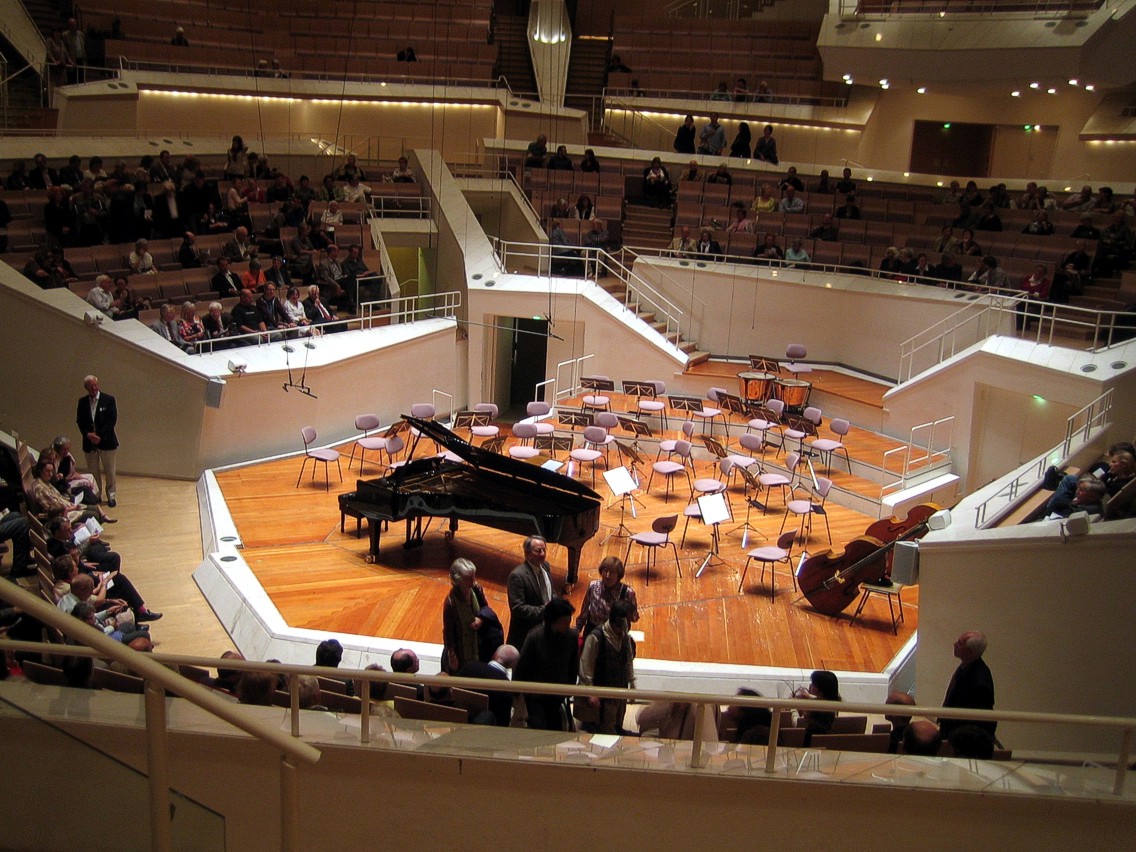
Beginning in the 2026/27 season, the Berliner Philharmoniker will broadcast all live performances in Dolby Atmos, moving the digital proxy closer to the specific acoustic profile of Hans Scharoun’s Philharmonie. This shift from stereo to immersive audio reflects a desire to replicate the spatial distribution of sound in a vineyard-style hall where the physical materials—specifically the tiered concrete balconies and wooden reflectors—dictate the orchestral presence. In a traditional shoebox hall, the sound reaches the listener as a unified longitudinal wave; in the Philharmonie, the Surround-Klang is multidirectional by design. 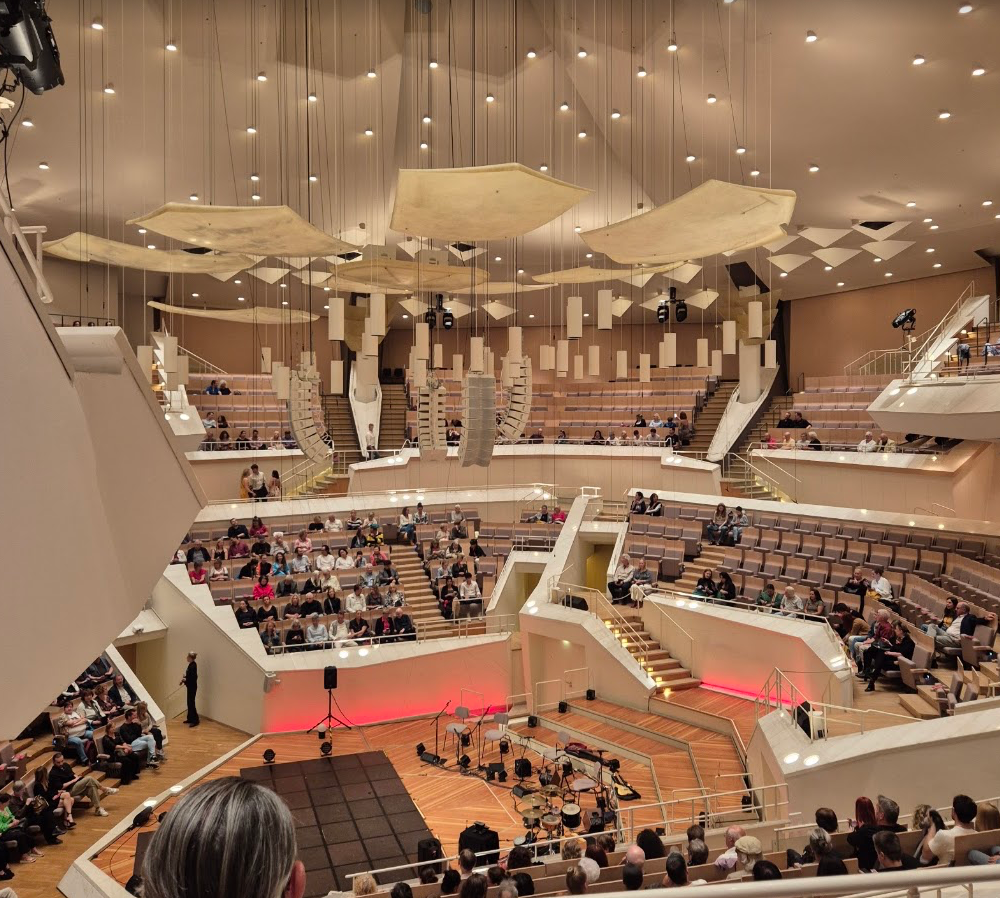 By adopting this standard, the institution seeks to mitigate the artificial flattening of the traditional mixing board. The transition marks the latest evolution in a recording culture that began under Karajan, where the technology is not merely a documentation tool but an extension of the ensemble’s aesthetic identity. The true test of the Atmos format will be its ability to handle the dense contrapuntal textures of the Bruckner symphonies without losing the transparency intended by the hall’s original architecture.
Baritone Angelo Romero, star of 600 Barbiere performances, dies at 86
The Violin Channel
Angelo Romero, the Italian baritone who built his career on a single role sung more than 600 times over five decades, died this week at 86. Born in Cagliari, Sardinia, he made his professional debut in 1966 as Orfeo in Monteverdi's opera, an unusually severe entry point for a singer who would go on to become one of the most performed comic baritones of his generation.
Romero's reputation rested chiefly on Figaro, the barber of Rossini's Il barbiere di Siviglia, a part whose vocal athleticism and comic timing he refined across more than 600 performances -- a repetition that in most singers would flatten a role into routine, but which colleagues described instead as a kind of accumulated authority, the part becoming more precisely his with each outing rather than less. His broader repertoire ran past 150 operas, and his stage career crossed briefly into film: he appeared as Alfio in The Godfather Part III, playing a version of the same Sicilian world his voice had spent decades inhabiting on the opera stage.
He spent his later years teaching at the Quartu Music Academy near his native Cagliari, passing on the specific comic-vocal technique that had defined his own performances to a new generation of singers. In 2017 the Municipality of Capoterra recognized him with a lifetime achievement award, a local honor for a career that had, by then, long since become international.
On This Day
On This Day: Robert Schumann

Robert Schumann died on July 29, 1856, in an asylum near Bonn — but the more illuminating story is how he arrived there, and what he left behind.
Born in the Saxon town of Zwickau in 1810, the son of a bookseller, Robert Schumann set out to become the greatest piano virtuoso Europe had ever seen. He failed. In his early twenties he built himself a mechanical device meant to strengthen a weak finger on his right hand — a weight-and-pulley contraption rigged from the ceiling that held the finger back while he drilled the others. It worked in precisely the wrong direction: the device damaged the tendons, and within a couple of years he had lost real control of two fingers. His performing career ended before it began. What followed was a full turn toward composition and criticism — the only reason any of what comes next happened at all.
As a critic, he possessed an unusual gift for recognizing genius before the public had caught up to it. He championed Chopin in print before most of Europe had heard of him ("Hats off, gentlemen — a genius!" he wrote of one early set of variations), and advanced the causes of Berlioz, Liszt, and Wagner through the journal he founded, the Neue Zeitschrift für Musik. His final major piece of criticism, written in 1853, introduced the world to a twenty-year-old unknown named Johannes Brahms, proclaiming him the composer who would "give ideal expression to the times" — a claim that read as absurd on the page and proved, in time, exactly right. Brahms grew close with the entire Schumann household, including Robert's wife Clara, herself among the era's great virtuoso pianists and a composer of real standing, whom Robert had fought her own father in court to marry.
His vocal music is where he is at his most haunting, and it arrived in a sudden flood: in 1840, the year he finally married Clara after years of legal battle, he composed roughly 140 songs in twelve months, a stretch musicologists simply call his "year of song." His songs are dense with musical-literary devices — text-painting that mirrors a word's meaning in the vocal line, a piano part that keeps commenting after the singer has gone quiet, and a harmonic language that unsettles exactly when the poem itself won't settle. The opening song of Dichterliebe, "Im wunderschönen Monat Mai," is the clearest case of that last one: Heine's poem describes falling in love amid the world's first blush of spring, then reveals in its final line that this was really the moment longing first took hold, not a settled happiness — and Schumann's music simply never comes to rest, mirroring a love that never really arrived anywhere either. Hear Fischer-Dieskau's classic 1957 recording of it here.
His orchestration has a fair reputation for muddiness — Mahler felt compelled to reorchestrate the Fourth Symphony decades later. But the structural thinking underneath it reflects his intense focus on the formal possibilities Beethoven had introduced: he waited until thirty to attempt a First Symphony, wary of the shadow Beethoven cast over the form. When he finally did, in 1841, it came out almost all at once — sketched in just four days. Its themes recur and transform across all four movements, a cyclical unity built directly into the architecture, the same structural ambition he'd absorbed from studying how Beethoven built an entire symphony out of a single motif.
None of it lasted. By the early 1850s his mental health was collapsing — he began hearing sustained tones and voices dictating melodies to him, and in February 1854 he walked onto a bridge in Düsseldorf and threw himself into the Rhine. Fishermen pulled him out alive. He asked to be committed himself, spent his final two years in an asylum near Bonn, and died there on July 29, 1856, at forty-six. It is why Schumann, more than any other composer, became the simulacrum of Romanticism's own mythology: the genius undone by the very mind that made the music possible in the first place.
Also Worth Noting
The Wire
Trending
Was Vivaldi Forgotten Until the 20th Century? The Rediscovery of a Giant — Serenade Magazine
Sony Music Entertainment Files Fresh Lawsuit Against AI Music Company Udio — The Violin Channel