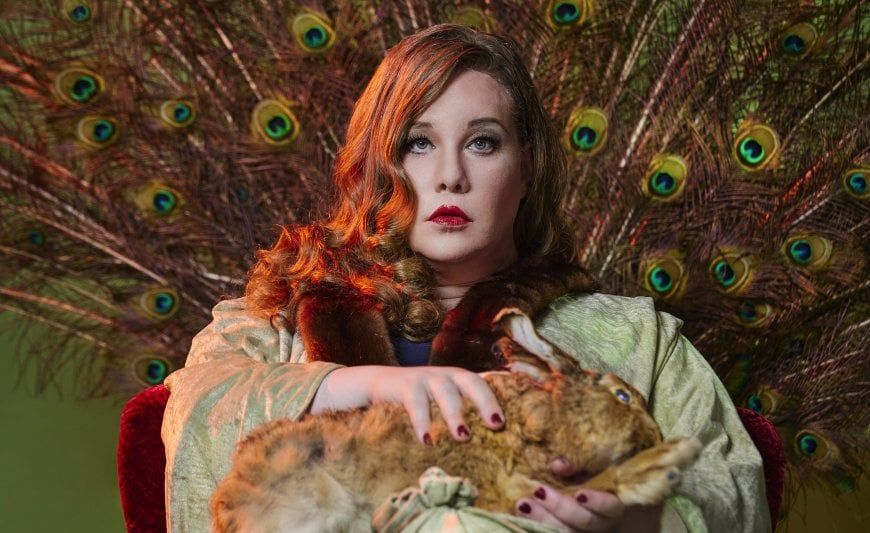
Santa Fe's 'Lili Elbe' keeps its transgender heroine's voice a baritone's.
OperaWire

Lili Elbe was a Danish painter — born Einar Wegener in 1882, married to fellow artist Gerda Gottlieb since 1904 — who lived increasingly as a woman through the 1920s before traveling to Germany in 1930 for one of history's first sex-reassignment surgeries, overseen in part by Magnus Hirschfeld. She died in 1931, three months after a fourth operation, when her body rejected a transplanted uterus — rejection immunosuppressants might have prevented decades later. She never lived to see herself become a symbol.
Composer Tobias Picker had this voice in mind for years before he had the story. He'd known Lucia Lucas, a transgender baritone, since 2018, and by the time he cast her as Don Giovanni at Tulsa Opera in 2019, he already planned to write her an opera. Lili Elbe, with librettist Aryeh Lev Stollman, became that opera — drawn from Elbe's own memoir rather than the novel behind The Danish Girl, with Lucas embedded as dramaturg throughout. He wrote for a voice already familiar with traditional male roles — Mozart, Verdi, Wagner — and set himself a different problem: not which voice type to use, but how to make that same instrument carry something expressively apart from the authority figures and villains it usually voices. Lucas has said Picker's music tracks speech patterns closely enough that a shift in the vocal line signals meaning before the words do — that's the tool he reached for to mark Lili as distinct, not a change in Fach. Writing Lili as a baritone is writing honestly for the voice that exists — arguably a voice and character opera hasn't quite heard before, ripe with possibility.
This isn't the first time Lili Elbe's story has reached an audience. The Danish Girl, David Ebershoff's fictionalized 2000 novel, became a 2015 film starring a cisgender Eddie Redmayne as Lili — casting criticized at the time and later regretted by Redmayne himself, though director Tom Hooper defended the choice. Santa Fe Opera's staging lands in a city that leans liberal, one of the state's most reliably progressive pockets — but New Mexico isn't uniform. Conservative currents have repeatedly clashed with Santa Fe's state government over cultural ideologies.
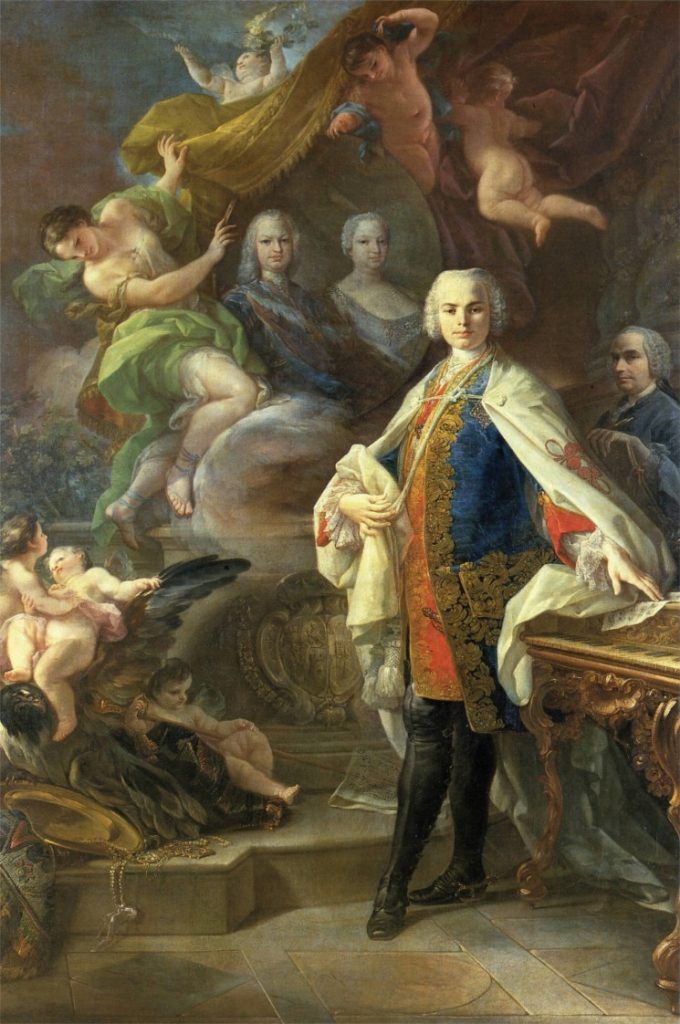
This isn't the first time opera has blurred the line between gender and identity, either — the practice goes back to its very beginning. Cross-gender casting already has a name in opera: a trouser role, a woman playing a man, the way Cherubino and Octavian have been sung for two centuries. The countertenor makes a different kind of point: an adult man whose identity stays male while his voice lives in a register culturally coded female, produced through falsetto rather than any change to the vocal folds themselves — a real blend of male identity and a sound the ear reads as feminine. Hear it in Andreas Scholl singing "Va tacito e nascosto," a Handel showpiece built on wide leaps and rapid coloratura. Lucas's voice sits opposite both: not a woman's voice raised to play a man, not a man's voice reaching for a woman's range, but a documented woman's voice that remains low, cast as a woman without disguise. That configuration is opera's actual first — and because opera fuses text, acting, and voice into one instrument, composing around it meant finding music that lets the register carry that tension rather than smooth it away.
Vocal pitch itself comes down to the vocal folds — their length and mass. Testosterone acting on the larynx during puberty thickens and lengthens them and enlarges the cartilage around them. The castrati were a class of singers developed by the Catholic Church to provide female voices where biological females were not permitted to sing. As the name implies, this was done by castrating a boy before puberty, blocking the testosterone surge that would otherwise deepen the voice, so a child soprano's dazzling upper brilliance survived intact into an adult body — producing an almost impossible range, over three and a half octaves in singers like Farinelli, along with dazzling agility and colors no other voice can reach without physiological interpolation. By the early 1900s, ethical objections to operating on children who couldn't consent closed the door on castrati, and much of the training and repertoire built around that voice went with it. The castrati lived a version of alienation that closely resembles transgender people's struggle for acceptance within culture today: celebrated on stage, unwelcomed off it.
Medicine can now produce something like the same effect chemically instead of surgically: puberty blockers, started early enough, halt that same laryngeal growth in transgender girls before it starts, and the measured result is a voice already closer to the female range, no later correction needed. A generation of singers who transition early enough to skip the pitch drop altogether wouldn't just be trans sopranos — they'd be a voice type opera doesn't have yet. Composers like Picker are already at the forefront of that discovery, and in that sense, this opera marks a first: a scientific development in the human voice that opera hasn't confronted since the early Baroque.
It's genuinely inspiring and exciting to consider the horizon this opens: comparable voice types emerging through a demographic already active in arts communities, and what that could mean for the future of vocal pedagogy and training. A voice that carries a soprano's brightness into a chest built for a baritone's power could ask something genuinely new of composers, the way the castrato once did — new tessituras, new blends of color within a single line, textures nobody has had reason to write for before. It also arrives just as Western composers are increasingly drawn to tuning systems built for microtonal coloration rather than the fixed half-steps of equal temperament, an appetite for pitch that bends and blurs rather than snapping cleanly into place. A voice still finding its own contours under hormone therapy might suit that emerging language unusually well — less a novelty to accommodate than a genuine new instrument arriving right as music starts listening for one. That's a real creative frontier, which is exactly why it deserves an open conversation.
But excitement about what a voice could do isn't separate from how it comes to exist. Proponents argue the arts carry their own share of responsibility for the ethical questions behind a new sound, not just the medicine that makes it possible. The ethics aren't simple here either. Some argue the biological window closes long before a person can legally consent at eighteen; others counter that a child's inability to consent is exactly why such decisions should wait. It elucidates, in our own time, the constant strain between science, aesthetic achievement, and the politics and ethics that are never really separate from it.
Reaction has split. One reviewer, after an October 2025 Guggenheim preview, called it "electrifying" — like hearing a man sing soprano or countertenor. Others pushed back: that comparison still treats Lucas's voice as a novelty rather than a woman's voice on its own terms. A separate complaint, more craft than casting: Lili's lines sometimes carry less dramatically than the music around her.
Whether Picker wrote the score anticipating that split isn't on record. What is: he built the vocal writing around Lucas's actual voice from 2018 on, not as a retrofit. Lucas says she prepared this role exactly like any other — text, then text-and-rhythm, then pitches, twenty-five times each. What differed, by her account, wasn't technique. It was emotional: processing her own history alongside Lili's.