Bavarian Radio Symphony Orchestra Fills Principal Cello Chair
The Strad
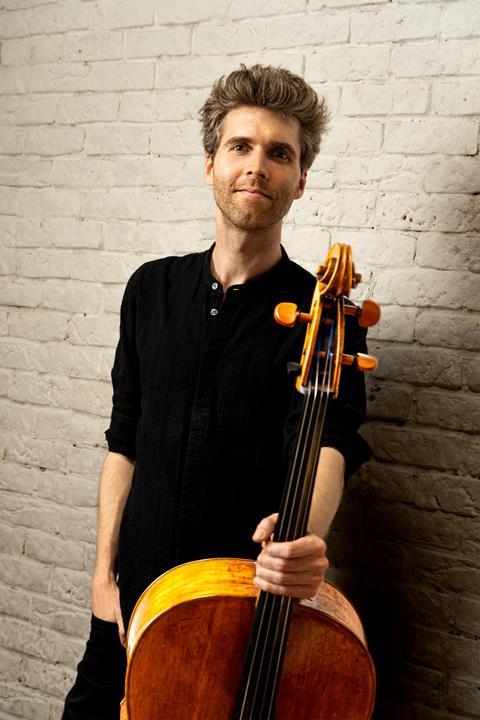
The Bavarian Radio Symphony Orchestra has appointed Philip Graham as its new first principal cellist. British-German, formerly a guest solo cellist with both the BRSO and the Munich Philharmonic, and a member of the Notos Piano Quartet from 2015 to 2024 — a chamber ensemble that won six international first prizes and released three albums on Sony Classical — Graham arrives with a profile that is as much chamber musician as orchestral player. That combination is not incidental to the appointment.
The principal cello chair is the low-string section's acoustic anchor — the voice that establishes the foundation against which the upper strings articulate, and the primary determinant of what musicians call ensemble blend: the point at which individual instruments surrender their distinct edge to a collective sound. In a large symphony orchestra the principal cellist's decisions about tone production, bow pressure, and vibrato depth propagate through the section and shape the orchestra's overall timbre from the bottom up. The appointment is, in that sense, always an aesthetic statement as much as a personnel decision.
Under Mariss Jansons, who led the BRSO from 2003 until his death in 2019, the orchestra developed a sound of considerable weight and density — the accumulated product of a conductor whose interpretive instincts ran toward orchestral mass and long-breathed architectural momentum. Rattle's aesthetic is differently calibrated. His Berlin Philharmonic tenure demonstrated a consistent preference for textural transparency, rhythmic clarity, and the kind of chamber-like responsiveness that requires every section to listen laterally as much as vertically. The BRSO's musica viva commitment to contemporary repertoire — founded by Karl Amadeus Hartmann in 1945 and maintained as a structural priority through every chief conductorship since — demands exactly that flexibility. New music requires orchestras that can shift weight and colour quickly, without the inertial resistance that comes from a section trained primarily for the monumental.
Graham's decade in chamber music is the qualification that matters most in that context. A principal cellist who has spent nine years negotiating the micro-adjustments of quartet playing — where blend is everything and individual projection is always contingent on collective listening — brings a different kind of sectional intelligence than one formed exclusively in the orchestral pipeline. Whether that intelligence translates into the specific sound Rattle is building at the BRSO is what the next several seasons will demonstrate.