Stradisphere — May 8, 2026
Edition #52 · Friday, May 8, 2026
Editor's Brief
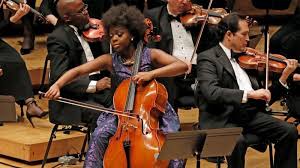
The Chicago Sinfonietta announced this week a "Strategic Renewal Period" — suspending all concerts and educational activities after this weekend's season-closing programme. The organisation, founded in 1987 by conductor Paul Freeman as a deliberate structural intervention in the demographics of the American concert hall, carries an annual operating budget of approximately $2.5 million. Its IRS 990 filings show a surplus of $1.3 million in FY21-22, followed by cumulative deficits approaching $2 million over the three years since.
Freeman built the Sinfonietta on a premise that was, at the time, structurally radical: that who stands on the podium, who sits in the pit, and who occupies the seats are consequences of institutional policy rather than accidents of culture. Freeman knew this from the inside — he was among the first Black conductors to hold a principal position with a major American orchestra, and he understood that the orchestral pipeline, from conservatoire training through audition culture, systematically produced rosters that were overwhelmingly white and predominantly male. The Sinfonietta launched with a majority-minority roster not as a quota exercise but as a demonstration that the talent existed and the pipeline was the problem. He programmed Coleridge-Taylor, Ulysses Kay, and Adolphus Hailstork alongside the standard canon — not as gesture but as the structural argument that the canon itself reflected curatorial choices rather than musical hierarchy. The Sinfonietta played venues and neighbourhoods the CSO did not. For three decades that argument was embodied in musical decisions rather than administrative language, and it gave the organisation a distinctiveness that translated into financial stability.
The tension that Freeman's model always carried — and never fully resolved — is the one the sector refuses to name directly. An orchestra built on the argument that merit had been structurally suppressed must, at some point, answer the question of whether its appointments reflect recovered merit or corrected demographics. These are not the same thing, and conflating them is precisely the institutional habit Freeman's founding argument was designed to expose. When the Sinfonietta programmed Hailstork alongside Beethoven, the implicit claim was that Hailstork belonged there on musical grounds — that the absence was the system's failure, not the composer's. Whether that rigour was maintained across every appointment decision, on the podium and in the pit, as the organisation matured and the political pressure to demonstrate equity intensified, is the question the 990 filings cannot answer but the deficit trajectory invites.
The press release cites a need to "stabilise and grow finances" and ensure the organisation remains "strategically aligned to sustain its mission to advance equity in classical music." What the filing record raises, without answering, is a prior question: in a post-2020 landscape where virtually every major American cultural institution adopted equity and inclusion as its declared mission, what remains of the founding argument's distinctiveness — and whether that shift in the broader environment bears any relationship to the deficit trajectory, is a conversation the sector has not yet had honestly.
Analytical Piece
The Critic as Institutional Ombudsman: The Legacy of Manuela Hoelterhoff
NYT Music
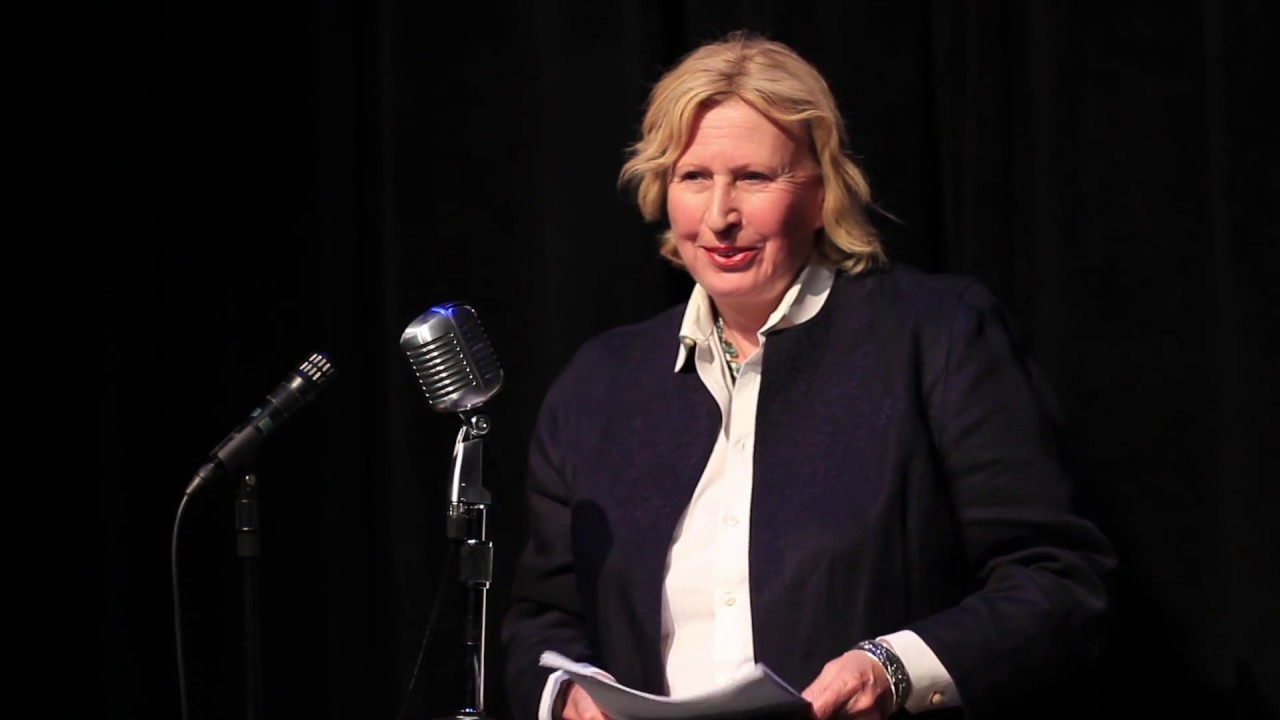
Manuela Hoelterhoff, who died on May 6th aged 77, was the last American critic to treat the opera house as an industry rather than a museum space. Her 1983 Pulitzer at the Wall Street Journal established the premise her entire career would test: that an art form serious enough to demand serious money deserves scrutiny at least as rigorous as the market that funds it. Cinderella & Company, her 1998 portrait of Cecilia Bartoli, documents the exact hinge between the mid-century celebrity system and the corporate apparatus that replaced it — remembered for its wit, its real argument is historical.
When Michael Bloomberg — the financier and former New York mayor whose name is synonymous with financial intelligence — needed someone to explain to finance people where their cultural philanthropy should go, he hired Hoelterhoff. Muse, the arts section she built at Bloomberg News, was not journalism adjacent to money — it was journalism aimed directly at the people who write the cheques. Whether that made her the most strategically intelligent cultural journalist of her generation, or an instrument of the very financialisation she'd spent decades diagnosing, is a question worth sitting with.
She died mid-manuscript on We Called It Hitler Weather, a study of Hitler's relationship to opera. A Hamburg-born woman who spent forty years holding American opera accountable to standards inherited from the German tradition — Wagner's Gesamtkunstwerk (the idea of opera as a unified total artwork) included — and who died writing about the man who turned that tradition into political theatre. Whether the Hitler book is the logical conclusion of everything she argued, or its catastrophic complication, she didn't live to tell us. American opera criticism has no successor to her diagnostic mode. That may be a structural problem — the serious arts desk, the editorially independent cultural section, systematically dismantled. Or a market verdict: that audiences, given the choice, prefer the promotional blurb. The difference matters.
The Sound of the Swarm and the Limits of Granular Synthesis
VAN Magazine
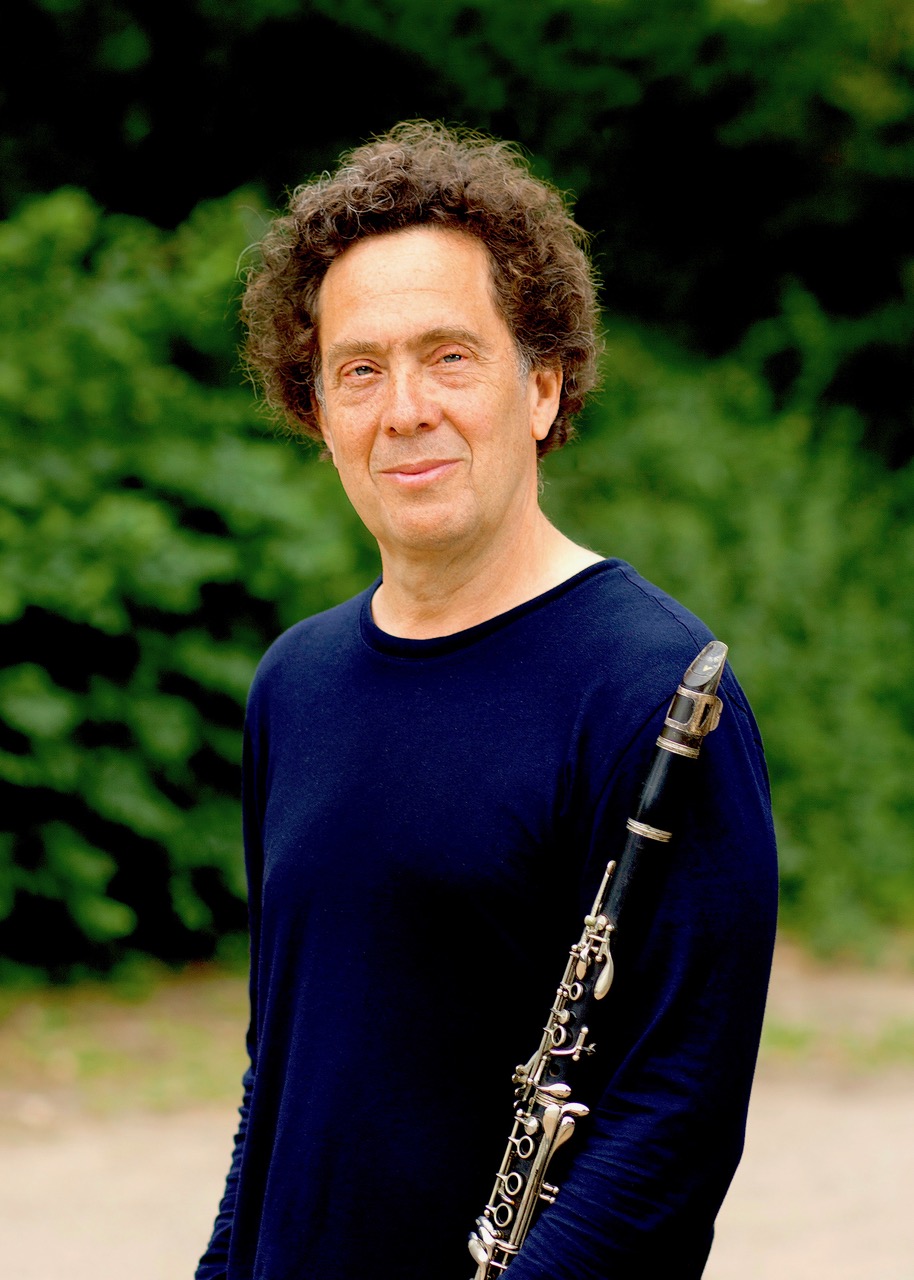
A VAN Magazine essay published this week revisits David Rothenberg's Bug Music — his investigation into the proposition that human rhythm did not originate in the composer's imagination but in the insect chorus that surrounded our species across millions of years of evolution. The argument is more unsettling than it first appears.
Rothenberg's central claim is precise: that rhythm, synchronisation, and dance in human music derive not from individual creative intelligence but from immersion in insect soundscapes so ancient and ubiquitous that we stopped hearing them. The 17-year cicada cycle — the slowest synchronised beat in the animal world, a pulse so extended it marks the phases of a human life — is his primary exhibit. When the Magicicada broods emerge in the northeastern United States, millions of individuals produce a collective drone of such mathematical precision that those who witness it compare the experience to a solar eclipse. No conductor. No score. No composer.
Iannis Xenakis understood this before Rothenberg named it. The Greek-French architect-composer who invented stochastic music — composition governed by mathematical probability rather than melodic intention — identified the cicada chorus explicitly as one of the two natural phenomena that gave him his conceptual model. Thousands of isolated sounds coalescing into a mass event with its own shape and internal architecture: that is Pithoprakta (1956). The insects were there first. Xenakis simply formalised the mathematics.
The same logic runs through the Balinese kecak chant, through Pygmy polyphony in the African rainforest, through tribal percussion traditions that Western musicology has consistently filed under "primitive" — meaning prior to the melodic line, prior to the individual voice organising sound from above. Rothenberg's provocation is that "prior" and "primitive" are not synonyms. The swarm is not a failed orchestra. It is the older model.
Western music theory constructed its entire architecture around the sustained individual melodic line — the singular voice, the composer as organising intelligence, the concert hall as the space in which that intelligence is received and judged. Granular synthesis, the electronic music technique developed by Curtis Roads and others from the 1970s onwards, arrived at insect logic through mathematics: sound broken into micro-pulses, continuity an illusion produced at sufficient distance. The technology reverse-engineered what the cicada chorus had always demonstrated. The conservatoire never noticed.
What the swarm offers as a compositional model — collective intelligence, horizontal synchronisation, rhythm emerging from biological constraint rather than notated intention — remains structurally alien to how Western institutions teach music. That the kecak and the katydid and Pithoprakta are pointing at the same thing is not, in Rothenberg's account, a curiosity. It is a diagnosis.
The invitation extends further. Every sustained tone is itself a composite event — a fundamental frequency accompanied by a cascade of overtones whose specific ratios determine what musicians call timbre: the colour that distinguishes a cello from an oboe on the same pitch. The single note, examined closely enough, is a swarm. Gérard Grisey and Tristan Murail — the founders of the spectralist movement — discovered exactly this when they placed a trombone tone under laboratory analysis in 1970s Paris and built an entire compositional language — musique spectrale — from what they found inside it.
Newsbag
Gabriela Lena Frank Wins Pulitzer Prize for Picaflor
Pizzicato
Gabriela Lena Frank won the 2026 Pulitzer Prize for Music this week for Picaflor: A Future Myth, a ten-movement orchestral work premiered by the Philadelphia Orchestra under Marin Alsop in March 2025. The Pulitzer jury cited a work rooted in Andean cosmology — the picaflor, or hummingbird, as a creation origin story — reimagined in a futuristic setting, following a small bird through cataclysm toward an uncertain but hopeful horizon.
Frank is of mixed Peruvian, Chinese, Jewish, and American heritage. She has described Picaflor as asking what it means to be a "real American, especially in the era of Trump and MAGA." The Pulitzer jury apparently had an answer.
The work itself resists the obvious reading. Frank's compositional language is not decorative multiculturalism — Andean melody as atmospheric colour over a Western harmonic frame. The interculturality operating in her scores functions at the level of structure: Andean rhythmic cells embedded within the symphonic architecture, asymmetrical meters held in productive tension rather than resolved into Western metric regularity, tonal, atonal, and polytonal languages operating simultaneously. Alberto Ginastera rebuilt the structural logic of his music from the inside using Argentine folk material. Frank works in that same tradition — the intercultural composer as structural thinker, treating cultural memory as technical resource rather than demographic credential.
The jury's confidence that Frank has achieved genuine synthesis rather than sophisticated assimilation deserves scrutiny. The project of embedding indigenous material within the Western symphonic apparatus has been a perennial ambition of progressive composition since at least the 1970s — Messiaen mapping Indian rhythmic modes onto the French organ tradition, Reich absorbing Ghanaian drumming and Balinese gamelan into minimalist structure, Tan Dun weaving Chinese folk material through the concert hall's acoustic expectations. Each claimed structural integration. Each was accused, with varying degrees of justice, of placing indigenous material inside a frame that Western institutions had already decided was the only one that counted. The Andean rhythmic cell inside the Philadelphia Orchestra remains, whatever Frank's intentions, an Andean rhythmic cell inside the Philadelphia Orchestra. Whether that represents liberation or absorption — whether Picaflor has genuinely found an ethical compositional method that its predecessors could not, or whether it has simply made the assimilation more elegant.
Whether her instincts impress any pragmatic ideology is another matter. The political forces she named as her implicit antagonists have staked their own claim on the same territory. Trump's reorientation of the Kennedy Center was framed explicitly as a restoration — a correction of an institution that had drifted toward pop programming and progressive cultural management at the expense of serious American artistic tradition. Ben Folds, inherited from the previous administration, was removed as evidence of exactly that drift. Both Frank and her antagonists are fighting over the same house. Both claim the mantle of authentic American culture. Both accuse the other of corrupting it. What Picaflorrepresents in that contest — Andean cosmology embedded in the Philadelphia Orchestra's symphonic apparatus, premiered in Marian Anderson Hall — is a genuine provocation. But what constitutes a real American, in music as in politics, remains furiously contested, battered between ideological opponents on either side of a broader war for Western civilisation itself, fought increasingly inside institutions that have spent the last thirty years accommodating extramusical concerns.
Watch Gabriela Lena Frank describe Picaflor in her own words — what the hummingbird carries, and what she was asking when she wrote it.
Brett Dean Appointed Composer-in-Residence at Berlin Philharmonic
The Strad
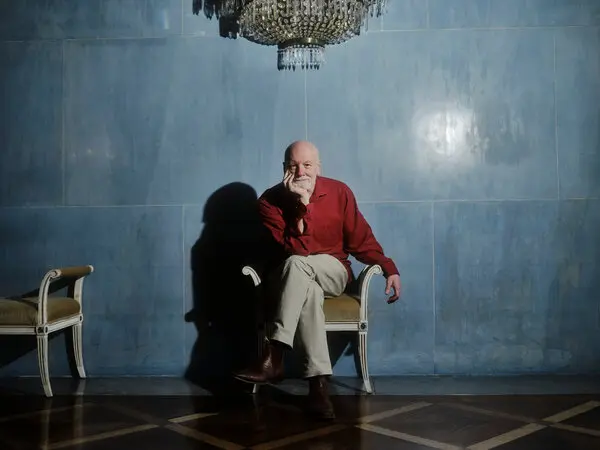
Brett Dean has been appointed Composer-in-Residence at the Berlin Philharmonic for the 2026/27 season. The appointment is structurally unusual in the history of the residency programme — Dean is not a celebrated outsider brought in for prestige, but a former desk player who spent fourteen years inside the machine, leaving his viola chair on New Year's Eve 1999 in a concert conducted by Claudio Abbado.
The distinction matters. Composer residencies at major orchestras have a reliable tendency toward the ceremonial — a name attached to a season, a premiere commissioned, the institutional association burnished on both sides. Dean's residency carries a different premise. "The sound of this orchestra is still inside me when I compose," he has said. That is not a press release formulation. It is a precise description of embodied compositional knowledge — the kind that comes not from studying scores in a library but from sitting in front of the bass section for fourteen years and feeling the physical weight of what the Berlin strings produce at full draw.
His biography contains a detail the announcement has largely passed over. While Dean was playing core repertoire under Karajan and Abbado by day, he was improvising in Kreuzberg clubs by night — a parallel musical life at maximum distance from the Philharmonie's aesthetic. That double existence is audible in his scores. Dean's compositional language treats orchestral texture — the way melodic, rhythmic, and harmonic materials combine and stratify — as a dynamic, unstable field rather than a decorative surface. His music moves between harsh physical extremes and near-inaudibility, deploys complex rhythmic layering within single instrumental parts, and integrates modern extended techniques not as novelty but as structural necessity. These are not the instincts of a composer who learned the orchestra from the outside.
The residency programme reflects this. Dean will conduct, play viola, and premiere new work — including Conversations with Schumann, which opens the season, and Phantoms, a new orchestral work commissioned by the Philharmonic itself. The Karajan Academy concerts place him alongside Korngold, Beethoven, and Kurtág — a curatorial framing that positions his work within the tradition rather than adjacent to it.
What the Berlin Philharmonic has appointed is not a composer who knows this orchestra. It has appointed a composer for whom this orchestra is the interior architecture of his musical imagination — and who spent twenty-five years away from it finding out what that meant.
New York Philharmonic Imports the El Sistema Playbook for Youth Choir
Slippedisc
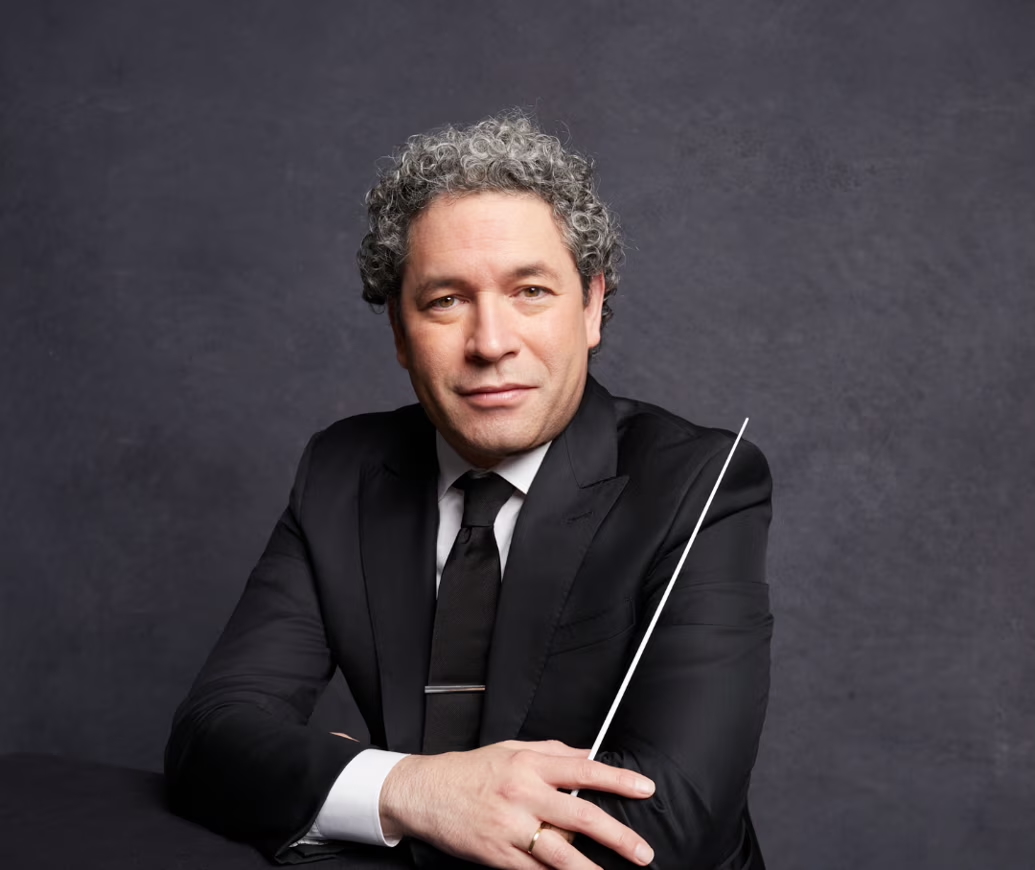
The New York Philharmonic has launched a youth choir — thirty students from seventeen schools across the Bronx, Brooklyn, Manhattan, and Queens, rehearsing since February under Dr. Tyrone Clinton of The Unsung Collective, in partnership with the Abyssinian Baptist Church in Harlem. The inaugural concert on May 19th programmes Bach, Dvořák, Lin-Manuel Miranda, Pasek and Paul, and Paul Simon. The initiative is described, without apparent irony, as drawing from the Dudamel playbook.
The playbook in question is El Sistema — the Venezuelan state music education programme founded by José Antonio Abreu in 1975, which trained Dudamel himself and which has been exported, with considerable fanfare, as a model for using orchestral training as a vehicle for social transformation. The Los Angeles Philharmonic's YOLA programme is its most visible American iteration. The NY Phil's youth choir is the next.
El Sistema's record deserves more than a branding exercise. The programme's relationship to the Venezuelan state has been a matter of sustained scrutiny — questions about whether its social transformation narrative obscures its function as a soft-power instrument, about the conditions under which children participate, and about the extent to which its celebrated alumni represent its typical outcomes rather than its exceptional ones. Dudamel's own silence during Venezuela's 2017 protests — when the Maduro government's crackdown on demonstrators became a global human rights crisis — and his subsequent carefully managed public positioning raised questions that his Los Angeles tenure did not fully resolve. The NY Phil has imported the model without, as yet, importing the conversation that model requires.
The programme list is its own argument. Bach and Dvořák sit alongside Lin-Manuel Miranda, Pasek and Paul, and Paul Simon — a curatorial statement about what the canon should contain and whom it should address. This is not neutral programming. It is a specific answer to a specific question about what the New York Philharmonic thinks classical music is for. Whether that answer serves the children in the choir, or serves the institution's need to demonstrate relevance, is the question the Chicago Sinfonietta's financial trajectory makes harder to avoid. The Sinfonietta built its entire identity on the same premise — that community access and musical excellence were the same project. The 990 filings suggest they are not always the same budget line.
The NY Phil can absorb the cost of this experiment in ways the Sinfonietta could not. What it cannot absorb, without consequence, is the habit of measuring musical education by its social optics rather than its musical outcomes. The subscription cycle that depends on the next generation of listeners being formed by serious musical encounters — not by Bridge Over Troubled Water performed in a church on the Upper West Side — is the institution's actual survival mechanism. Dudamel knows this. The question is whether the playbook he has imported is designed to serve it.
Nicholas Collon Extends Tenure as FRSO Chief Conductor to 2030
Gramophone News
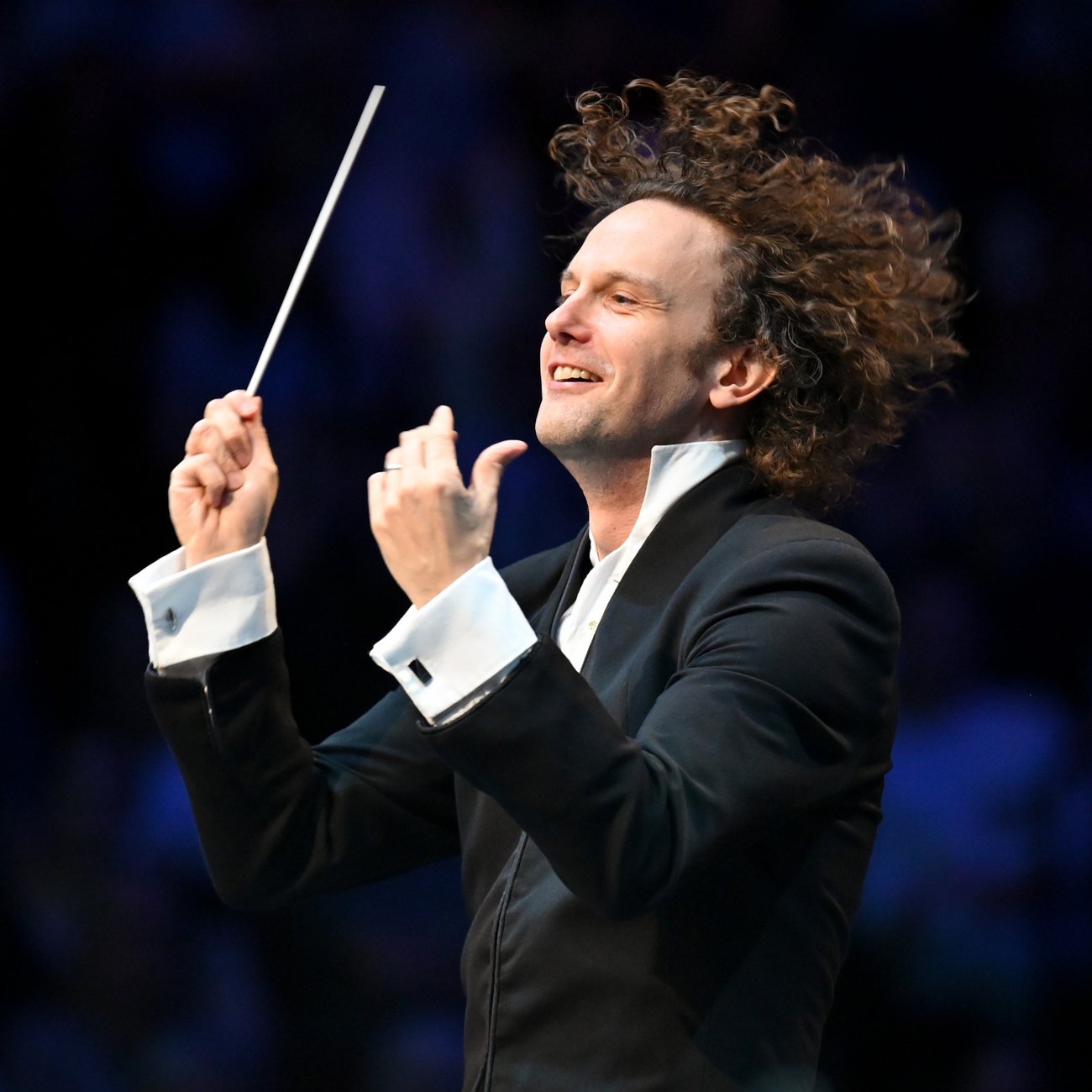
Nicholas Collon has renewed his contract as Chief Conductor of the Finnish Radio Symphony Orchestra until 2030, with an option for two further years beyond that. Appointed in 2021 as the first non-Finnish conductor in the orchestra's ninety-nine year history, Collon has now extended what could become an eleven-year tenure — a duration that registers as a counter-argument in a European conducting landscape defined by accelerating leadership turnover.
The FRSO is a broadcast orchestra — funded primarily through YLE television licence fees, mandated to record the Finnish orchestral archive, and committed to ten new commissions per season. That structural position gives it a stability that market-dependent orchestras cannot replicate. The Finnish state funding model has not been immune to pressure, but it has produced something increasingly rare: an institution with the financial architecture to support long-term artistic relationships rather than the rolling celebrity appointments that characterise orchestras whose programming is driven by box office. Collon's renewal is as much a statement about that model as it is about him.
His tenure's recorded output reflects the range the generated pieces about him consistently understate — Sibelius and Finnish repertoire alongside Elgar's Dream of Gerontius, Strauss's Eine Alpensinfonie, and Thomas Adès. The orchestra has been nominated twice for Gramophone's Orchestra of the Year during his tenure. The 2026/27 season opens with Ligeti's Le grand macabre at the Helsinki Festival and Berlin Musikfest — a grotesque satirical opera about the end of the world, written in 1978, which has a habit of becoming newly relevant. That Collon has programmed it to open a season whose themes include Gubaidulina, Szymanowski, and the Beethoven death bicentenary is a curatorial statement worth reading carefully.
What Collon brought was not Finnish cultural fluency but something the orchestra's own spokesman identified at the time as the willingness to take risks with difficult repertoire in a climate of genuine mutual trust. That description contains a tension the renewal does not resolve. A broadcast orchestra funded by licence fees carries a public accountability that a subscription-dependent ensemble does not — its audience is not self-selecting, and its programming is heard by people who did not choose to be in the room. The risk Collon has taken with Thomas Adès and Ligeti's Le grand macabre is a different order of risk from programming a fifth Sibelius cycle. Both fill the Helsinki Music Centre — the FRSO was running at 99% capacity before the pandemic — but they fill it differently, and for different reasons. Whether the audience that arrives for Sibelius stays for Adès, whether the technical demands of new repertoire build or erode the trust of listeners still finding their way into the concert hall, is the question every chief conductor of a state broadcast orchestra is quietly managing beneath the press release. Collon's eleven-year runway gives him more time than most to find out.
Sollazzo Ensemble Records Complete Leuven Chansonnier
Crescendo Magazine
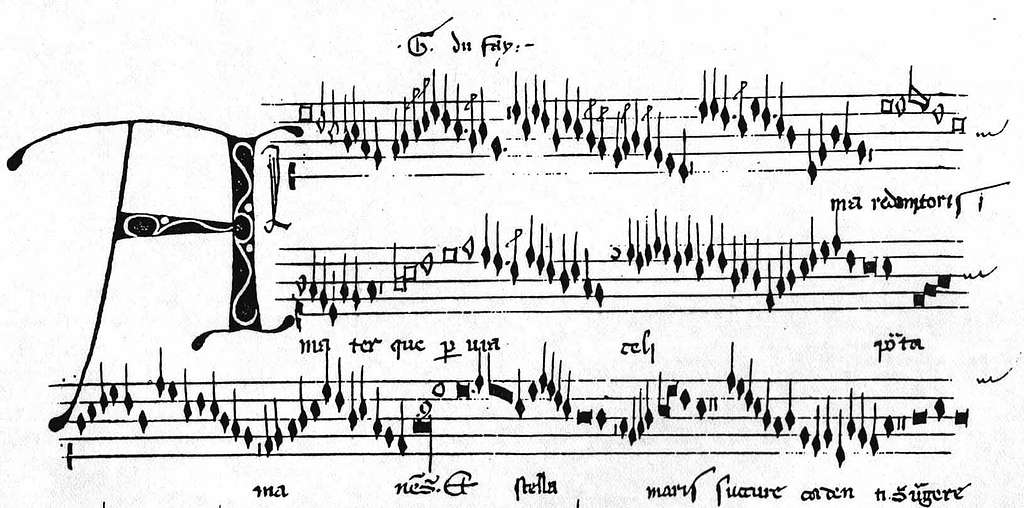
In 2014, a manuscript surfaced that had been absent from the scholarly record for three centuries. The Leuven Chansonnier — fifty pieces of 15th-century Franco-Flemish polyphony, copied in the last quarter of the 1400s, almost certainly commissioned by Philippe de Savoie and subsequently passed to his son Philibert and thence to Marguerite d'Autriche — re-entered the world through the Alamire Foundation in Leuven, which has overseen its study and dissemination since 2016. The Ensemble Sollazzo has now released the complete recording across three CDs on Passacaille, consolidating four years of sessions into a single integral edition reorganised according to the manuscript's original order.
The repertoire is anchored by Johannes Ockeghem and Antoine Busnoys, the two principal authenticated contributors, alongside Gilles Binchois, Guillaume Dufay, Firmin Caron, Robert Morton, and Walter Frye. Forty-three rondeaux and six virelais, almost exclusively secular, almost exclusively concerned with courtly love — the thematic narrowness of the chansonnier's surface concealing the extraordinary diversity of its musical solutions. Twelve of the fifty pieces are unica: works that survive nowhere else in the manuscript tradition. The Sollazzo recording is not a better edition of known music. It is, in twelve cases, the only record these compositions have ever had.
That distinction matters for how the recording is heard. Early music performance has spent fifty years refining its relationship to the known repertoire — the great Ockeghem masses, the Busnoys chansons with established transmission histories, the works that exist in multiple sources and have accumulated layers of editorial and interpretive decision. The unica of the Leuven Chansonnier carry none of that weight. They arrive without performance tradition, without comparative scholarly apparatus, without the accumulated pressure of previous recordings against which new ones are measured. The Sollazzo Ensemble is not interpreting these pieces. It is, in the most literal sense, premiering them.
The ensemble's approach deploys alternating vocal and instrumental forces across the three discs — the first built around two sopranos and tenor over flute and vielles, the second around three male voices with alta cappella winds. The countertenor Andrew Hallock is the recording's most consistently arresting voice, his open, camphorated timbre coiling through melismatic lines with a quality the Crescendo review identifies as troubling portamento — an affective instability that suits the courtly love poetry's emotional register precisely because it refuses to settle. The chansonnier's famous De tous bien playne becomes, in Carine Tinney and Jonatan Alvarado's hands, a suspended duo freed from gravitational pull. Ou beau chastel, one of the unica, pairs Hallock with Adrien Reboisson's shawm in a combination that makes the text's image of mental imprisonment physically audible.
What the Leuven Chansonnier restores is not just a repertoire but a soundworld — the specific acoustic of a Savoyard court in the 1470s, music made for particular rooms and particular ears that then vanished for three hundred years. The Sollazzo Ensemble has not recovered it academically. It has inhabited it.
Bavarian Radio Symphony Orchestra Fills Principal Cello Chair
The Strad
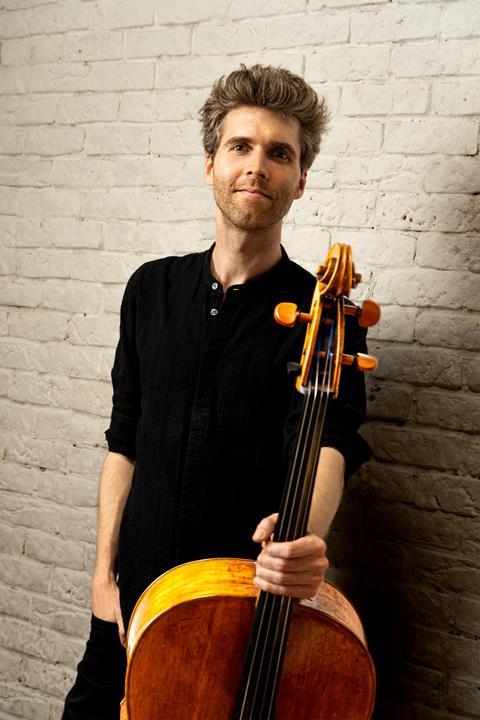
The Bavarian Radio Symphony Orchestra has appointed Philip Graham as its new first principal cellist. British-German, formerly a guest solo cellist with both the BRSO and the Munich Philharmonic, and a member of the Notos Piano Quartet from 2015 to 2024 — a chamber ensemble that won six international first prizes and released three albums on Sony Classical — Graham arrives with a profile that is as much chamber musician as orchestral player. That combination is not incidental to the appointment.
The principal cello chair is the low-string section's acoustic anchor — the voice that establishes the foundation against which the upper strings articulate, and the primary determinant of what musicians call ensemble blend: the point at which individual instruments surrender their distinct edge to a collective sound. In a large symphony orchestra the principal cellist's decisions about tone production, bow pressure, and vibrato depth propagate through the section and shape the orchestra's overall timbre from the bottom up. The appointment is, in that sense, always an aesthetic statement as much as a personnel decision.
Under Mariss Jansons, who led the BRSO from 2003 until his death in 2019, the orchestra developed a sound of considerable weight and density — the accumulated product of a conductor whose interpretive instincts ran toward orchestral mass and long-breathed architectural momentum. Rattle's aesthetic is differently calibrated. His Berlin Philharmonic tenure demonstrated a consistent preference for textural transparency, rhythmic clarity, and the kind of chamber-like responsiveness that requires every section to listen laterally as much as vertically. The BRSO's musica viva commitment to contemporary repertoire — founded by Karl Amadeus Hartmann in 1945 and maintained as a structural priority through every chief conductorship since — demands exactly that flexibility. New music requires orchestras that can shift weight and colour quickly, without the inertial resistance that comes from a section trained primarily for the monumental.
Graham's decade in chamber music is the qualification that matters most in that context. A principal cellist who has spent nine years negotiating the micro-adjustments of quartet playing — where blend is everything and individual projection is always contingent on collective listening — brings a different kind of sectional intelligence than one formed exclusively in the orchestral pipeline. Whether that intelligence translates into the specific sound Rattle is building at the BRSO is what the next several seasons will demonstrate.
Ori Kam Departs Jerusalem Quartet
Slippedisc
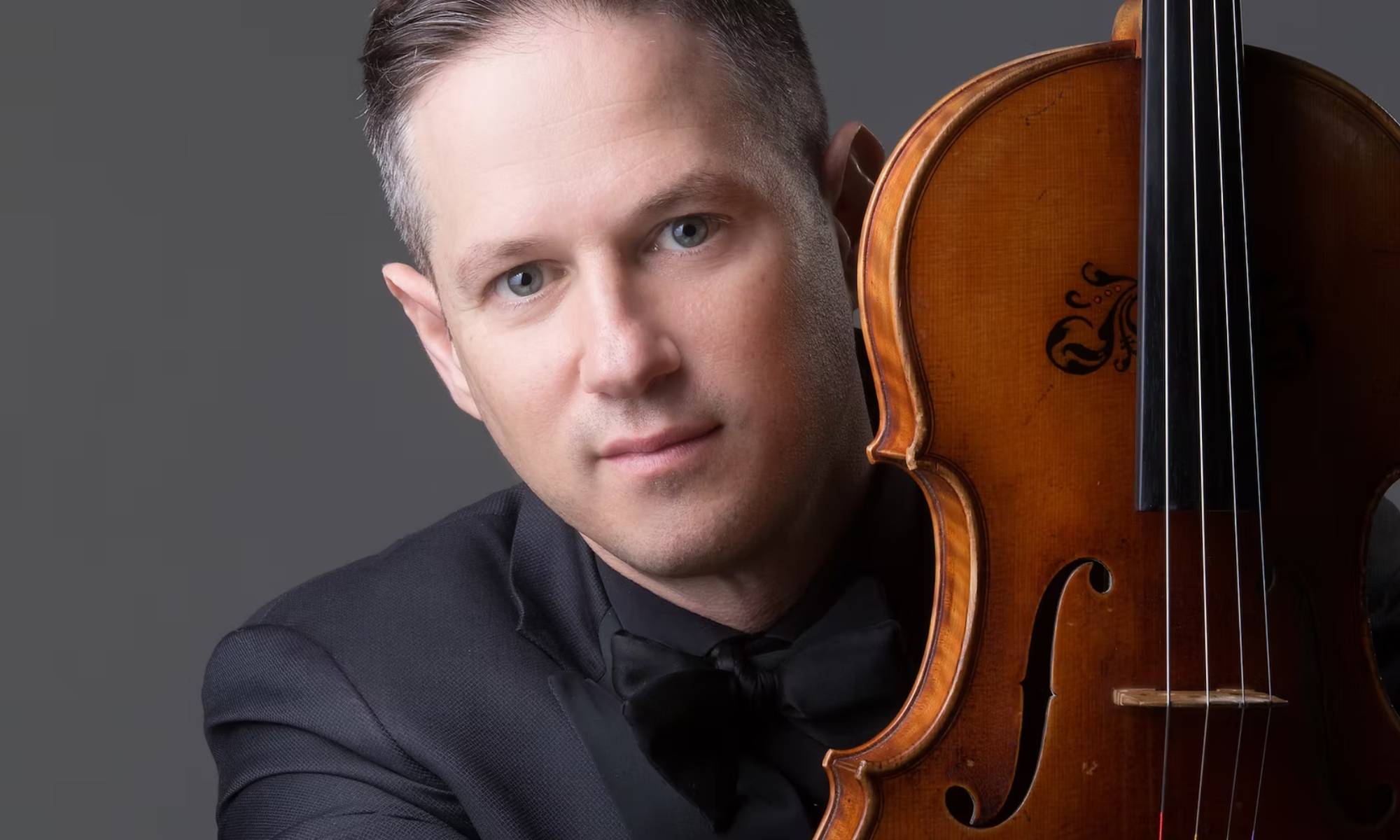
The Jerusalem Quartet has announced the permanent appointment of Alexander Gordon Zemtsov as its violist, closing a transitional year in which the ensemble — founded thirty years ago by Alexander Pavlovsky, Sergei Bresler, and Kyril Zlotnikov — performed with two candidates before arriving at their decision. Ori Kam, who held the viola chair for the better part of two decades, departed last season. The news is not Kam's exit but the quartet's answer to it.
The answer took a year to find, and the founding members' letter is precise about why. "From the very first rehearsals with him, there was a clear sense of personal and artistic chemistry, as well as a shared commitment to the values that guide us in our demanding profession." In quartet playing, that language is not diplomatic. Chemistry in this context is acoustic — the specific way two people's vibrato rates interact, the way bow pressure decisions in one part calibrate the intonation of another, the way a new voice either settles into or disturbs the ensemble's existing internal balance. Gordon Zemtsov, currently Professor of Viola in Cologne and Lausanne and among the most respected pedagogues of his generation, was not chosen for his credentials. He was chosen because he fits.
The viola is the string quartet's most structurally exposed voice. It carries the inner harmony — mediating between the cello's bass foundation and the violins' melodic surface — and bears primary responsibility for the ensemble's intonation: the accuracy of pitch in relation to every other voice simultaneously sounding. A quartet's viola sound is its fingerprint. The Jerusalem Quartet has built its reputation on a specific late-Romantic performance practice — saturated tone, singing line, an interpretive weight that suits the Beethoven late quartets and the Shostakovich cycle the ensemble has been documenting. That sound lived, for two decades, in Ori Kam's instrument and hands. Gordon Zemtsov now inherits its obligations.
The transitional season offered the quartet, and its audiences, a rare opportunity to hear what identity actually means in this context. The same Shostakovich, the same Beethoven Op. 130 with the Grosse Fuge, the same Ravel — performed with a different inner voice. Whether the ensemble's sound shifted perceptibly, and in which direction, is information the founding members have processed and acted on. The appointment of Gordon Zemtsov is their conclusion. The recordings that follow will be the evidence.
Also Worth Noting
Edward Gardner Solidifies Profile as Ambassador for British Music — NYT Music
Simon Rattle Awarded Bavarian Maximilian Order — Neue Musikzeitung (NMZ)
Reconsidering Alicia de Larrocha’s Nights in the Gardens of Spain — Gramophone Features
Soprano Khayakazi Madlala Dies at 32 — The Violin Channel
Indeterminacy Festival to Premiere Babylonian Flood Myth Opera — OperaWire
The Wire
Andrew Lloyd Webber’s Wine Auction Raises Funds for Music Education — Slippedisc
David Grossman Awarded the Thomas Mann Prize — Slippedisc
Singing Found to Improve Respiratory Symptoms — The Violin Channel
OperAffinity Founder on the Future of Music and Connection — OperaWire