Sollazzo Ensemble Records Complete Leuven Chansonnier
Crescendo Magazine
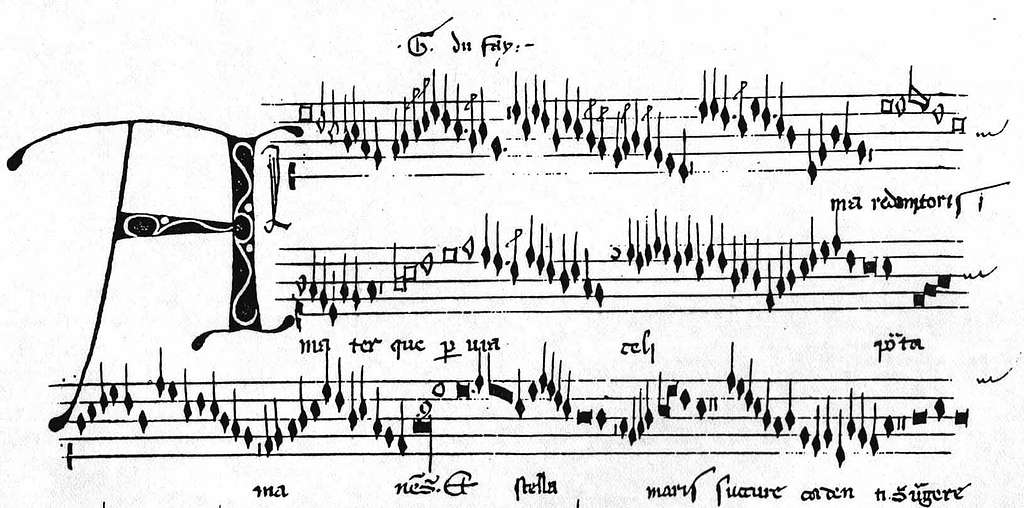
In 2014, a manuscript surfaced that had been absent from the scholarly record for three centuries. The Leuven Chansonnier — fifty pieces of 15th-century Franco-Flemish polyphony, copied in the last quarter of the 1400s, almost certainly commissioned by Philippe de Savoie and subsequently passed to his son Philibert and thence to Marguerite d'Autriche — re-entered the world through the Alamire Foundation in Leuven, which has overseen its study and dissemination since 2016. The Ensemble Sollazzo has now released the complete recording across three CDs on Passacaille, consolidating four years of sessions into a single integral edition reorganised according to the manuscript's original order.
The repertoire is anchored by Johannes Ockeghem and Antoine Busnoys, the two principal authenticated contributors, alongside Gilles Binchois, Guillaume Dufay, Firmin Caron, Robert Morton, and Walter Frye. Forty-three rondeaux and six virelais, almost exclusively secular, almost exclusively concerned with courtly love — the thematic narrowness of the chansonnier's surface concealing the extraordinary diversity of its musical solutions. Twelve of the fifty pieces are unica: works that survive nowhere else in the manuscript tradition. The Sollazzo recording is not a better edition of known music. It is, in twelve cases, the only record these compositions have ever had.
That distinction matters for how the recording is heard. Early music performance has spent fifty years refining its relationship to the known repertoire — the great Ockeghem masses, the Busnoys chansons with established transmission histories, the works that exist in multiple sources and have accumulated layers of editorial and interpretive decision. The unica of the Leuven Chansonnier carry none of that weight. They arrive without performance tradition, without comparative scholarly apparatus, without the accumulated pressure of previous recordings against which new ones are measured. The Sollazzo Ensemble is not interpreting these pieces. It is, in the most literal sense, premiering them.
The ensemble's approach deploys alternating vocal and instrumental forces across the three discs — the first built around two sopranos and tenor over flute and vielles, the second around three male voices with alta cappella winds. The countertenor Andrew Hallock is the recording's most consistently arresting voice, his open, camphorated timbre coiling through melismatic lines with a quality the Crescendo review identifies as troubling portamento — an affective instability that suits the courtly love poetry's emotional register precisely because it refuses to settle. The chansonnier's famous De tous bien playne becomes, in Carine Tinney and Jonatan Alvarado's hands, a suspended duo freed from gravitational pull. Ou beau chastel, one of the unica, pairs Hallock with Adrien Reboisson's shawm in a combination that makes the text's image of mental imprisonment physically audible.
What the Leuven Chansonnier restores is not just a repertoire but a soundworld — the specific acoustic of a Savoyard court in the 1470s, music made for particular rooms and particular ears that then vanished for three hundred years. The Sollazzo Ensemble has not recovered it academically. It has inhabited it.