Bioacoustics, Interspecies Composition, and the Industrial Fracturing of the Acoustic Niche
Slippedisc
Play a housecat Bach's Air on a G String and she won't so much as flick an ear. Play her a purr sped up into a heartbeat and layered under a kitten's suckling rhythm, and she'll cross the room to rub her face against the speaker. That's not a quirk of taste — cats can't hear human music the way we do, because nothing about it was built for a cat's ears. Bioacoustics exists as a field because that mismatch turns out to be universal, and because the animal kingdom has been building its own music, engineered down to the millisecond and the kilohertz, for a lot longer than we've been building ours.
The clearest account of how that works comes from field bioacoustician Bernie Krause, who spent four decades recording wild soundscapes before formulating what he calls the acoustic niche hypothesis in his book The Great Animal Orchestra. Krause's claim, echoed by musicologist François-Bernard Mâche and acoustic ecologist R. Murray Schafer, is that an undisturbed habitat behaves like an orchestral score already written out: every species claims its own frequency band and time slot, and the whole thing holds together because nobody's stepping on anyone else's line.

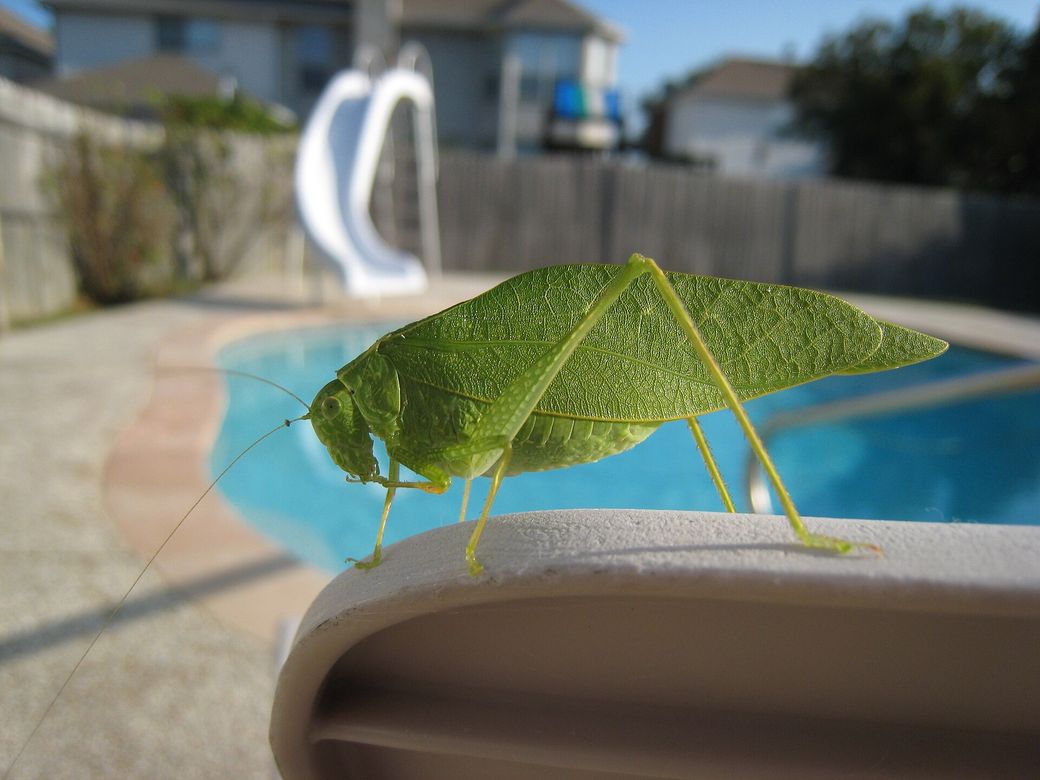
Insects worked this out first, and they did it by building actual instruments into their own bodies. A cricket or katydid is, structurally, a tiny fiddle: a hardened plectrum on the edge of one forewing scrapes against a ridged file on the other, and the resulting friction gets pushed through two membranes
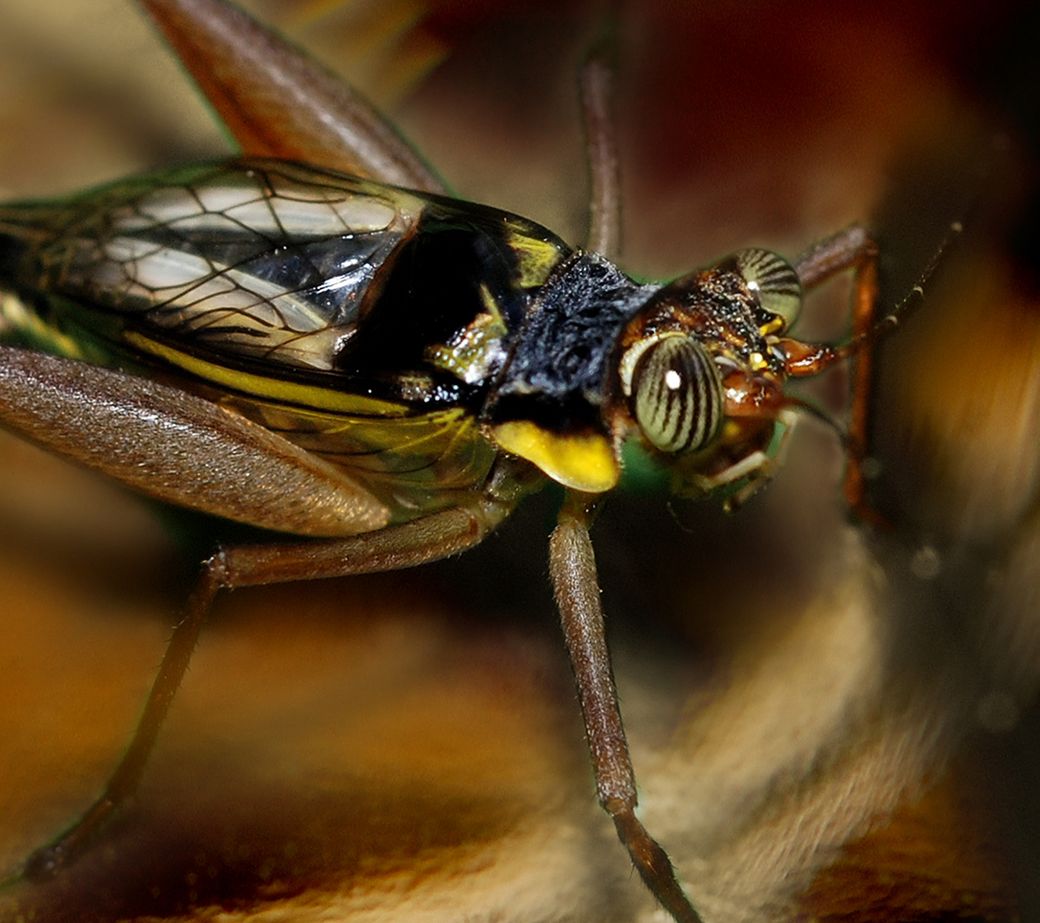
entomologists call the harp and the mirror — doing the same acoustic job a violin's spruce top or a cello's belly does, shaping raw scrape into a clean, amplified tone. In a crowded neotropical canopy, hundreds of species do this at once without collapsing into noise, because ground-dwelling crickets hold to a narrow 3–8 kHz band while bush-dwelling katydids climb into 8–17 kHz or higher, and where the bands do overlap, individuals stagger their calls by milliseconds so nobody drowns anybody else out. That self-organizing division of labor is documented in the field data indexed at EcoEvoRxiv and in the structural analyses published in Applied Sciences.
None of that architecture has anything to do with a 60–120 beats-per-minute tempo or the vocal-formant contours that shape human melody — which is exactly why animals mostly ignore what we call music. That gap sent David Teielooking for a different starting point. Teie spent years as a National Symphony Orchestra cellist, playing nineteen concerto performances with the NSO — twelve of them under Mstislav Rostropovich — before turning his training toward a stranger question: what would music sound like if you wrote it for a cat's ears instead of a human's? Working with primatologist Charles Snowdon, he threw out the human heartbeat as a tempo reference and replaced it with a kitten's suckling rhythm, then layered in 20–25 Hz modulations pulled straight from a cat's own purr, pitched an octave above the human voice. The resulting study found cats reliably preferred it — approaching the speaker, rubbing against it, engaging with it the way they'd engage with another cat.
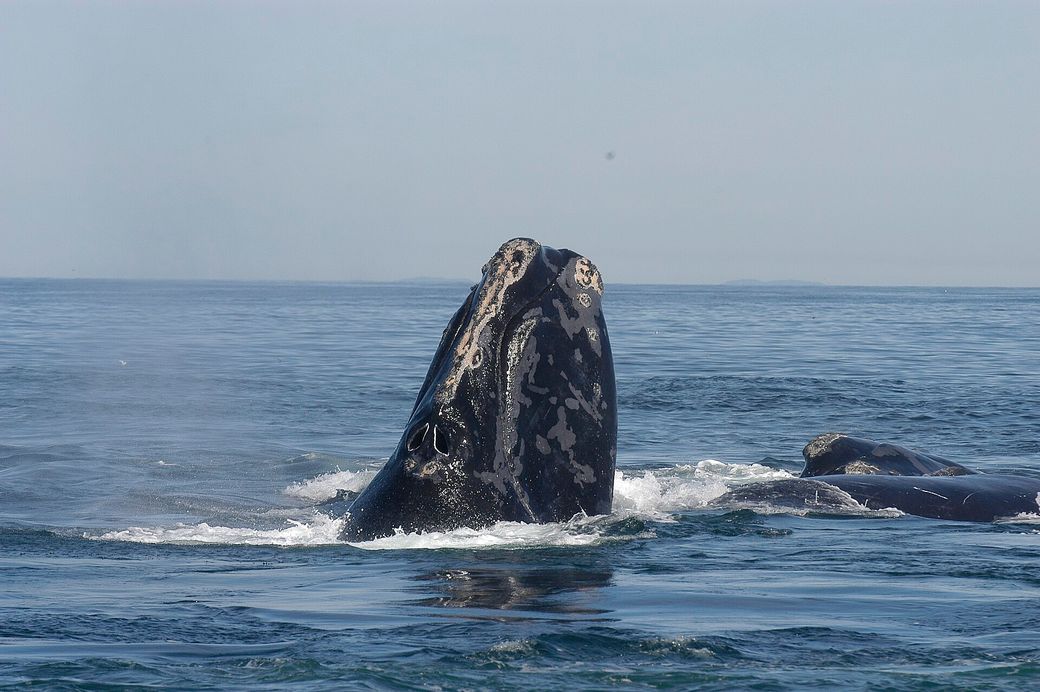
That result matters beyond the novelty of it. It means what makes music "work" isn't taste or culture — it's a biological match between the sound and the ear it's built for. That has real consequences once you take it outside the lab: a healthy wild soundscape runs on the same acoustic territoriality that keeps a cricket chorus organized, and a container ship doesn't respect any of it. Commercial shipping generates steady low-frequency noise in the same 30–300 Hz band North Atlantic right whales use for their contact calls; near an active shipping lane, an upcall that would otherwise travel for tens of kilometers becomes reliably audible only within about 320 meters. Human music and human shipping noise got built the same way — around what our own ears can hear — without either one asking what anyone else's ears needed.
Sources