Denver Puts It in Writing
OperaWire
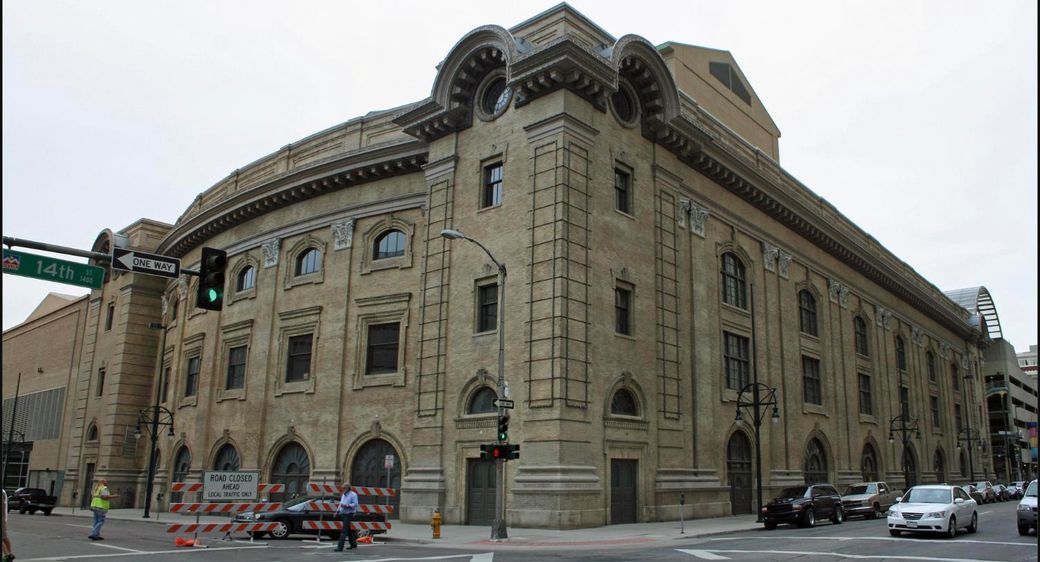
Opera Colorado, the Denver company founded in 1983 and the largest opera producer between Chicago and the West Coast, has signed the first collective bargaining agreement in its history — and, in the process, done something no American opera house has done in decades. Announced on 15 July and reached after roughly two and a half years of talks, the three-year contract with the American Guild of Musical Artists covers not just the principal singers but the chorus, the dancers, the staging crew and the artisans backstage (source). It is, in other words, a single agreement for everyone who makes a production, from the tenor at the footlights to the carpenter who built them.
The significance is structural, not theatrical, and it deserves to be named plainly as a win: workers who had no guaranteed pay, defined conditions, or protection from being treated as a disposable line item now have all three in writing, for the first time in the company's four-decade history. American opera has spent a decade managing scarcity — shortened seasons, cancelled titles, companies going dark — and in lean years the reflex is to convert permanent staff into freelance items, hired per show and released after the final curtain. Denver's vote, which followed a 2023 unionization drive, reverses that drift toward improvisation, and it's worth sitting with what kind of stability the reversal is actually reaching for.
That stability has a longer history than the AGMA contract suggests, and not always a flattering one. Joseph Haydn spent nearly three decades as Kapellmeister to the Esterházy court under a 1761 contract that made him, in explicit terms, a servant — required to wear the household's livery, compose only what the Prince requested, and appear each morning to learn whether a concert was wanted that day (source). Johann Sebastian Bach's position in Leipzig ran through a comparably restrictive contract with the Town Council, which hired him in 1723 primarily as an educator and church musician, and remained openly unhappy that he acted more like an independent Kapellmeister than a subordinate Cantor (source). Both men were, in every meaningful sense, employees of an aristocracy or a civic body, not independent artists selling work on an open market — and both had exactly the kind of guaranteed income, defined duties, and lifelong post that Opera Colorado's chorus just spent two and a half years fighting to get a modern version of.
Beethoven is usually credited with breaking that mold, the first composer to build a career as something like a free artist rather than a household employee. But look at how he actually managed it. In March 1809, three aristocratic patrons — Archduke Rudolph, Prince Lobkowitz and Prince Kinsky — signed a joint annuity contract guaranteeing him 4,000 florins a year for as long as he lived in Vienna or the Habsburg territories (source). That was still patronage, just spread across three ledgers instead of one, with a residency condition attached. Nor was there an institution behind him the way a conservatory stands behind a composition student today: Europe's first state-run conservatory, the Paris Conservatoire, was not founded until 1795, and it trained singers and performers for the Paris stage more than it credentialed composers the way a degree does now (source). Even the composer everyone points to as the birth of artistic independence still needed three princes' names on a contract to have anything like security.
Here is the discomfort worth sitting with rather than resolving too quickly. The aristocratic patronage system drew real and fair criticism on grounds of equality and rights, and Haydn's servant's livery was not a metaphor. But what that system actually delivered — a secured livelihood, room to experiment beyond what a paying public would immediately reward, recognition of merit independent of ticket sales, a life spent inside the same world being served rather than performing for it from a wage-earner's distance — is close to what many working artists still describe wanting. The union contract, the annuity, the servant's post: three very different arrangements chasing the same floor.
The insecurity Opera Colorado's chorus just organized against is not new, and neither is the response. The American Guild of Musical Artists was founded in 1936 specifically because opera and concert singers were being sent on tour without transportation home, paid nothing for rehearsal time, and given no limit on how many performances a company could demand in a week (source). Ninety years later, in a city AGMA's founders never performed in, its members won a version of the same basic promise Haydn had under a very different name: predictable pay, defined conditions, protection from being treated as a disposable line item.
None of this is an argument for aristocracy, and it isn't Opera Colorado's job to resolve it. The idea of the artist as something other than an ordinary worker, unbound by contracts and job descriptions, is largely a nineteenth-century story the era told about itself — a story capitalism made possible in the first place, by inventing publishing royalties, ticket subscriptions, and eventually the conservatory system that let a composer build a career independent of any single household. But that market apparatus was never sufficient by itself; it has always needed a floor under it, whether that floor was a prince's ledger, three aristocrats splitting an annuity, or now a ratified union contract. What is happening in Denver looks less like artists rejecting an old model and more like artists rebuilding its security through the only legal tool available to them today, without the livery.
Whether other regional houses follow Denver's example will depend on whether they are willing to say the same thing out loud: that the open market has never fully funded this art form on its own, and that some kind of floor has always had to come from somewhere else. The open question is who is willing to admit that plainly, and what it will cost the companies that keep pretending otherwise.
Sources:
Opera Colorado and the American Guild of Musical Artists Announce First-Ever Collective Bargaining Agreement (OperaWire)
Joseph Haydn Biography (Deutsche Grammophon)
Johann Sebastian Bach — A Chronology (Bach-Archiv Leipzig)
Beethoven's Capital (Beethoven-Haus Bonn)
History (Conservatoire de Paris)
About AGMA (American Guild of Musical Artists)