Stradisphere — July 17, 2026 (Corrected)
Edition #139 · Monday, July 20, 2026
Editor's Brief
Today's issue reads the industry through its ledgers and its governing documents as much as its performances. Our lead follows the Kennedy Center naming fight, where a federal appeals court let the removal of a president's name stand — a story less about one politician than about who holds the deed to a national institution's identity. From Boston, the Symphony's new accounts show a record endowment shadowed by a warning that its money is increasingly locked where it cannot be spent. In Denver, Opera Colorado and the American Guild of Musical Artists have signed the company's first contract, quietly rewriting how an American opera house is run. We set the critics against each other on Giulio Prandi's lean new recording of Pergolesi's L'Olimpiade, and highlight the baritone Trevor Haumschilt-Rocha, who went from elimination to a €50,000 prize in a single competition — his full story lives on our new News page. Members get our essay on the apprentice system that made him. And on this day in 1717, the Thames became a concert hall. — The Editors
Analytical Piece
Who Holds the Deed? The Kennedy Center Name Ruling
NPR
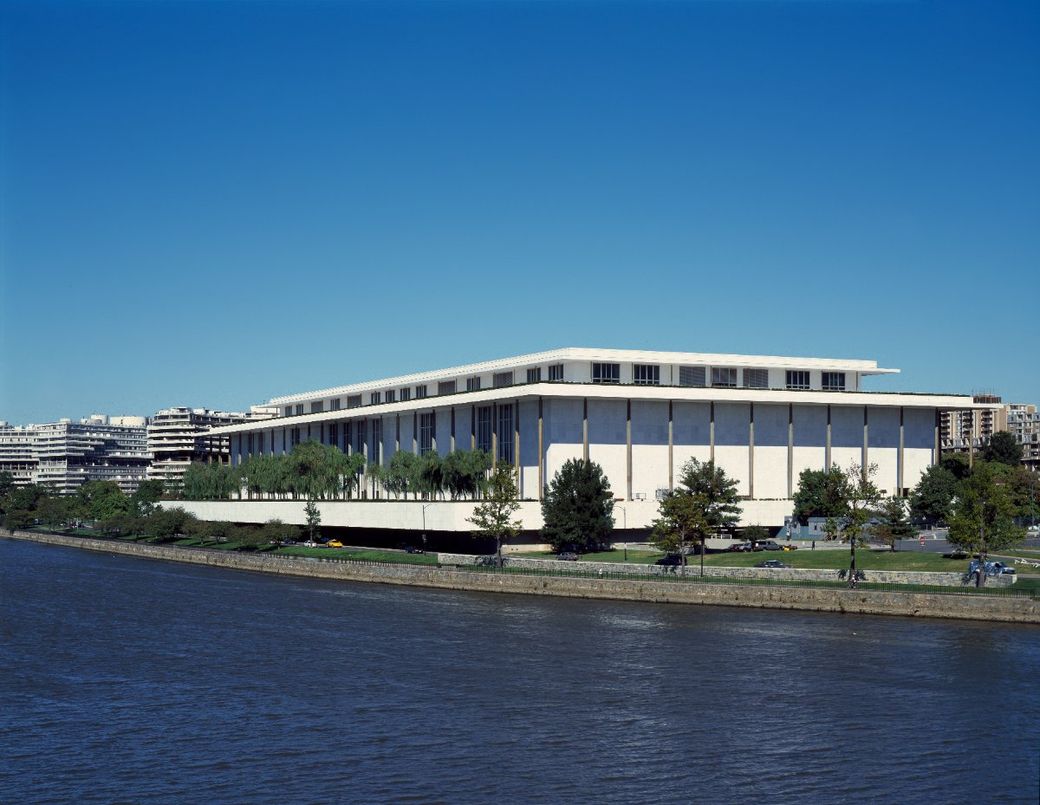
A naming dispute at the John F. Kennedy Center for the Performing Arts reached a federal appeals court this month, which on 8 July declined to step in, as NPR reported. The dispute traces to the contested 2025 board takeover, which President Trump framed as ushering in a "Golden Age in Arts and Culture" and his opponents called an authoritarian seizure of an institution meant to run independent of the White House. Each side claimed to be protecting art. But the charter that built the place reveals a cultural tension.
By the Center's own published listings, its two named flagship classical companies — the National Symphony Orchestra, written into the building's own governing structure, and Washington National Opera — account for something on the order of 115 performances a year. Fold in the Fortas chamber series, visiting recitalists, and the rest of the classical-family programming and the figure climbs. Even generously counted, it lands somewhere between roughly six and thirteen percent. The Kennedy Center's own programming office counts "over 2,000 performances annually across nine stages" in a full calendar. Whichever end of that range you take, the clear majority of the calendar goes to acts such as hip-hop, comedy, touring Broadway, rock, and popular entertainment of every kind. The building has nine stages, organized around nine named artforms. Classical, even counting New Music and its contemporary offshoots, accounts for at most three of them.
None of which is a scandal, and none of those other forms is an intruder. The point isn't ranking; it's definition. The Center's 1958 mandate was to present "classical and contemporary music, opera, drama, dance, and other performing arts." Classical and contemporary music named the two ends of a single tradition. The legislation was signed in September 1958 — the same year Elvis Presley was inducted into the Army, with rock and roll barely two years past "Heartbreak Hotel" and nowhere near a claim on serious cultural institutions. "Contemporary music" in that context meant a living composer working inside the classical tradition, not something standing apart from it. Today the same phrase covers nearly anything currently being made. The mandate was structured to sustain the composer of remarkable and challenging ideas by connecting them to seasoned listeners willing to meet the work halfway. That category now shares its cultural viewership with artists who already dominate stadiums, Spotify, and radio. A Ligeti or a Cage of that era — difficult, unproven, working at the far edge of what the tradition could absorb — would find almost no institutional room today. As the institution's own published programming suggests, the category built to carry that work has been redistributed to everything else. An established Adès or Chin still commands a stage; the emerging one has nowhere to become that. The mandate describes a pathway, a way for new and demanding ideas to enter the tradition and mature inside it.
Popular music has a commercial apparatus built to carry it — arenas, labels, festivals, streaming, a pipeline that funds the next act from the receipts of the last. A national cultural center offers classical music something different: public support standing between the art and the box office. So the question cuts both ways. Is it wrong for such a place to program in rough proportion to demand, giving each of its stages its share? Perhaps not. But run the logic in reverse and the strangeness shows: imagine a cinema that screens one feature film while every other auditorium runs opera broadcasts, and call that a movie theater.
What the charter's language and the season's numbers actually open up is a conversation the culture rarely has directly: what happens to a centuries-old tradition when the institution built to shelter it increasingly looks like everything else. The larger question isn't about any one building or administration. It's about what classical music's place in American life actually requires going forward — in classrooms, in outreach to new listeners, in the ordinary promotion every other genre already takes for granted. Where, exactly, is classical music's own seat at that table?
The Vault and the Gamble: What Boston and the Met Reveal About Classical Music's Vanishing Patron
Slippedisc
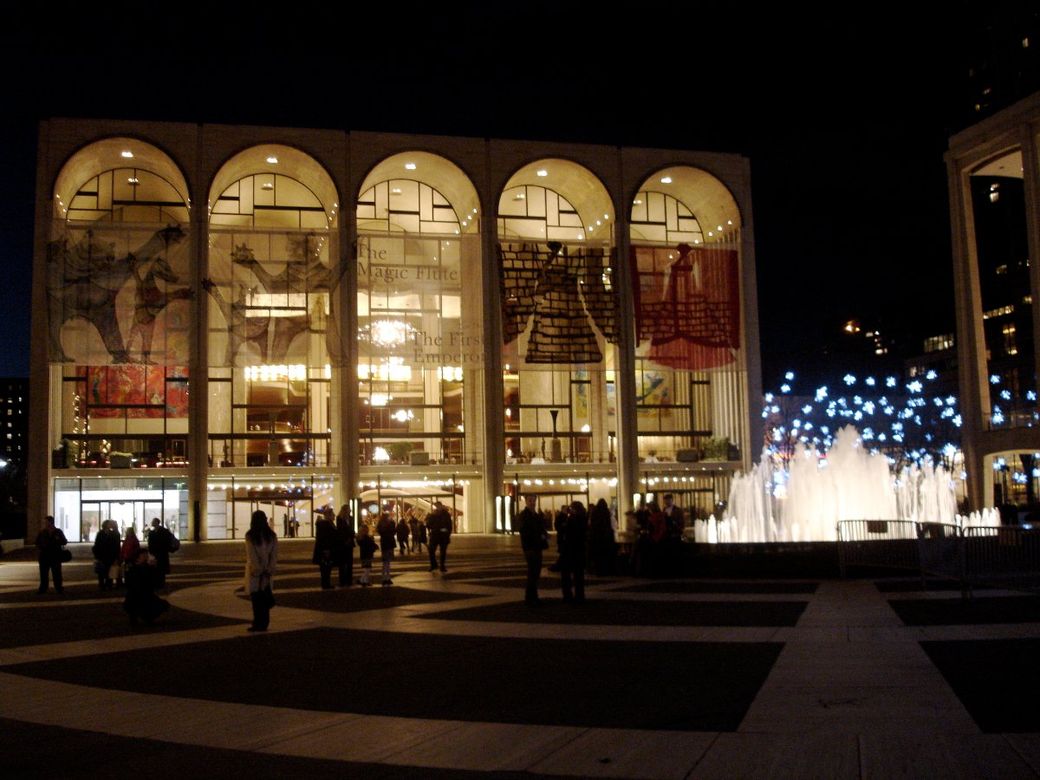
The Boston Symphony Orchestra, the oldest of the American 'Big Five,' has filed accounts that read at first like a boast and, on a second look, like a warning. For the year ending 31 August 2025 the orchestra took in a record $155 million and posted a $27 million surplus — its largest since the James Levine era — while the endowment reached a new high of $603 million (source). Set against a field bracketed by hiring freezes and shortened seasons, Boston looks less like a peer of the New York Philharmonic than a household on higher ground while the neighbors bail out their basements.
The revealing figure is not the total but what sits inside it. An analyst's read of the filings found that illiquid private-equity and venture partnerships now make up about a fifth of the endowment, up from six percent in 2019 (source) — money locked away for years and subject to capital calls the orchestra cannot refuse. Since 2009, by that measure, the fund has trailed a plain index fund in all but three years.
Boston's answer to a changing support model is to chase better returns and accept less flexibility. Two hundred miles south, the Metropolitan Opera is answering the same underlying question more visibly, and at far greater cost. Subscriptions, which once locked in 45 percent of the Met's seats each season, have fallen to 15 percent, and the average subscriber is now 70 (source). Last year the company discovered that a donor it had spent years cultivating, and had elevated to its board, did not have the tens of millions he had pledged; the Met was left to return funds it had already booked (source).
Facing that gap, and after Moody's had already downgraded its debt toward junk over $120 million in endowment draws since fiscal 2023 (source), the Met signed an agreement in September 2025 with the Saudi Music Commission worth up to $200 million over the coming years, in exchange for performing annually at the new Royal Diriyah Opera House outside Riyadh (source). The deal drew criticism over Saudi Arabia's human rights record. Gelb's defense was direct: "All the democratic governments that I know of are engaged in business with Saudi Arabia," he said, adding that he had to put the survival of the institution first (source). Saudi Arabia frames the same investment differently: its Vision 2030 cultural strategy describes the opera house and the country's new national orchestra as evidence it means to help shape a global culture, not simply receive one from the West (source).
None of it mattered by April 2026. Saudi officials told Gelb the deal was off, citing economic damage from the war in Iran and the closure of shipping through the Strait of Hormuz (source) — a reason with nothing to do with opera and everything to do with the fact that the Met's rescue depended on a government whose priorities it did not control. The company now faces a $30 million shortfall it must close by 31 July, and has reportedly turned to selling the Chagall paintings that have hung in its lobby for sixty years (source).
None of this happened in a vacuum. The industry's own debate over access and inclusion has, in recent years, increasingly framed the classical audience's traditional composition — older, wealthier, less representative of the country at large — as itself an obstacle to the art form's future, a framing some scholars describe as a false dichotomy between diversity and quality that avoids the harder question of what actually replaces that base's giving (source). Wanting an audience and donor base that looks more like the country classical music serves is not, in itself, a case against the tradition. But neither institution has said in public what replaces the money and flexibility that older model provided while a new one is still being built. In its absence, this is what institutions reach for instead: a foreign government's opera house, or a locked box of private equity.
Endowments and government partnerships are both tools, and a tool is only worth what you can still lift when you need it. Boston's is locked in funds that have underperformed a plain index for most of the last fifteen years. The Met's broke the moment a war six thousand miles away touched an oil strait it had no hand in. Neither institution chose those particular risks so much as backed into them, looking for capital that didn't require rebuilding the relationships that used to fund the work. The question their boards haven't answered yet: what does a support model actually built for classical music's next fifty years look like, and who is doing the work of building it?
Sources:
Tax returns show Boston Symphony is rolling in money (Slippedisc)
How Boston Symphony mishandles its money (Slippedisc)
The Met's 'Big Bet' on Contemporary Opera Looks Like a Loser (City Journal)
The Case of the Fake Donor (New York Magazine)
NYC's Metropolitan Opera Debt Cut Deeper Into Junk by Moody's (Bloomberg)
Met Opera and Saudi Music Commission announcement (Metropolitan Opera)
Metropolitan Opera & Peter Gelb Sign Problematic Business Deal With Saudi Arabia (OperaWire)
Saudi Arabia's Opera Strategy and Vision 2030 (vision2030.ai)
Metropolitan Opera's funding agreement with Saudi Arabia falls through (CBS New York)
Classical Music Futures: Classical Music has a Diversity Problem (Open Book Publishers)
OperaWire
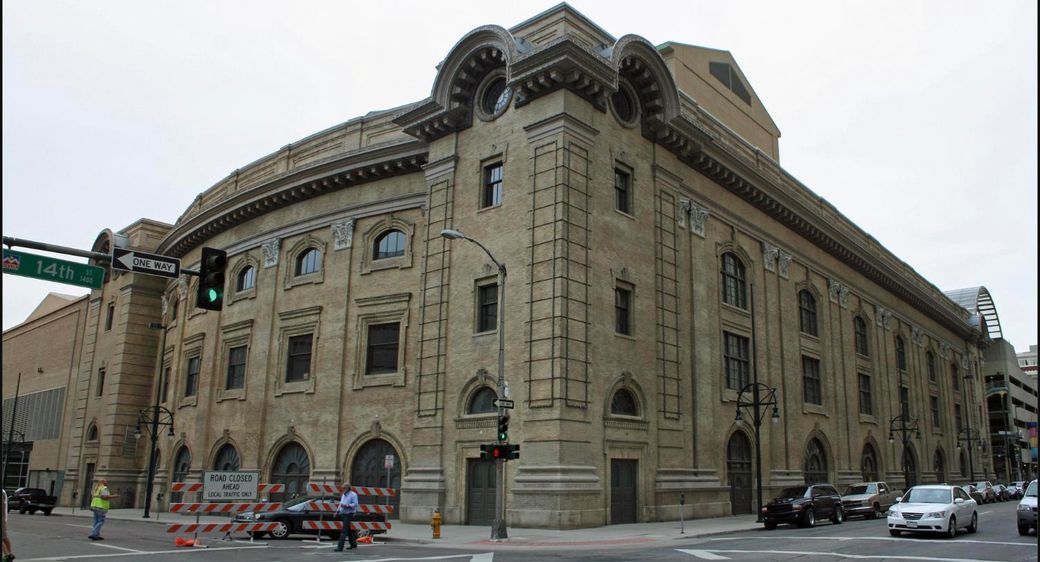
Opera Colorado, the Denver company founded in 1983 and the largest opera producer between Chicago and the West Coast, has signed the first collective bargaining agreement in its history — and, in the process, done something no American opera house has done in decades. Announced on 15 July and reached after roughly two and a half years of talks, the three-year contract with the American Guild of Musical Artists covers not just the principal singers but the chorus, the dancers, the staging crew and the artisans backstage (source). It is, in other words, a single agreement for everyone who makes a production, from the tenor at the footlights to the carpenter who built them.
The significance is structural, not theatrical, and it deserves to be named plainly as a win: workers who had no guaranteed pay, defined conditions, or protection from being treated as a disposable line item now have all three in writing, for the first time in the company's four-decade history. American opera has spent a decade managing scarcity — shortened seasons, cancelled titles, companies going dark — and in lean years the reflex is to convert permanent staff into freelance items, hired per show and released after the final curtain. Denver's vote, which followed a 2023 unionization drive, reverses that drift toward improvisation, and it's worth sitting with what kind of stability the reversal is actually reaching for.
That stability has a longer history than the AGMA contract suggests, and not always a flattering one. Joseph Haydn spent nearly three decades as Kapellmeister to the Esterházy court under a 1761 contract that made him, in explicit terms, a servant — required to wear the household's livery, compose only what the Prince requested, and appear each morning to learn whether a concert was wanted that day (source). Johann Sebastian Bach's position in Leipzig ran through a comparably restrictive contract with the Town Council, which hired him in 1723 primarily as an educator and church musician, and remained openly unhappy that he acted more like an independent Kapellmeister than a subordinate Cantor (source). Both men were, in every meaningful sense, employees of an aristocracy or a civic body, not independent artists selling work on an open market — and both had exactly the kind of guaranteed income, defined duties, and lifelong post that Opera Colorado's chorus just spent two and a half years fighting to get a modern version of.
Beethoven is usually credited with breaking that mold, the first composer to build a career as something like a free artist rather than a household employee. But look at how he actually managed it. In March 1809, three aristocratic patrons — Archduke Rudolph, Prince Lobkowitz and Prince Kinsky — signed a joint annuity contract guaranteeing him 4,000 florins a year for as long as he lived in Vienna or the Habsburg territories (source). That was still patronage, just spread across three ledgers instead of one, with a residency condition attached. Nor was there an institution behind him the way a conservatory stands behind a composition student today: Europe's first state-run conservatory, the Paris Conservatoire, was not founded until 1795, and it trained singers and performers for the Paris stage more than it credentialed composers the way a degree does now (source). Even the composer everyone points to as the birth of artistic independence still needed three princes' names on a contract to have anything like security.
Here is the discomfort worth sitting with rather than resolving too quickly. The aristocratic patronage system drew real and fair criticism on grounds of equality and rights, and Haydn's servant's livery was not a metaphor. But what that system actually delivered — a secured livelihood, room to experiment beyond what a paying public would immediately reward, recognition of merit independent of ticket sales, a life spent inside the same world being served rather than performing for it from a wage-earner's distance — is close to what many working artists still describe wanting. The union contract, the annuity, the servant's post: three very different arrangements chasing the same floor.
The insecurity Opera Colorado's chorus just organized against is not new, and neither is the response. The American Guild of Musical Artists was founded in 1936 specifically because opera and concert singers were being sent on tour without transportation home, paid nothing for rehearsal time, and given no limit on how many performances a company could demand in a week (source). Ninety years later, in a city AGMA's founders never performed in, its members won a version of the same basic promise Haydn had under a very different name: predictable pay, defined conditions, protection from being treated as a disposable line item.
None of this is an argument for aristocracy, and it isn't Opera Colorado's job to resolve it. The idea of the artist as something other than an ordinary worker, unbound by contracts and job descriptions, is largely a nineteenth-century story the era told about itself — a story capitalism made possible in the first place, by inventing publishing royalties, ticket subscriptions, and eventually the conservatory system that let a composer build a career independent of any single household. But that market apparatus was never sufficient by itself; it has always needed a floor under it, whether that floor was a prince's ledger, three aristocrats splitting an annuity, or now a ratified union contract. What is happening in Denver looks less like artists rejecting an old model and more like artists rebuilding its security through the only legal tool available to them today, without the livery.
Whether other regional houses follow Denver's example will depend on whether they are willing to say the same thing out loud: that the open market has never fully funded this art form on its own, and that some kind of floor has always had to come from somewhere else. The open question is who is willing to admit that plainly, and what it will cost the companies that keep pretending otherwise.
Sources:
Opera Colorado and the American Guild of Musical Artists Announce First-Ever Collective Bargaining Agreement (OperaWire)
Joseph Haydn Biography (Deutsche Grammophon)
Johann Sebastian Bach — A Chronology (Bach-Archiv Leipzig)
Beethoven's Capital (Beethoven-Haus Bonn)
History (Conservatoire de Paris)
About AGMA (American Guild of Musical Artists)
Two Recordings, One Opera: Pergolesi's L'Olimpiade
The Guardian
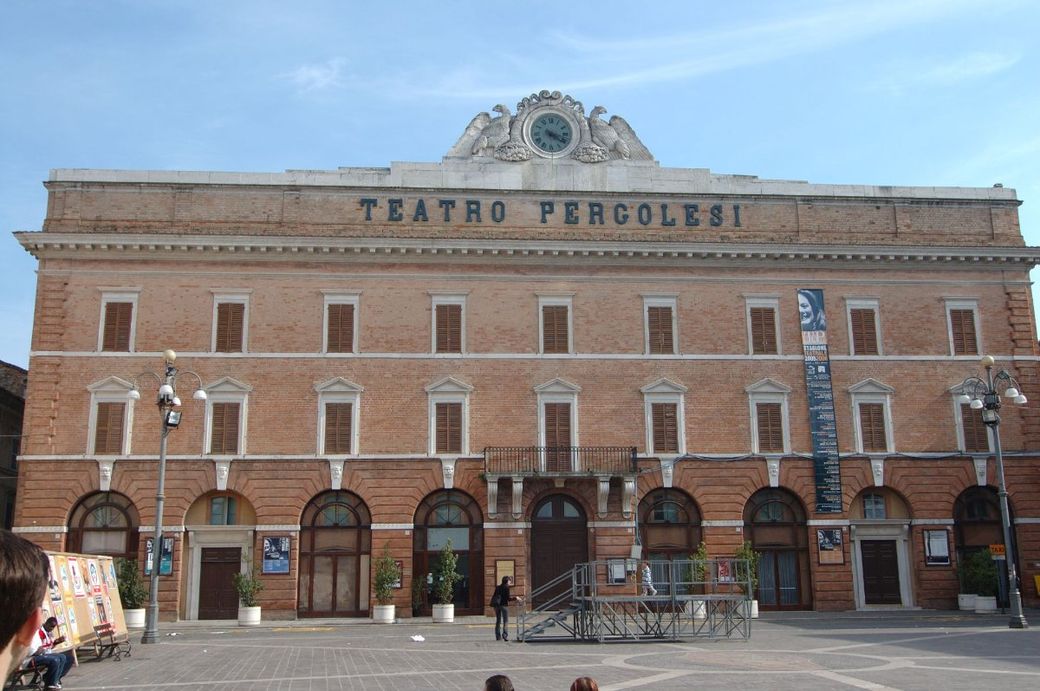
Giovanni Battista Pergolesi finished L'Olimpiade in 1735 and was dead within the year, at twenty-six, of causes his admirers have spent three centuries wishing had waited. That leaves every recording of the opera doing a job beyond the one printed on the libretto. Yes, it has to stage the plot — disguised athletes, mistaken lovers, a mix-up at the ancient Games that nobody watching would mistake for actual sport — but it also has to argue, on a dead man's behalf, for a career that never got the chance to prove itself. Two recordings are making that argument right now, from opposite ends of a stopwatch, and the ninety minutes between them is the entire fight.
Alessandro De Marchi's account is the one you'd hand a scholar: a patient four hours that lets the opera breathe at something like its original scale, recitative and all. Giulio Prandi's new recording with the Orchestra Ghislieri — taped live last year in Jesi, Pergolesi's hometown — takes a knife to that runtime and gets out in two and a half hours, and the critics who've sat through both agree on roughly what got cut and why. Reviewing De Marchi for BBC Music Magazine, Berta Joncus admired the drama but flagged its 'long stretches of secco recitative' — the sung-speech connective tissue between arias that, stretched too far, turns a baroque opera into a story told in instalments. Prandi's edit goes straight at that complaint and removes it.
What that buys is momentum, and the Guardian's Clive Paget hears it: he calls the conducting 'ideally pacy,' the orchestra 'sinewy and tightly sprung,' and rates Carlotta Colombo's Aristea and Theodora Raftis's boyish Megacle without a single reservation. What it costs is body — Paget himself concedes the set 'lacks the sonic depth' of De Marchi's studio sound, and the live source comes with stage noise and the odd burst of applause bleeding through the mix. Neither recording is wrong; they're answering different questions. De Marchi is the version for someone who already loves this opera and wants to live inside it. Prandi is the version that makes a stranger fall for it in the first place — and since most listeners meeting L'Olimpiade for the first time haven't earned De Marchi's patience yet, Prandi is the one to buy first. You can always go back for the other three centuries' worth of secco recitative once you're hooked.
Pizzicato
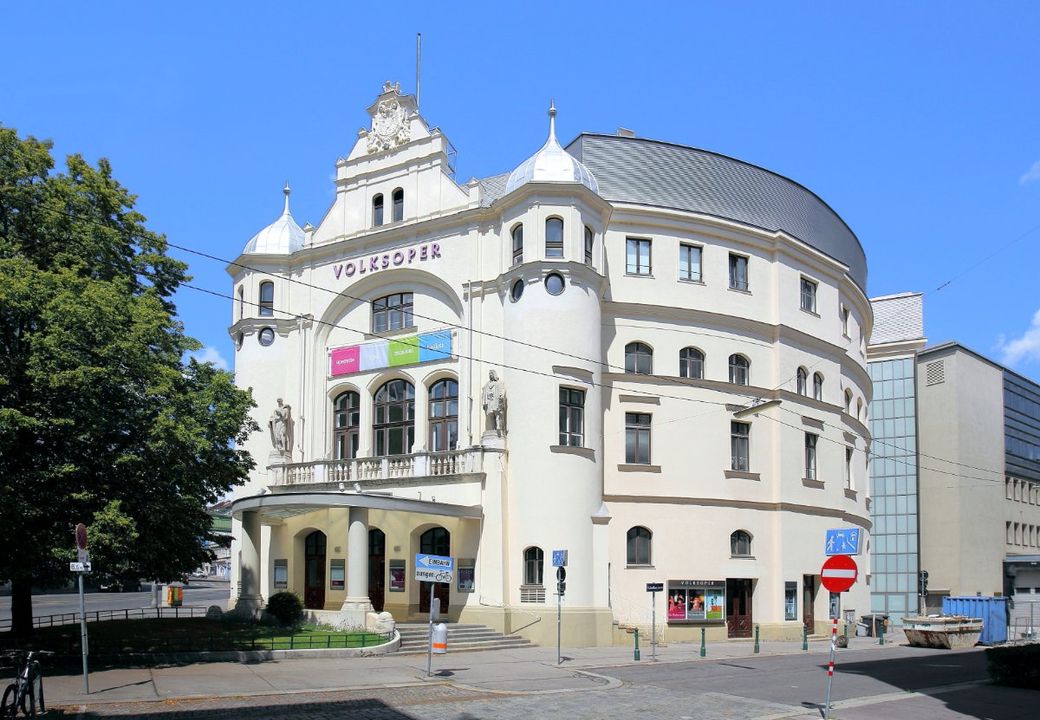
Trevor Haumschilt-Rocha's prize in France is a fine result for one baritone. It is also a small piece of evidence in a much older argument — about how an art form replaces itself — and that argument is why the win is worth more than a line in a results column.
Haumschilt-Rocha was trained inside the Volksoper Vienna's Opernstudio, the European house's oldest and least glamorous institution: the apprentice tier, where a young singer is bound to a working theatre for two or three seasons and learns the trade by doing it. Covering roles. Waiting in the wings. Absorbing an entire repertory in performance until technique stops being something you think about and becomes something you have. It is the operatic equivalent of the guild workshop, where a painter ground pigment for years before he was trusted near the master's canvas — slow, unglamorous, and unmatched at producing people who can actually do the work.
Which raises the uncomfortable question of why almost no American company still runs one.
Read the rest of this essay — on what the apprentice model still has to teach the institutions that abandoned it — with a Stradisphere membership: stradispheremusic.com/blog-1/how-singers-are-made
Newsbag
Read the full feature on Stradisphere
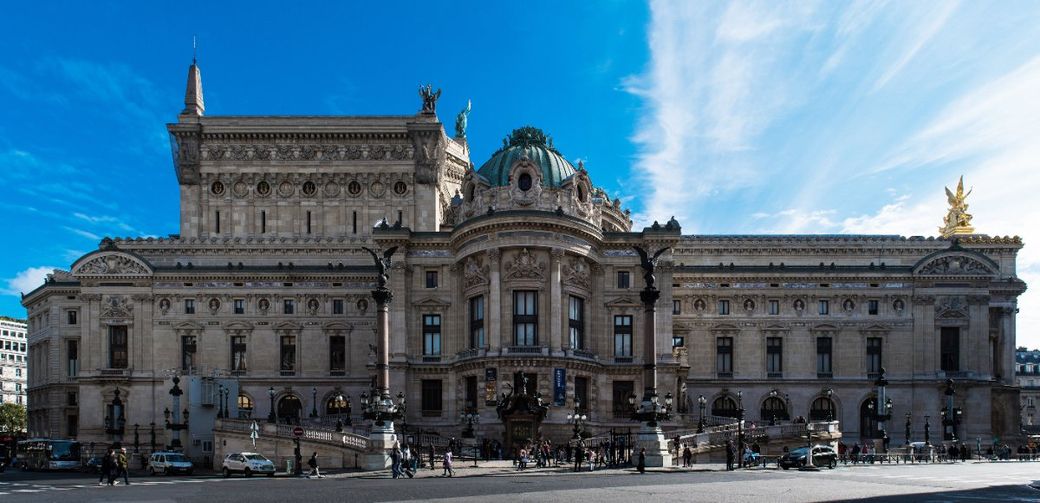
Trevor Haumschilt-Rocha's week resists a tidy summary. Cut before the final round of the Sumi Jo International Singing Competition in France, the young Mexican-American baritone was called back to sing only because the jury's president refused to let the voice go — and then won it outright, taking the €50,000 first prize. Slippedisc, reporting the result, filed him under the obvious word: 'rescued.'
The near-miss is the hook; the training is the substance. Haumschilt-Rocha spent 2024 to 2026 in the Volksoper Vienna's Opernstudio, made his Zurich Opera debut this past season, and next season joins the Troupe Lyrique of the Paris Opera — a baritone being built the slow way, in public, inside institutions that still believe singers are made rather than found.
We've written the full story — how he nearly went home, and what his path says about the way great voices are actually made — as the first feature on our new News page.
On This Day
On This Day: The Thames Becomes a Concert Hall, 1717
Britannica

On this day in 1717, the concert hall was a river. At about eight in the evening on 17 July, King George I stepped onto a royal barge at Whitehall and was carried up the Thames toward Chelsea on a rising tide; a second barge, provided by the City of London, held some fifty musicians playing music written for the occasion by a German newcomer to London named George Frideric Handel. So many Londoners rowed out to follow that, by one contemporary account, the whole river was in a manner covered with boats.
What drifted across the water was the Water Music — not one piece but a set of suites, dances strung together the way a good evening is: a stately French overture to open the proceedings, then the bright, skipping triple time of a hornpipe, a country dance dressed up for a king. Handel scored it to carry in open air, letting horns and trumpets call and answer over the current, brilliance engineered for a room with no walls.
The King liked it enough to demand it three times over, upstream and back, until he stepped ashore again near eleven. There is a lesson tucked inside the extravagance, and it is a cheerful one: three hundred years before anyone coined the phrase 'audience development,' an institution grasped that music meets its public best when it goes out to find them — even if that means loading the orchestra onto a boat.