Who Holds the Deed? The Kennedy Center Name Ruling
NPR
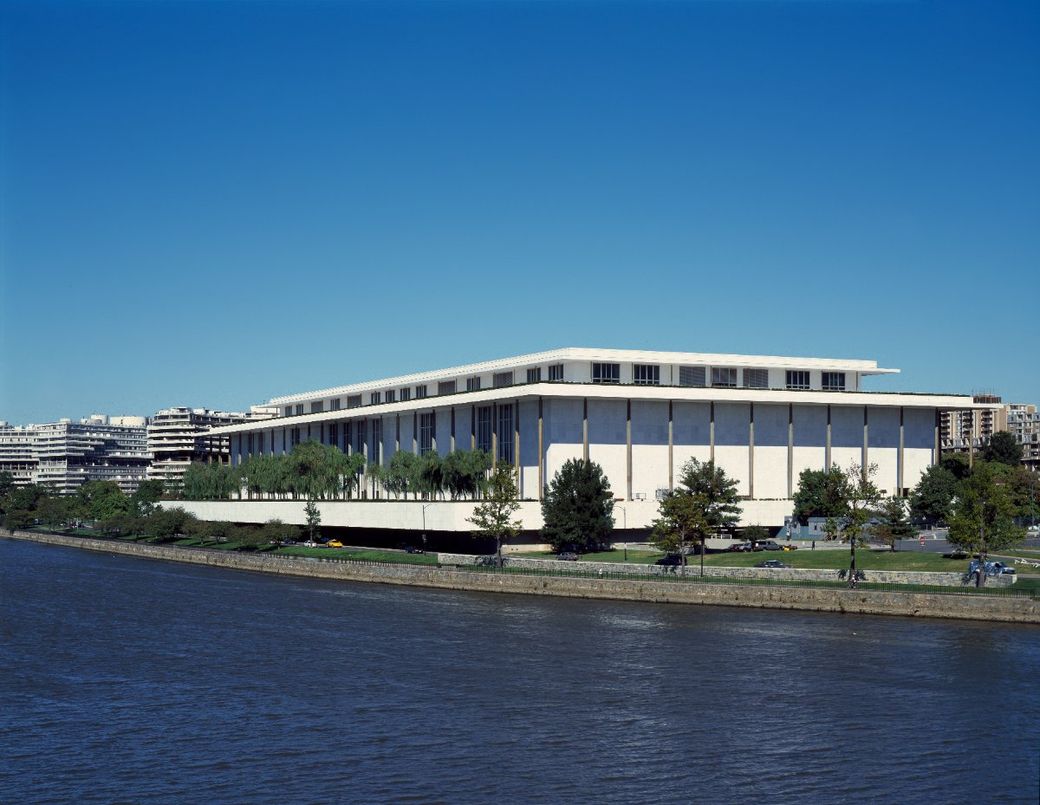
A naming dispute at the John F. Kennedy Center for the Performing Arts reached a federal appeals court this month, which on 8 July declined to step in, as NPR reported. The dispute traces to the contested 2025 board takeover, which President Trump framed as ushering in a "Golden Age in Arts and Culture" and his opponents called an authoritarian seizure of an institution meant to run independent of the White House. Each side claimed to be protecting art. But the charter that built the place reveals a cultural tension.
By the Center's own published listings, its two named flagship classical companies — the National Symphony Orchestra, written into the building's own governing structure, and Washington National Opera — account for something on the order of 115 performances a year. Fold in the Fortas chamber series, visiting recitalists, and the rest of the classical-family programming and the figure climbs. Even generously counted, it lands somewhere between roughly six and thirteen percent. The Kennedy Center's own programming office counts "over 2,000 performances annually across nine stages" in a full calendar. Whichever end of that range you take, the clear majority of the calendar goes to acts such as hip-hop, comedy, touring Broadway, rock, and popular entertainment of every kind. The building has nine stages, organized around nine named artforms. Classical, even counting New Music and its contemporary offshoots, accounts for at most three of them.
None of which is a scandal, and none of those other forms is an intruder. The point isn't ranking; it's definition. The Center's 1958 mandate was to present "classical and contemporary music, opera, drama, dance, and other performing arts." Classical and contemporary music named the two ends of a single tradition. The legislation was signed in September 1958 — the same year Elvis Presley was inducted into the Army, with rock and roll barely two years past "Heartbreak Hotel" and nowhere near a claim on serious cultural institutions. "Contemporary music" in that context meant a living composer working inside the classical tradition, not something standing apart from it. Today the same phrase covers nearly anything currently being made. The mandate was structured to sustain the composer of remarkable and challenging ideas by connecting them to seasoned listeners willing to meet the work halfway. That category now shares its cultural viewership with artists who already dominate stadiums, Spotify, and radio. A Ligeti or a Cage of that era — difficult, unproven, working at the far edge of what the tradition could absorb — would find almost no institutional room today. As the institution's own published programming suggests, the category built to carry that work has been redistributed to everything else. An established Adès or Chin still commands a stage; the emerging one has nowhere to become that. The mandate describes a pathway, a way for new and demanding ideas to enter the tradition and mature inside it.
Popular music has a commercial apparatus built to carry it — arenas, labels, festivals, streaming, a pipeline that funds the next act from the receipts of the last. A national cultural center offers classical music something different: public support standing between the art and the box office. So the question cuts both ways. Is it wrong for such a place to program in rough proportion to demand, giving each of its stages its share? Perhaps not. But run the logic in reverse and the strangeness shows: imagine a cinema that screens one feature film while every other auditorium runs opera broadcasts, and call that a movie theater.
What the charter's language and the season's numbers actually open up is a conversation the culture rarely has directly: what happens to a centuries-old tradition when the institution built to shelter it increasingly looks like everything else. The larger question isn't about any one building or administration. It's about what classical music's place in American life actually requires going forward — in classrooms, in outreach to new listeners, in the ordinary promotion every other genre already takes for granted. Where, exactly, is classical music's own seat at that table?