The Vault and the Gamble: What Boston and the Met Reveal About Classical Music's Vanishing Patron
Slippedisc
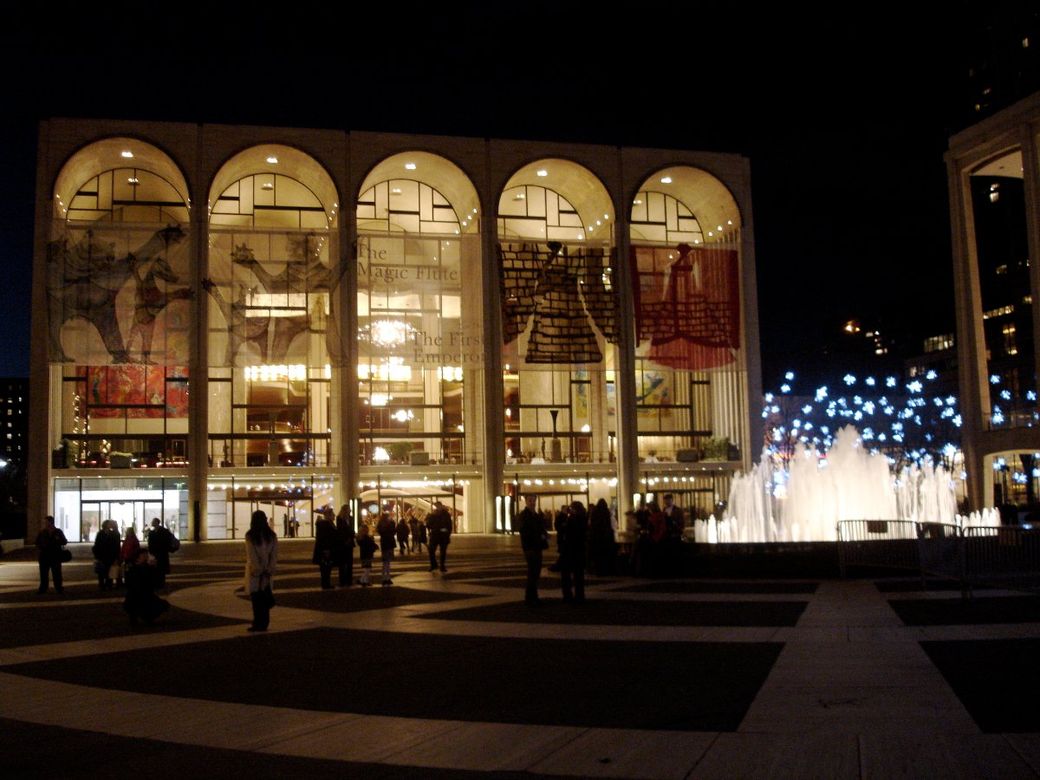
The Boston Symphony Orchestra, the oldest of the American 'Big Five,' has filed accounts that read at first like a boast and, on a second look, like a warning. For the year ending 31 August 2025 the orchestra took in a record $155 million and posted a $27 million surplus — its largest since the James Levine era — while the endowment reached a new high of $603 million (source). Set against a field bracketed by hiring freezes and shortened seasons, Boston looks less like a peer of the New York Philharmonic than a household on higher ground while the neighbors bail out their basements.
The revealing figure is not the total but what sits inside it. An analyst's read of the filings found that illiquid private-equity and venture partnerships now make up about a fifth of the endowment, up from six percent in 2019 (source) — money locked away for years and subject to capital calls the orchestra cannot refuse. Since 2009, by that measure, the fund has trailed a plain index fund in all but three years.
Boston's answer to a changing support model is to chase better returns and accept less flexibility. Two hundred miles south, the Metropolitan Opera is answering the same underlying question more visibly, and at far greater cost. Subscriptions, which once locked in 45 percent of the Met's seats each season, have fallen to 15 percent, and the average subscriber is now 70 (source). Last year the company discovered that a donor it had spent years cultivating, and had elevated to its board, did not have the tens of millions he had pledged; the Met was left to return funds it had already booked (source).
Facing that gap, and after Moody's had already downgraded its debt toward junk over $120 million in endowment draws since fiscal 2023 (source), the Met signed an agreement in September 2025 with the Saudi Music Commission worth up to $200 million over the coming years, in exchange for performing annually at the new Royal Diriyah Opera House outside Riyadh (source). The deal drew criticism over Saudi Arabia's human rights record. Gelb's defense was direct: "All the democratic governments that I know of are engaged in business with Saudi Arabia," he said, adding that he had to put the survival of the institution first (source). Saudi Arabia frames the same investment differently: its Vision 2030 cultural strategy describes the opera house and the country's new national orchestra as evidence it means to help shape a global culture, not simply receive one from the West (source).
None of it mattered by April 2026. Saudi officials told Gelb the deal was off, citing economic damage from the war in Iran and the closure of shipping through the Strait of Hormuz (source) — a reason with nothing to do with opera and everything to do with the fact that the Met's rescue depended on a government whose priorities it did not control. The company now faces a $30 million shortfall it must close by 31 July, and has reportedly turned to selling the Chagall paintings that have hung in its lobby for sixty years (source).
None of this happened in a vacuum. The industry's own debate over access and inclusion has, in recent years, increasingly framed the classical audience's traditional composition — older, wealthier, less representative of the country at large — as itself an obstacle to the art form's future, a framing some scholars describe as a false dichotomy between diversity and quality that avoids the harder question of what actually replaces that base's giving (source). Wanting an audience and donor base that looks more like the country classical music serves is not, in itself, a case against the tradition. But neither institution has said in public what replaces the money and flexibility that older model provided while a new one is still being built. In its absence, this is what institutions reach for instead: a foreign government's opera house, or a locked box of private equity.
Endowments and government partnerships are both tools, and a tool is only worth what you can still lift when you need it. Boston's is locked in funds that have underperformed a plain index for most of the last fifteen years. The Met's broke the moment a war six thousand miles away touched an oil strait it had no hand in. Neither institution chose those particular risks so much as backed into them, looking for capital that didn't require rebuilding the relationships that used to fund the work. The question their boards haven't answered yet: what does a support model actually built for classical music's next fifty years look like, and who is doing the work of building it?
Sources:
Tax returns show Boston Symphony is rolling in money (Slippedisc)
How Boston Symphony mishandles its money (Slippedisc)
The Met's 'Big Bet' on Contemporary Opera Looks Like a Loser (City Journal)
The Case of the Fake Donor (New York Magazine)
NYC's Metropolitan Opera Debt Cut Deeper Into Junk by Moody's (Bloomberg)
Met Opera and Saudi Music Commission announcement (Metropolitan Opera)
Metropolitan Opera & Peter Gelb Sign Problematic Business Deal With Saudi Arabia (OperaWire)
Saudi Arabia's Opera Strategy and Vision 2030 (vision2030.ai)
Metropolitan Opera's funding agreement with Saudi Arabia falls through (CBS New York)
Classical Music Futures: Classical Music has a Diversity Problem (Open Book Publishers)