Inside the archive built to outrun accident: the Fryderyk Chopin Institute
Interlude
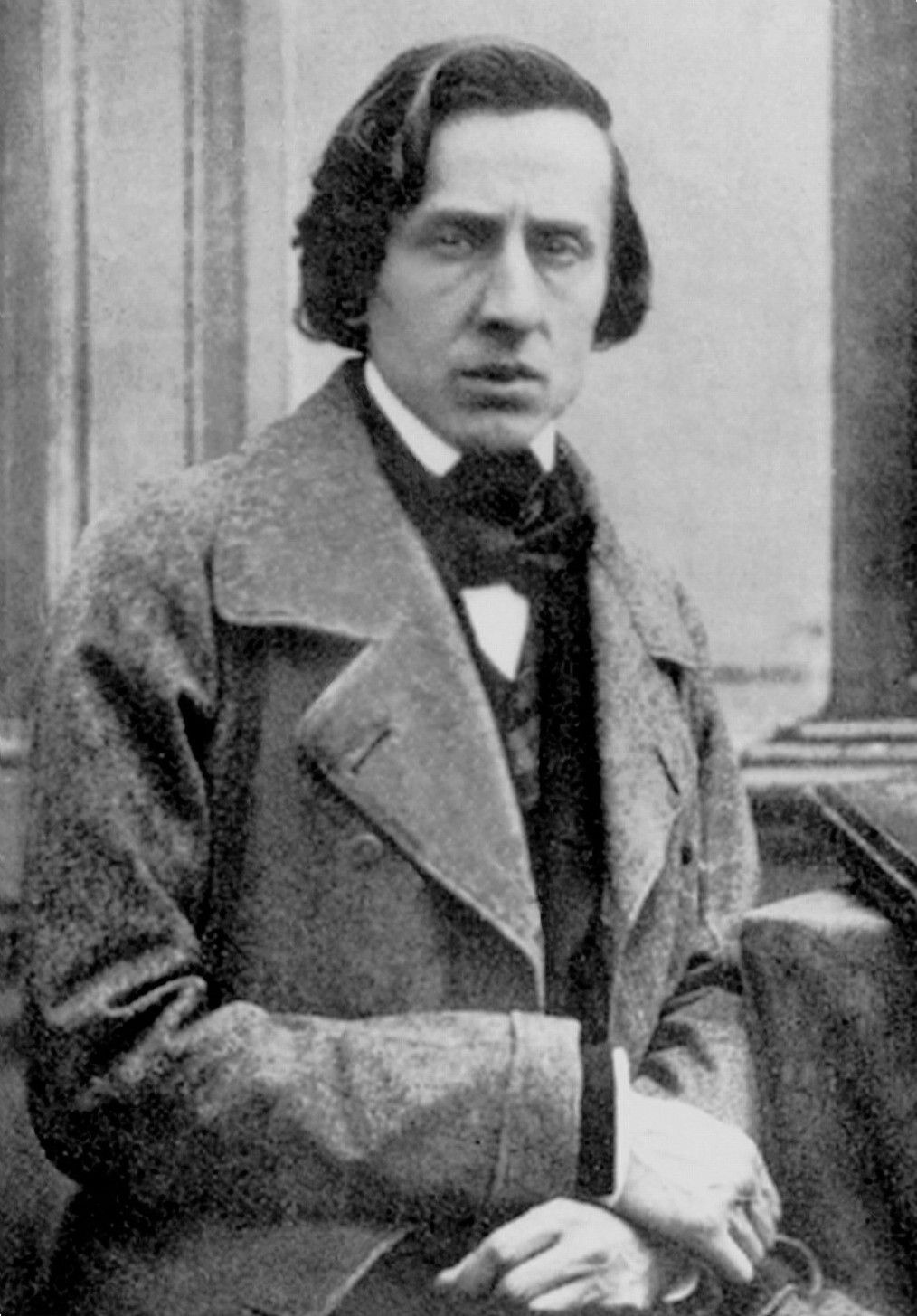
Most composers' legacies survive by luck: a stray manuscript in a drawer, an heir who didn't throw things away. Chopin's survives by design. Since 2001, the Fryderyk Chopin Institute in Warsaw -- under director Artur Szklener since 2012 -- has been assembling what amounts to an engineered insurance policy against the ordinary accidents of cultural memory: roughly 30,000 archival items, an 86,000-image photo archive, and some 15,000 recordings, including historic performances by Paderewski and Rachmaninoff.
The Institute's most distinctive project is "The Real Chopin," a historically informed performance series that records his works on the actual kinds of instruments he wrote for -- Pleyels, Erards, a Broadwood, and a reconstructed Buchholtz piano built around 1825-26, close to what a young Chopin would have played on before he ever left Warsaw. A companion series, "Chopin's Time Music," goes further still, reviving contemporaries who shared his Warsaw and Paris circles but never got their own institute: Dobrzynski, Lipinski, Krogulski -- composers whose names most listeners have never encountered, because nobody built them a comparable archive. Dobrzynski was a classmate of Chopin's under the same Warsaw teacher, Jozef Elsner, and later wrote a symphonic Hommage a Beethoven for the 1845 unveiling of Beethoven's statue in Bonn -- direct proof he saw himself working in Beethoven's shadow as much as Chopin's. Lipinski was a violinist good enough that Paganini, asked who the greatest living violinist was, reportedly answered "I don't know who the greatest is, but Lipinski is certainly the second" -- he went on to mentor both Joseph Joachim and Henryk Wieniawski. Krogulski was a genuine child prodigy who died at 26, having already written a piano concerto and a piano octet still good enough that specialist labels record them today.
That same pattern -- a handful of documented giants next to dozens of forgotten near-contemporaries -- runs through Beethoven, Haydn, and Mozart's Vienna too. Joseph Martin Kraus, praised by both Haydn and Gluck as a genius in his own lifetime; Carl Ditters von Dittersdorf; Johann Vanhal; Carl Stamitz; Franz Beck. None of them got a Chopin Institute. What they got instead was quieter and far less funded: the German label CPO has built its entire identity since 1986 around recording complete cycles nobody else would touch, and Naxos's 18th Century Classics series -- fed by roughly seventy newly typeset scores a year from the specialist publisher Artaria Editions -- has spent decades working through Beck, Stamitz, Dittersdorf, and Vanhal's complete symphonies one disc at a time. The contrast is the point: the Chopin Institute is a government-backed, twenty-five-year project engineered around a single, already-famous name, popularizing him further. CPO and Naxos are doing the reverse, unglamorously and without an institute's budget, for a dozen composers most audiences will never learn to recognize by name -- a genuinely grassroots revival running quietly alongside the well-funded, populist kind.
Genius is the story we like to tell about why some composers endure and others vanish, but Warsaw and Vienna together make the same counter-argument twice over: endurance is mostly a funding decision. Sometimes that funding is loud and institutional, twenty-five years and a government behind a single name. Sometimes it's a small label quietly working through a back catalog nobody asked for. Either way, it's sustained decade after decade by people who are not the composer.