Stradisphere — July 30, 2026
Edition #156 · Thursday, July 30, 2026
Editor's Brief
Four stories in this issue, on their surface, have nothing to do with each other: a Warsaw archive, two opera houses in the Amazon rainforest, a satirical cantata about a dead canary, and a composer's older sister whose music didn't make it to us at all. Put them side by side and one question keeps surfacing -- what actually decides whether a piece of music, a building, or a body of work survives, and who takes the trouble to make sure it does?
The Fryderyk Chopin Institute in Warsaw is the clearest case: twenty-five years of deliberate, well-funded archival engineering built specifically so that Chopin's legacy would not be left to chance the way so much else has been -- including his own forgotten Warsaw contemporaries, and the wider circle of Beethoven, Haydn, and Mozart-adjacent composers who survive today mostly through small labels quietly doing the same work with none of the funding. The Teatro Amazonas and Theatro da Paz survived by accident as much as design -- opera houses built on rubber money in the middle of the rainforest, outlasting the boom that paid for them, now UNESCO World Heritage sites nobody in 1896 could have planned for. Telemann's funeral cantata for a pet canary survived mostly because it was funny enough that someone bothered to copy it out. And Nannerl Mozart's own compositions didn't survive at all -- what we have is a paper trail about her, not from her.
Read together, they make the same point from four different angles: talent alone has never been enough. Someone has to fund the archive, build the theater, keep the joke in circulation, or simply decide whose manuscripts are worth saving. That's the throughline for today's issue.
Analytical Piece
Inside the archive built to outrun accident: the Fryderyk Chopin Institute
Interlude
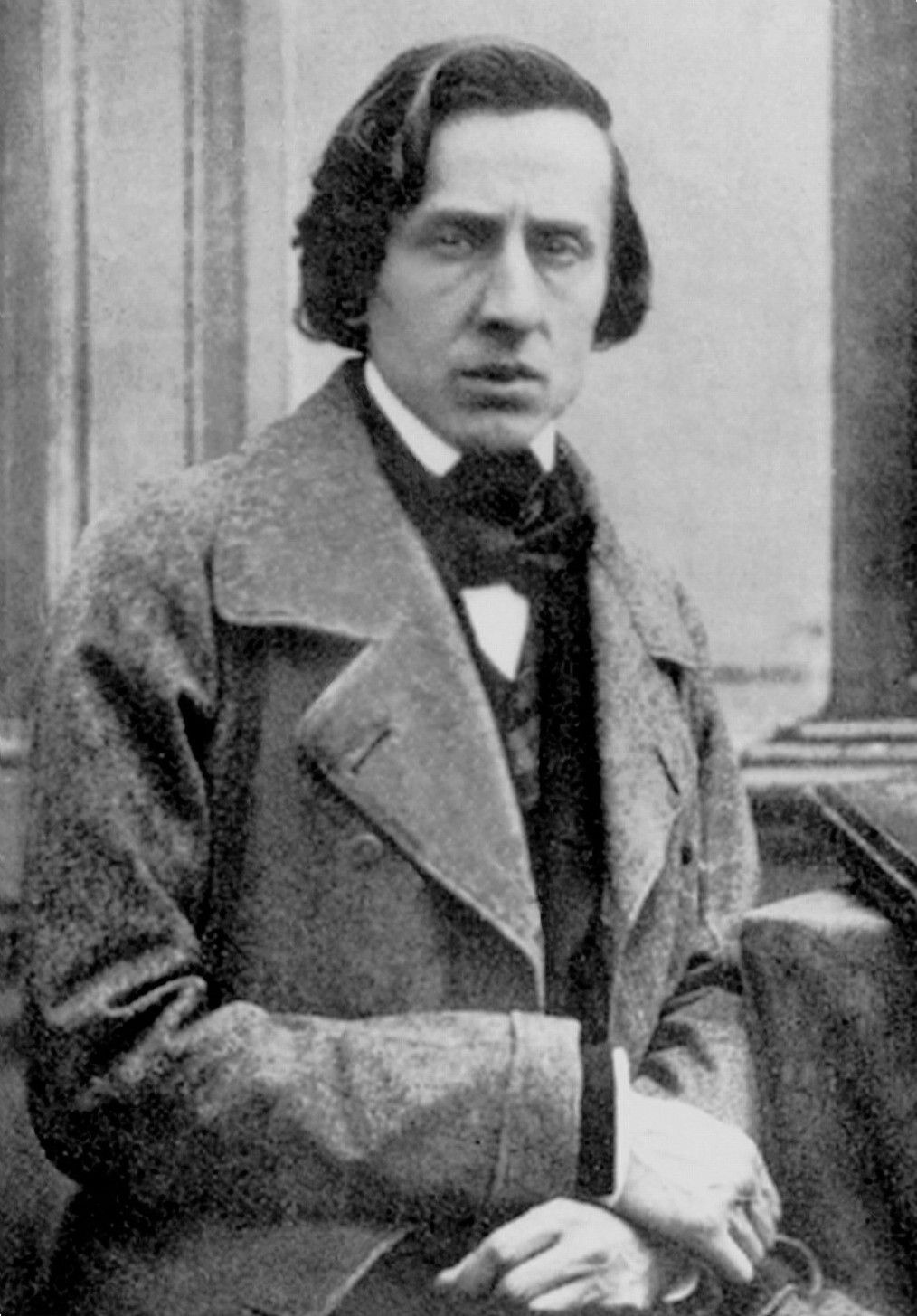
Most composers' legacies survive by luck: a stray manuscript in a drawer, an heir who didn't throw things away. Chopin's survives by design. Since 2001, the Fryderyk Chopin Institute in Warsaw -- under director Artur Szklener since 2012 -- has been assembling what amounts to an engineered insurance policy against the ordinary accidents of cultural memory: roughly 30,000 archival items, an 86,000-image photo archive, and some 15,000 recordings, including historic performances by Paderewski and Rachmaninoff.
The Institute's most distinctive project is "The Real Chopin," a historically informed performance series that records his works on the actual kinds of instruments he wrote for -- Pleyels, Erards, a Broadwood, and a reconstructed Buchholtz piano built around 1825-26, close to what a young Chopin would have played on before he ever left Warsaw. A companion series, "Chopin's Time Music," goes further still, reviving contemporaries who shared his Warsaw and Paris circles but never got their own institute: Dobrzynski, Lipinski, Krogulski -- composers whose names most listeners have never encountered, because nobody built them a comparable archive. Dobrzynski was a classmate of Chopin's under the same Warsaw teacher, Jozef Elsner, and later wrote a symphonic Hommage a Beethoven for the 1845 unveiling of Beethoven's statue in Bonn -- direct proof he saw himself working in Beethoven's shadow as much as Chopin's. Lipinski was a violinist good enough that Paganini, asked who the greatest living violinist was, reportedly answered "I don't know who the greatest is, but Lipinski is certainly the second" -- he went on to mentor both Joseph Joachim and Henryk Wieniawski. Krogulski was a genuine child prodigy who died at 26, having already written a piano concerto and a piano octet still good enough that specialist labels record them today.
That same pattern -- a handful of documented giants next to dozens of forgotten near-contemporaries -- runs through Beethoven, Haydn, and Mozart's Vienna too. Joseph Martin Kraus, praised by both Haydn and Gluck as a genius in his own lifetime; Carl Ditters von Dittersdorf; Johann Vanhal; Carl Stamitz; Franz Beck. None of them got a Chopin Institute. What they got instead was quieter and far less funded: the German label CPO has built its entire identity since 1986 around recording complete cycles nobody else would touch, and Naxos's 18th Century Classics series -- fed by roughly seventy newly typeset scores a year from the specialist publisher Artaria Editions -- has spent decades working through Beck, Stamitz, Dittersdorf, and Vanhal's complete symphonies one disc at a time. The contrast is the point: the Chopin Institute is a government-backed, twenty-five-year project engineered around a single, already-famous name, popularizing him further. CPO and Naxos are doing the reverse, unglamorously and without an institute's budget, for a dozen composers most audiences will never learn to recognize by name -- a genuinely grassroots revival running quietly alongside the well-funded, populist kind.
Genius is the story we like to tell about why some composers endure and others vanish, but Warsaw and Vienna together make the same counter-argument twice over: endurance is mostly a funding decision. Sometimes that funding is loud and institutional, twenty-five years and a government behind a single name. Sometimes it's a small label quietly working through a back catalog nobody asked for. Either way, it's sustained decade after decade by people who are not the composer.
Two rubber-boom opera houses in the Amazon just became UNESCO World Heritage sites
SRF
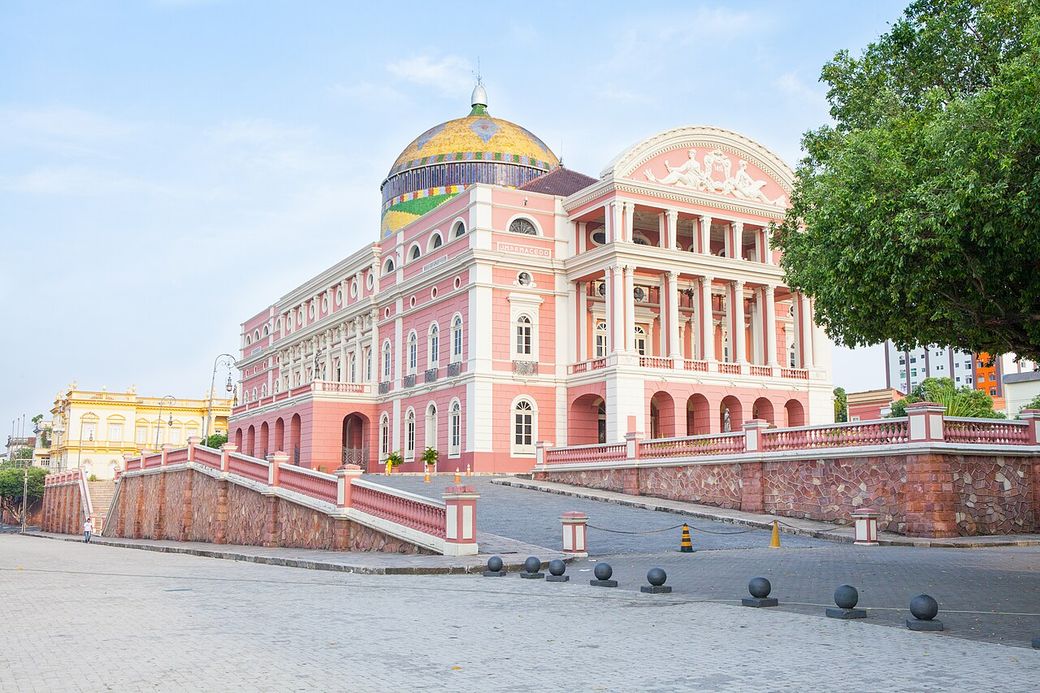
Between 1879 and 1912, the Amazon controlled the world's rubber supply, and two cities in the middle of the rainforest got rich enough to build opera houses. The Theatro da Paz opened first, in Belem in 1878, seating 1,100 and modeled directly on Milan's La Scala; the Teatro Amazonas followed in Manaus in 1896, after twelve years of construction. Both were built entirely on money extracted from wild rubber trees by an industry that had, at most, three more decades to live. Neither city had a functioning railway to the coast -- every piece of the buildings, Italian marble, French stained glass, British ironwork, thousands of tiles for the dome's mosaic, had to come by ship, up the Amazon River from the Atlantic, the same route the rubber itself went out on.
That same river was the only way in for performers, too. European touring opera companies took a transatlantic steamer to the Brazilian coast, then transferred to a second ship for the days-long voyage upriver, arriving in a city whose imported opulence had briefly earned it the nickname "Paris of the tropics." The Teatro Amazonas opened on January 7, 1897, with a real Italian touring company staging Ponchielli's La Gioconda -- not, as a persistent modern legend holds, Enrico Caruso singing Verdi's Ernani. That story was invented for Werner Herzog's 1982 film Fitzcarraldo, which staged a fictional Caruso performance at the theater; no record places him in Manaus at all, and he was 21 and unknown outside Italy when the house opened. Theatro da Paz's real bookings are arguably the better story anyway: home-grown Brazilian opera by Carlos Gomes, and, in 1918, a tour stop by the Russian ballerina Anna Pavlova, arriving well after the rubber economy that built her venue had already collapsed.
That collapse came fast. Brazilian rubber seeds smuggled out to British Malaya in 1876 grew into plantations that could out-produce wild Amazonian trees at a fraction of the cost, and by the 1910s both cities' rubber economies had cratered. The Teatro Amazonas went dark in 1924 -- no touring company could justify the trip once the money that paid for the opera stopped moving through the port. Both houses sat dimmed for decades, revived only by 20th-century government preservation money and, eventually, their own opera festivals.
It's tempting to read this as a familiar twist on the usual story of a place borrowing European opera-house prestige to broadcast local identity. But it runs the other direction: these were never state projects. They were built by a regional merchant elite trying to buy Old World legitimacy with New World money, and they survived the collapse of the very economy that justified them, entirely by accident of good construction and, eventually, government preservation money that arrived generations after the original rubber barons were gone. This month, that whole arc got its formal recognition as UNESCO World Heritage.
Bachtrack
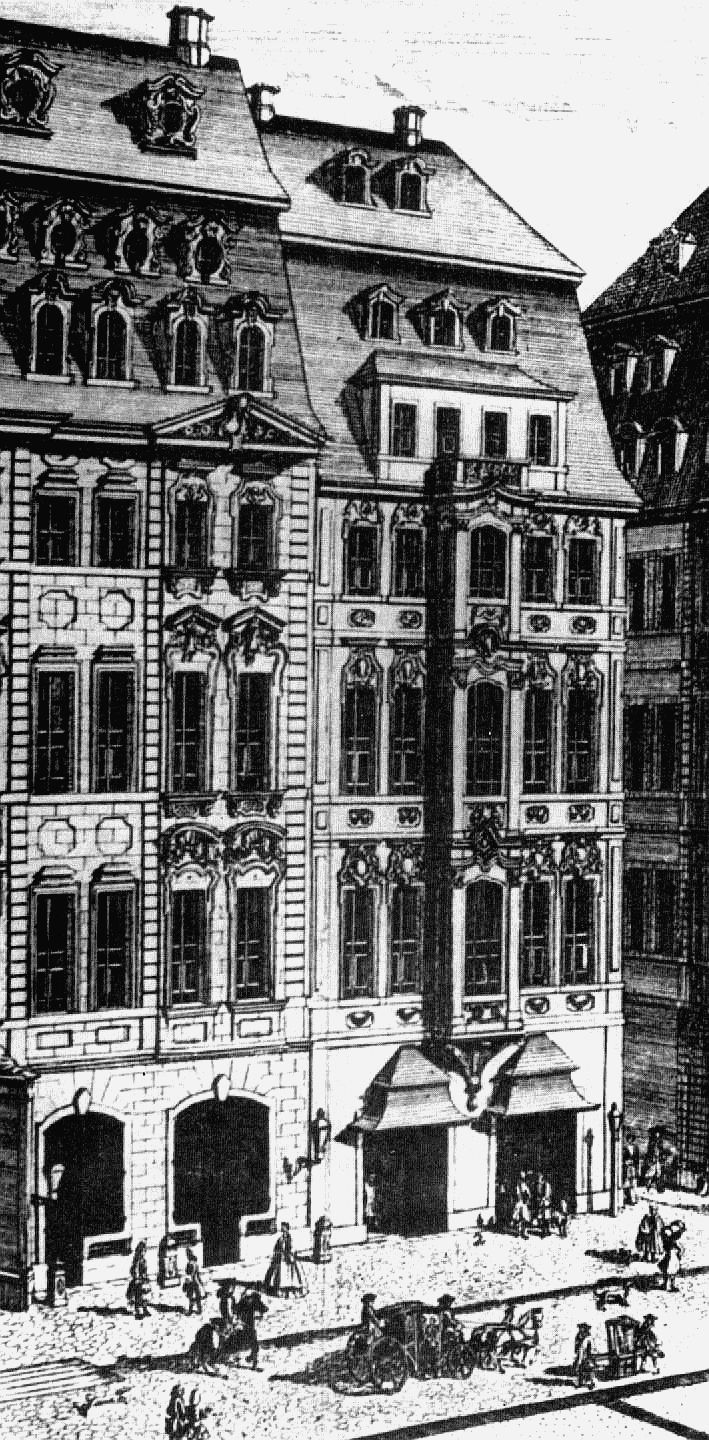
In 1737, Georg Philipp Telemann's pet canary died -- reportedly killed by a cat -- and he responded the way an 18th-century composer with a sense of humor responds: he wrote it a full funeral cantata, "Trauer-Musik eines kunsterfahrenen Canarienvogels" ("Funeral Music for an Artistically Skilled Canary"), complete with mourners, a sermon-like recitative, and mock-solemn arias grieving a bird that could apparently sing better than most people. It is, genuinely, a real piece in Telemann's catalogue, not a novelty invented for this review. This month the ensemble Australian Baroque staged it in Perth, with mezzo-soprano Brigitte Heuser leading the mourning, alongside a running joke about the offending cat's containment policy.
They paired it with a piece far more people have actually heard of without knowing what it is: Bach's "Coffee Cantata" (BWV 211), a miniature comic opera about a young woman, Lieschen, whose father can't get her to quit her coffee habit. Bach wrote it for his own Collegium Musicum, a voluntary ensemble he directed from 1729 that performed weekly not in a church but in Zimmermann's coffee house in Leipzig -- the actual target audience for a joke about a coffee addict, drinking coffee, while the joke played.
Put next to each other, the two pieces make a point that's easy to lose under the reputation Baroque music has for being devotional and formal: the cantata was an extremely flexible container. Telemann and Bach used the same tools -- recitative, da capo aria, chorale -- to eulogize a bird and mock a caffeine habit as readily as to set scripture. The joke was the point, and the audience was in on it from the first bar.
Newsbag
Opéra National de Paris names Polina Lebedieva Conductor in Residence
OperaWire
Ukrainian conductor Polina Lebedieva, currently Assistant Conductor there, steps into the new residency from September 2026.
Read the full story →Bayreuth announces two new productions for its 2027 season
ResMusica
Coming off its AI-assisted 150th-anniversary Rheingold, the festival has already announced its next programming move for 2027.
Read the full story →Manchester appoints Arts Council veteran as Director of Culture
Slippedisc
Jennifer Cleary moves from Arts Council England into the city's top culture post, the latest instance of the funder-to-administrator pipeline.
Read the full story →Verbier Festival extends Shenzhen partnership through 2028
OperaWire
The Swiss festival and Wu Promotion extend their China partnership another two years -- part of a broader pattern of Western festivals building a second home in the Chinese market.
Read the full story →On This Day
On This Day: Maria Anna "Nannerl" Mozart, born July 30, 1751
Wikipedia / historical record
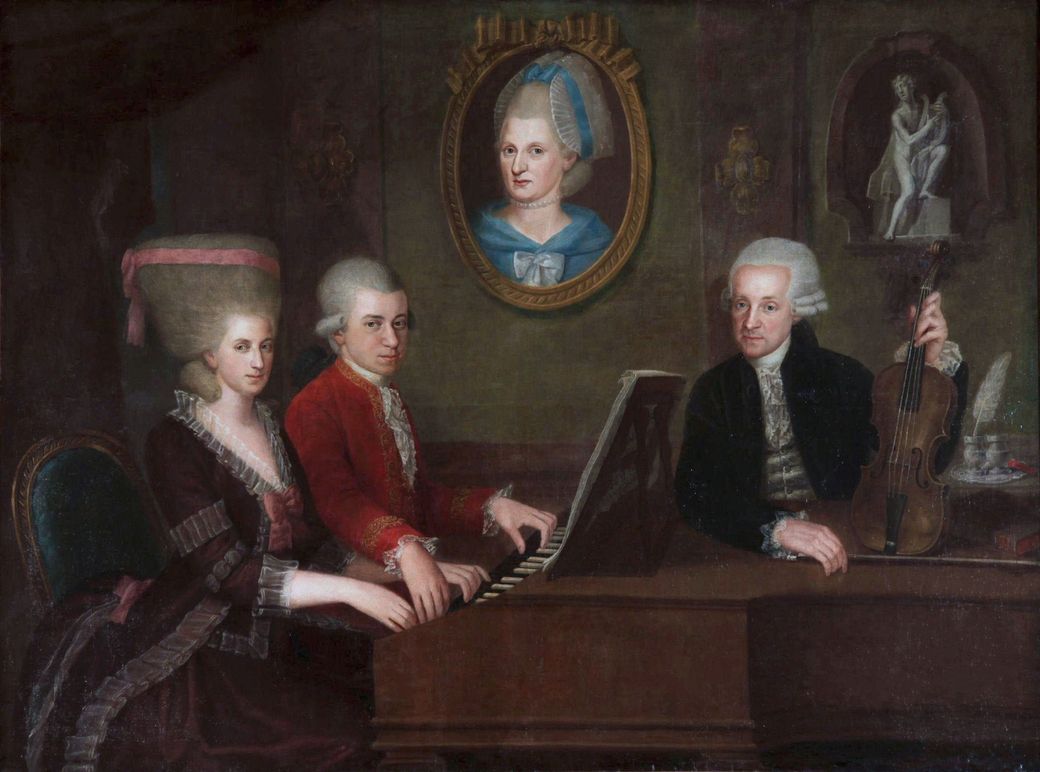
Maria Anna Mozart -- called "Nannerl" by her family -- was born in Salzburg on July 30, 1751, four and a half years before her brother Wolfgang. When their father Leopold took the family on tour through Europe's courts in the 1760s, it was Nannerl, not the young Wolfgang, who was often billed first: a genuine child-prodigy keyboardist in her own right, not merely her famous brother's opening act.
Leopold's surviving letters describe Nannerl composing music of her own during these years, and Wolfgang himself, in a letter written when he was 14, praised a song she had sent him. None of it survives. What we have instead is a paper trail about her talent, written by other people, rather than a single manuscript in her own hand -- a gap archivists still debate: were her compositions never preserved, or simply never fully credited to begin with.
Her performing career effectively ended around 1769, when she turned 18 and reached the age Leopold considered proper for a young woman to stop touring and focus on marriage prospects -- a convention Wolfgang, as a man, never had to reckon with. She married a magistrate in 1784 and lived until 1829, outliving her brother by nearly four decades. Whatever she wrote in her own hand, if it ever existed as more than a few pages, simply wasn't kept -- a small, specific reminder that the canon we've inherited reflects what somebody bothered to save as much as what was actually written.
Also Worth Noting
Lowell Liebermann writes new flute sonata to celebrate Sir James Galway — The Violin Channel