Thea Musgrave, 98, Sends Her Bassoon Concerto Walking Out of the Dark
The Guardian (Flora Willson)
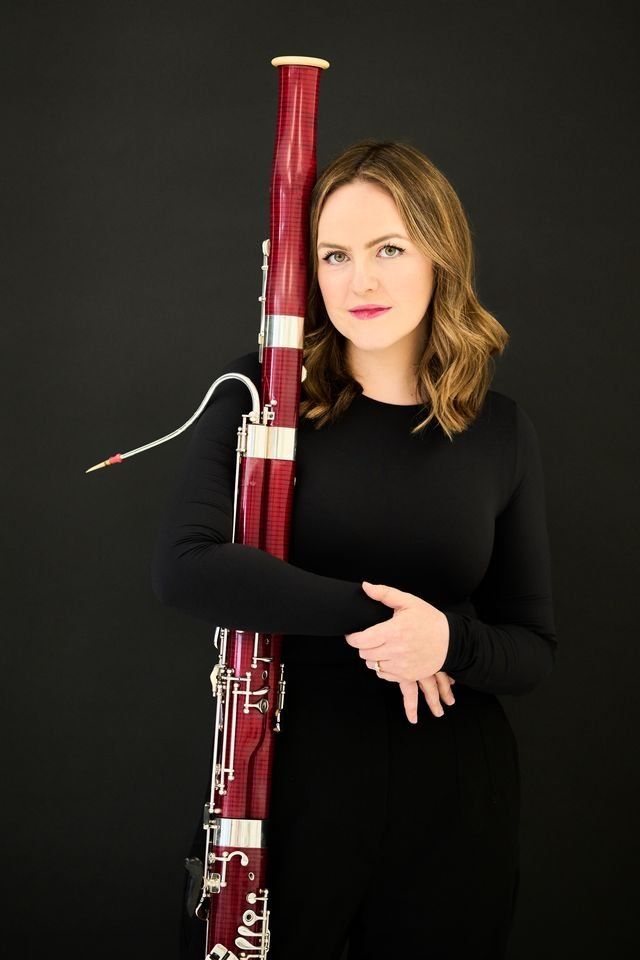
At the Proms this year, one premiere had already made news before a single note sounded: a new bassoon concerto by a 98-year-old composer whose music first reached that stage in 1960. On 23 August, bassoonist Amy Harman and conductor Benjamin Marquise Gilmore led the Academy of St Martin in the Fields through the world premiere of Thea Musgrave's Out of the Darkness — a twelve-minute concerto built around a single idea: the soloist has to walk to find her way out.
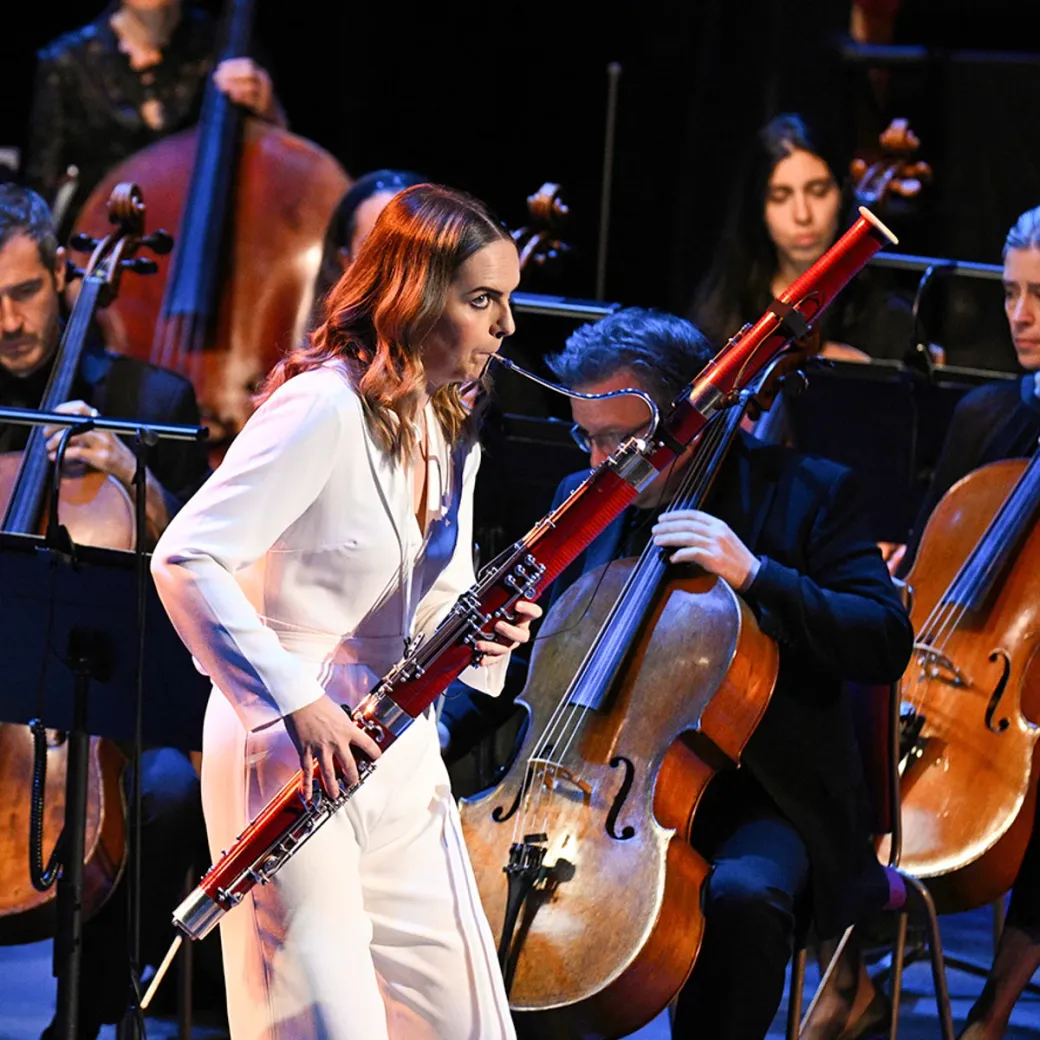
The piece opens in a dark grumble of percussion and low strings, into which Harman answers from the back of the stage, working a warm, low-register vocalise through the gloom. Nothing about the harmony resolves the darkness — only her feet do. Bassoon in hand, she walks forward through the orchestra, pairing off with the trumpets, then the double basses, gathering rhythmic momentum with each section she reaches, until she arrives at the conductor's side — a soloist's ordinary spot — just in time for a disarmingly plain, near-tonal final chord. Critics described it afterward as a literal journey across the stage: hope, in this piece, is a place on the stage floor, and the only way to reach it is to physically go there.
Musgrave has reached for that device — treating where a sound comes from as compositional material, not just staging — since 1968, when her Clarinet Concerto sent its soloist wandering between chamber-sized clusters of players scattered across the platform, because, as she put it at the time, the soloist's small groups "can't hear him unless he joins them" — a practical problem solved by an audibly dramatic one. Her 1971 Horn Concerto answered the same instinct differently, stationing horns around the concert hall itself, so the soloist's calls were literally being answered from around the room. By 1974's Space Play, the idea was in the title outright: nine unconducted players, four woodwinds parked at the platform's corners, spatial separation doing double duty as acoustic device and onstage comedy.
Musgrave inherited the idea of location-as-music from a lineage that runs back over four centuries. Giovanni Gabrieli, organist at Venice's Basilica San Marco in the late 1500s, wrote for choirs split across the building's two opposing balconies — cori spezzati — so a phrase sung on one side would be answered, echo-like, from the other: the earliest known instance of a composer treating a building's own geometry as an instrument. Three and a half centuries later, Charles Ives revived the idea in The Unanswered Question (1908), putting a solo trumpet offstage entirely so its five-note question kept interrupting the onstage strings from a world the audience couldn't see into. The American composer Henry Brant built a career on it: his 1953 Antiphony I, for five orchestral groups positioned around a hall, predates Karlheinz Stockhausen's better-known Gruppen — three full orchestras, three conductors, surrounding the Cologne audience at its 1958 premiere — by five years. Brant kept going for another half-century, winning the 2002 Pulitzer for Ice Field, scored for over a hundred players split into groups spread through the hall. Iannis Xenakis pushed the same idea to its logical extreme in 1966's Terretektorh, seating all 88 musicians in a ring with the audience placed among them, erasing the stage-versus-seats divide entirely.
Musgrave's corner of that lineage stays distinct because her spatial devices always attach to a specific dramatic question rather than function as sound-design for its own sake. In the Clarinet Concerto, the question was literally about hearing each other. In Out of the Darkness, it's about whether a single voice, starting alone in the dark, can physically reach the light everyone else is already standing in. Musgrave, who studied under Nadia Boulanger in Paris in the early 1950s and has long described the shape of her own music as dramatic-abstract, is still writing pieces that dramatize an argument rather than just orchestrating one — at 98, with a new opera already announced for Buxton International Festival in 2027.