Untitled Newsletter
Edition #172 · Friday, August 28, 2026
Analytical Piece
The notes between C & C#: Haas' violin concerto 2
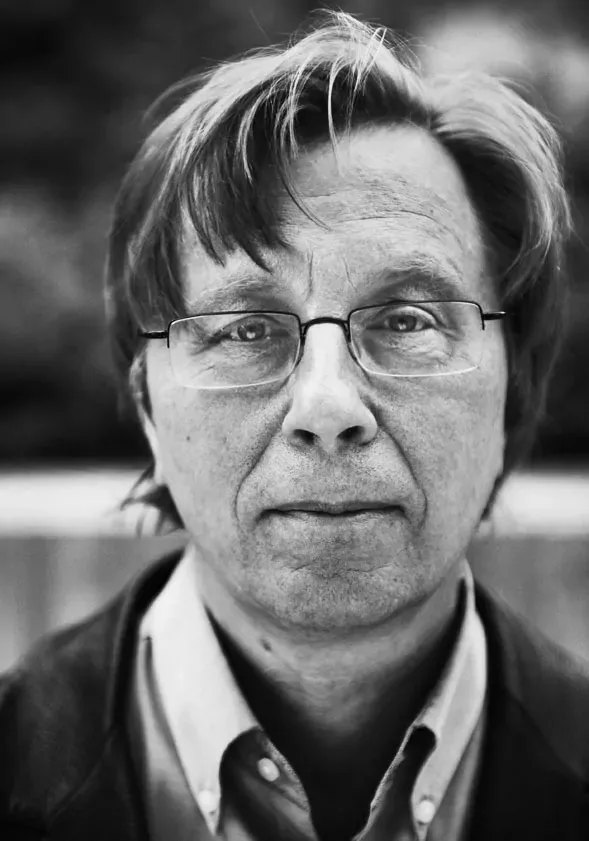
Seventy minutes into a piece by Georg Friedrich Haas, the house goes fully black. Not dim — black. Twenty-four musicians keep playing a piece called in vain by feel and memory alone, and the audience sits there unable to see the stage, the players, or each other. Klangforum Wien's recording of the full piece is on YouTube, though hearing it through headphones only gets you halfway to what the room does: strip out sight, and a chord that would otherwise register as "a violin, slightly sharp" just registers as itself — a pitch that doesn't belong to any key on a piano, heard on its own terms because there's nothing left to compare it to.
That's the reputation Haas built his career on, and it's not a stunt. In 2017, the Italian magazine Classic Voice polled critics and musicians on the best work of art music written since 2000. Nothing beat in vain.
Ask Haas what he does and he'll correct you before you finish the question. "I am a composer, not a microtonalist," he's said — flatly enough that it's clearly a line he's had to draw more than once. He writes operas, orchestral works, chamber pieces of every temperament; one of his lighter pieces is dedicated to his wife, the American writer and BDSM educator Mollena Williams-Haas, whose marriage to Haas — the dynamic inside it, openly discussed by both of them — was the subject of a widely read 2016 New York Times profile. They live in Harlem.
The tool Haas reaches for again and again, across four decades and dozens of pieces, is microtonal writing. The term is relative, not absolute: "micro" means smaller than a specific reference unit, and that reference unit is the Western piano's — one octave, cut into 12 equal semitones. That grid isn't a law of acoustics. It's a few centuries old, a practical European compromise that let one instrument play in any key without being retuned by hand each time. Once that grid gets treated as the default, anything falling between its cracks picks up a diminishing label — micro, in-between, out of tune.
Most of the world's musical traditions never signed onto that compromise, because they were never trying to solve the piano's problem in the first place — which means what a Western ear hears as "microtonal," they hear as simply correct. In Arabic maqam music, the octave holds 24 quarter-tone steps instead of 12, and those extra pitches aren't the scale going flat by Western standards — they're the specific coordinates that tell a listener which maqam, which mode with its own mood and grammar, they're actually inside. Nudge one of those pitches over to the nearest Western semitone and the maqam doesn't get corrected; it gets erased. Indian classical musicians go further still: Hindustani and Carnatic theory both recognize 22 unequal microtonal steps per octave, called shrutis, and it's the precise shading between two notes — not just which seven notes a raga uses — that lets two ragas built on an identical scale sound like two entirely different emotional worlds. Neither tradition is playing "in-between" notes. They're playing exactly what their own system calls for; it's only the Western grid, held up as the reference point, that makes those pitches look like they're falling through the cracks.
Western concert music arrived at that same in-between space by accident, twice, years apart.
Alois Hába grew up listening to local folk singers slide between pitches no piano in the house could reproduce, and instead of deciding his ear was wrong, he decided the piano was incomplete. His first quarter-tone string quartet was finished in 1920; four years later he talked the Prague Conservatory into letting him teach the first quarter-tone composition class anywhere in the world. His String Quartet, Op. 7, written entirely in that system, is on YouTube — put it on and the pitches sound "wrong" for about thirty seconds, then simply sound like a different, specific place.
In the 1970s, composers Gérard Grisey and Tristan Murail started running sound-analysis machines on ordinary instruments playing single, unremarkable notes — and found that no note is ever really single. Underneath the pitch a listener consciously registers sits a whole ladder of quieter, higher overtones, and most rungs of that ladder don't line up with any piano key at all. Grisey pointed his equipment at a trombonist playing one low E and built an entire piece, Partiels, out of what the machine actually saw: instead of rounding those overtones to the nearest black or white key, he wrote out their real pitches for eighteen musicians, so everything hiding inside one trombone player's single note became audible as its own orchestral piece. This walkthrough of Partiels shows exactly how that translation works, step by step.
Haas studied both disvcoveries closely enough to publish scholarly essays on Hába directly, and on the Russian-French theorist Ivan Wyschnegradsky, who'd been chasing a similar idea in Paris even earlier. His own dense, churning textures owe an audible debt to György Ligeti too — close enough that one of Haas's earliest pieces is a direct tribute to him. The two lineages actually meet inside Haas's own résumé: the composition chair he's held at Columbia University since 2013 belonged, immediately before him, to Murail.
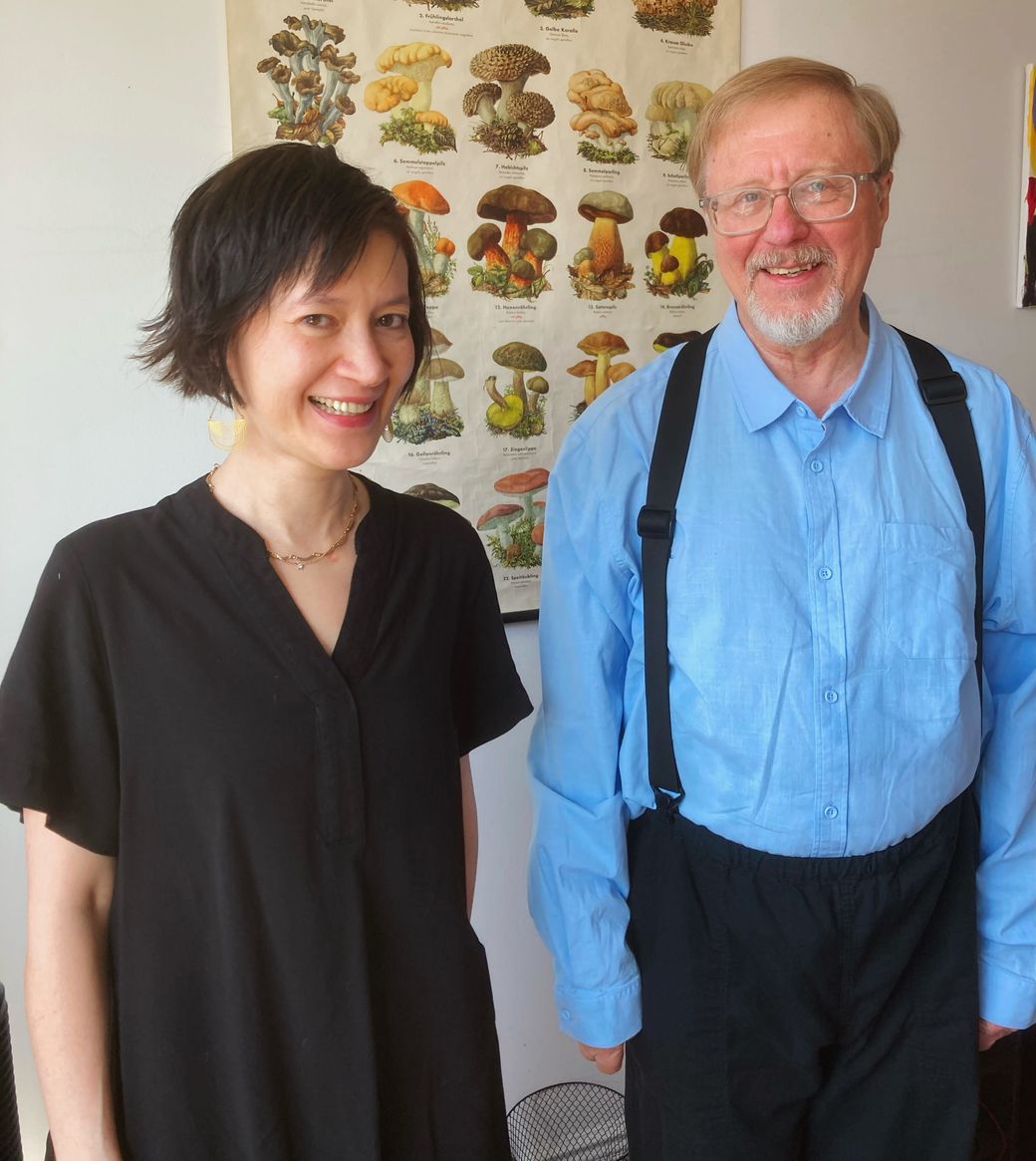
Which brings us to the reason to bring any of this up this week. A violinist named Miranda Cuckson has spent years inside Haas's music — she gave the American premiere of in vain, and has played his solo violin piece de terrae fine"many times," in her own words. After one of those performances, Haas came to her and said he wanted to write her a concerto. That became his Violin Concerto No. 2, which premiered in 2017 with the Tokyo Symphony Orchestra under Ilan Volkov. A new recording, just out on the label Urlicht AudioVisual, captures a later performance of it — live at Vienna's Musikverein, with the ORF Vienna Radio Symphony Orchestra under Markus Poschner, taped in November 2023 — paired with Cuckson's own recording of de terrae fine.
That solo piece has its own small, specific origin. Haas wrote it in 2001 during a stretch alone on the Irish coast, and dedicated it to violinist Ernst Kovacic. The title translates as "from the end of the earth" — naming the place he was actually standing and the isolation he felt standing there, at the same time. A recorded performance is on YouTube.
Critics haven't tried to make the concerto easier than it is. MusicWeb International's Rob Barnett called it "a big-boned, capricious yet unremittingly serious concerto" that "makes no concessions to the romantics." Gramophone's Jennifer Gersten described its nine unbroken movements as putting the soloist in the position of "a prism refracting the orchestra's behaviours," and reached for Alban Berg's and Ligeti's own violin concertos as the nearest comparisons.
Haas still won't let you call him a microtonalist. Fair enough — but strip the concerto of the pitches that fall between the keys, and there's no piece left. It's the same space Hába found by trusting a child's ear over a piano keyboard, that Grisey found hiding inside one trombone player's single note, and that Arabic and Indian musicians never had to go looking for, because they'd been living in it for centuries already.
Sources
MusicWeb International, "Haas: Violin Concerto 2 & de terrae fine (Urlicht AudioVisual)," Rob Barnett, Aug 17, 2026
Wikipedia, "Georg Friedrich Haas"
Wikipedia, "In vain (Haas)"
Urlicht AudioVisual, release page for Violin Concerto No. 2 & de terrae fine (Cuckson, Gene Gaudette, and Gramophone/Jennifer Gersten quotes)
Wikipedia, "Alois Hába"; search synthesis on Hába's 1920 quartet and 1924 Prague Conservatory quarter-tone class
Wikipedia, "Gérard Grisey"; search synthesis on Partiels and the trombone sonogram
Search synthesis, Arabic maqam quarter-tone system (24 steps/octave)
Search synthesis, Indian classical shruti system (22 microtones/octave)
Search synthesis, overtone series / harmonic series / just intonation fundamentals
Search synthesis, de terrae fine origin (Irish coast, 2001, dedicated to Ernst Kovacic)
Search synthesis, Violin Concerto No. 2 premiere/commission details (Tokyo Symphony, Ilan Volkov, 2017)
Wikipedia, "Markus Poschner"
WBUR (Andrea Shea)
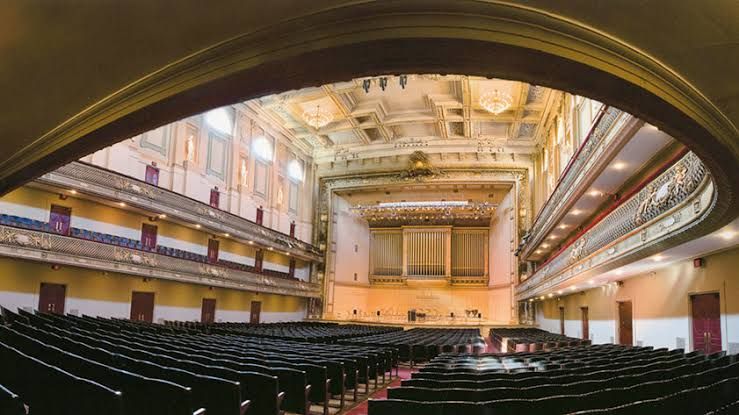
On 22 August, more than ninety musicians of the Boston Symphony Orchestra voted to authorize a strike — the first in the orchestra's 145-year history. Four days later, they ratified a new three-year contract instead, 94 percent in favor. The vote didn't get them what they actually wanted: Andris Nelsons is still leaving.
Founded in 1881 by the financier Henry Lee Higginson, with the baritone-turned-conductor George Henschel — a close friend of Johannes Brahms — on the podium for its first concert, the BSO has spent a century and a half as one of the rare American orchestras never to strike. That record broke this month over a decision the players had no vote in at all. On 6 March, the BSO's board of trustees announced it would not renew Andris Nelsons's contract past the 2026-27 season, after 13 years as music director, citing only a broad lack of alignment on the orchestra's future vision. Musicians learned the news in a meeting called that same Friday afternoon, at the same moment the public did. Nelsons responded through his management with a brief statement, calling it "not the decision I anticipated or wanted," while pledging his continued commitment to the orchestra.
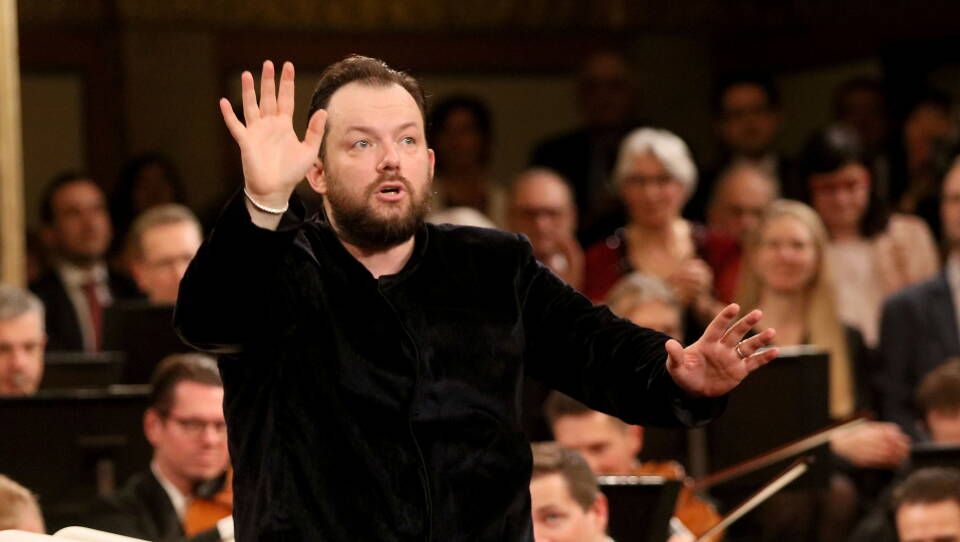
Ten days later, staff and musicians gathered on the Symphony Hall steps and chanted his name as he arrived for a concert. William R. Hudgins, the orchestra's principal clarinet for more than 45 years, kept the campaign alive through the summer, publishing an open letter the week the contract was signed that described his twelve years working under Nelsons as among the most meaningful of his career, and urged patrons and board members to keep pressing BSO leadership directly rather than let the matter drop.
The contract itself does something structural: a new Music Director Search Committee will split six seats between players and management, and any candidate will need a two-thirds supermajority from both sides to advance — built, by the players' own account, specifically so a future board can't repeat what happened to Nelsons unilaterally. BSO president Chad Smith, who arrived from the Los Angeles Philharmonic and extended his own contract in 2024, framed the deal as deepening collaboration between players and management. Neither side got everything it wanted: the union's other stated goals going into the summer — Smith's removal, Nelsons's reinstatement, seats on the board itself — went unmet, and several musicians said as much afterward, unhappy the players' committee had settled for less than it set out to win.
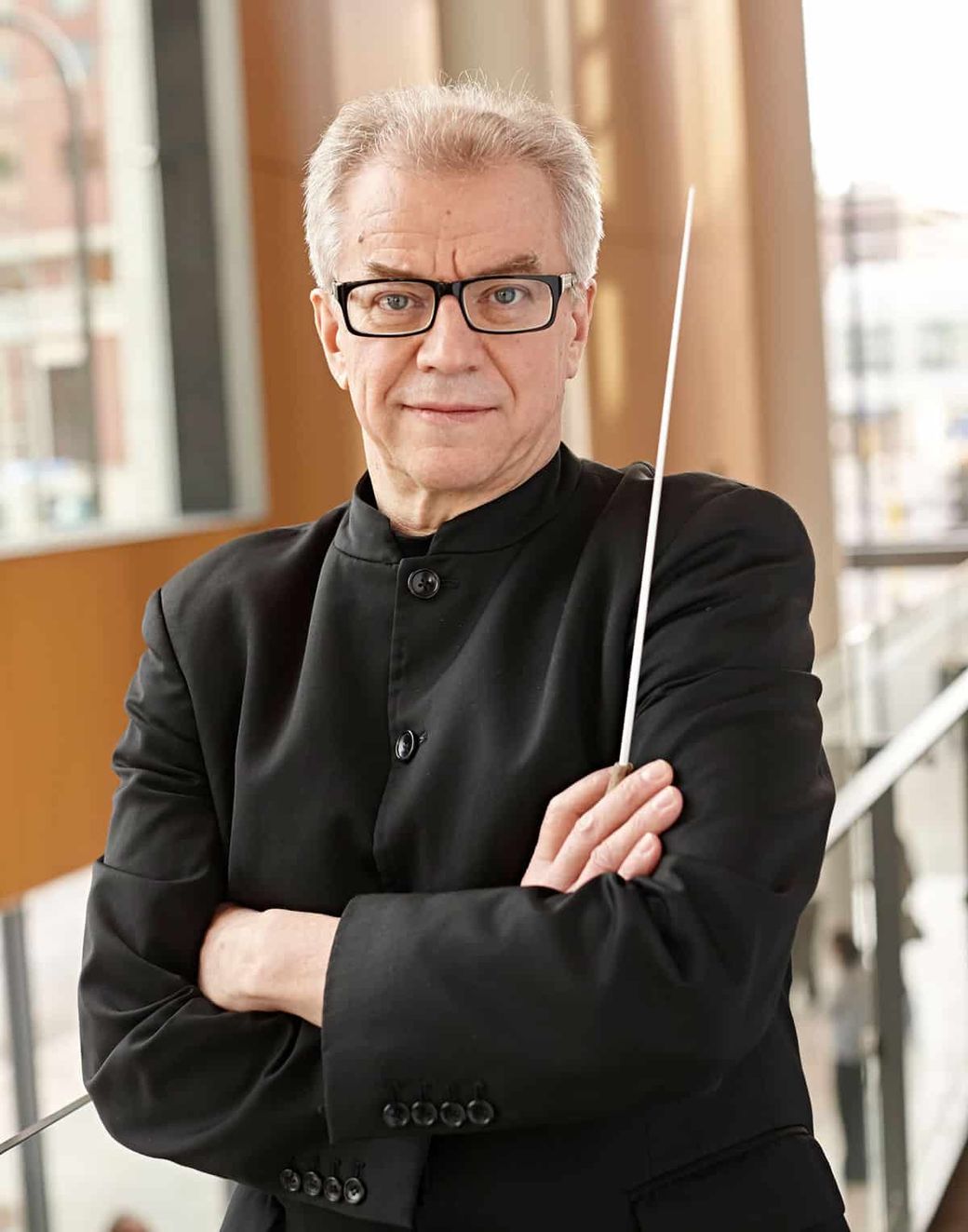
For a sense of how much worse an orchestra labor dispute can get, the comparison Boston's players kept invoking all summer was Minnesota: the Minnesota Orchestra locked its musicians out for 488 days between 2012 and 2014 — still the longest work stoppage in American orchestral history — over a proposed pay cut of 30 to 40 percent, a fight bitter enough to cost the orchestra an entire season and its own music director, Osmo Vänskä, who resigned in protest before returning once it ended. Boston's dispute ran roughly six months from the Nelsons announcement to ratification, cost no performances, and never crossed from authorization into an actual walkout. Measured against Minneapolis, it is a mild case. Measured against Boston's own 145 years of labor peace, it is not.
The new committee's first real test is already set: finding Nelsons's successor, under a contract that also leaves Smith with sole authority over hiring a still-undefined Chief Artistic Officer role, whose relationship to the next music director's authority hasn't been settled either. Hudgins, for his part, is still asking Boston's patrons to keep making noise — not for a different music director, but for the one the orchestra already has, back on the Symphony Hall podium as a guest.
Thea Musgrave, 98, Sends Her Bassoon Concerto Walking Out of the Dark
The Guardian (Flora Willson)
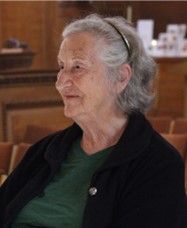
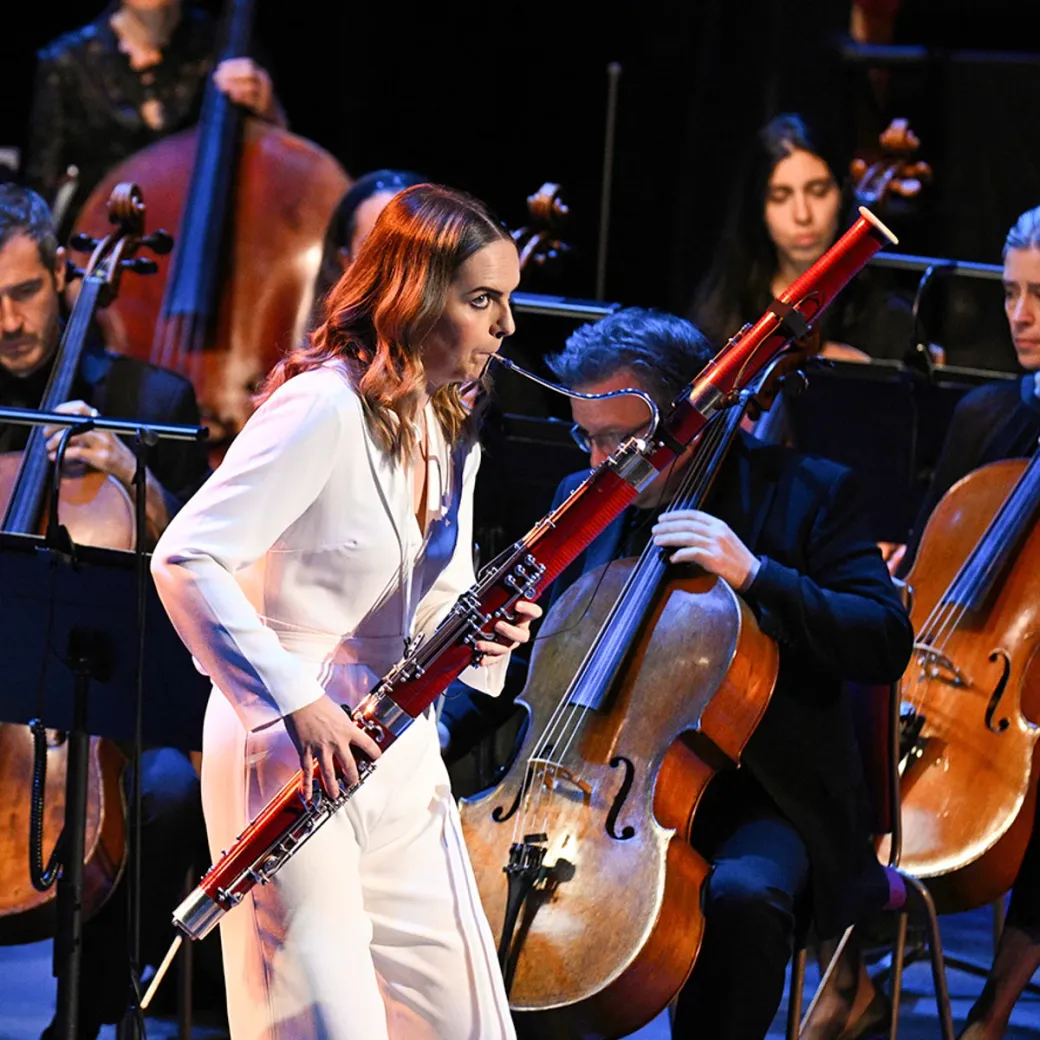
At the Proms this year, one premiere had already made news before a single note sounded: a new bassoon concerto by a 98-year-old composer whose music first reached that stage in 1960. On 23 August, bassoonist Amy Harman and conductor Benjamin Marquise Gilmore led the Academy of St Martin in the Fields through the world premiere of Thea Musgrave's Out of the Darkness — a twelve-minute concerto built around a single idea: the soloist has to walk to find her way out.
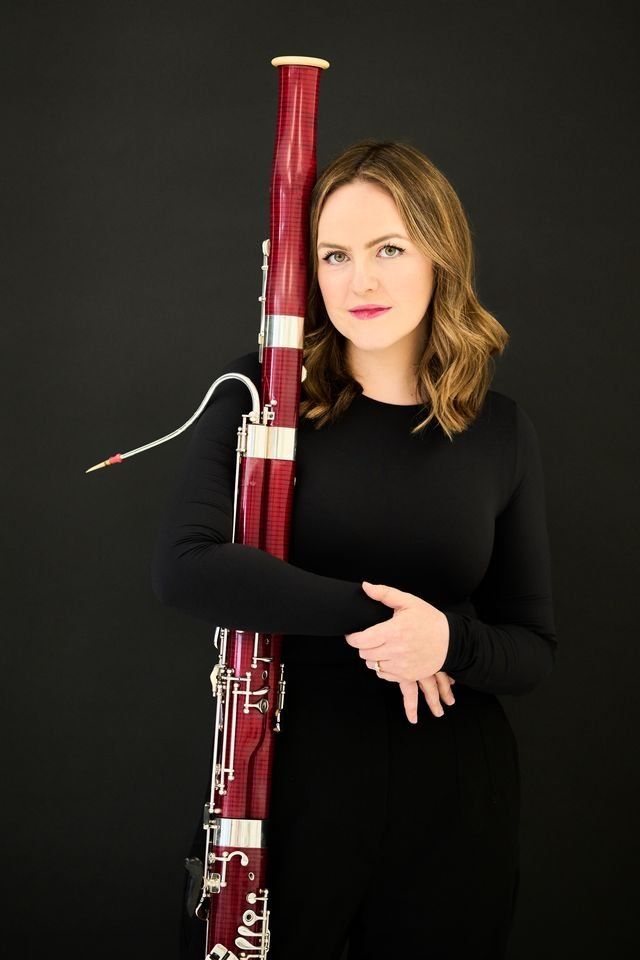
The piece opens in a dark grumble of percussion and low strings, into which Harman answers from the back of the stage, working a warm, low-register vocalise through the gloom. Nothing about the harmony resolves the darkness — only her feet do. Bassoon in hand, she walks forward through the orchestra, pairing off with the trumpets, then the double basses, gathering rhythmic momentum with each section she reaches, until she arrives at the conductor's side — a soloist's ordinary spot — just in time for a disarmingly plain, near-tonal final chord. Critics described it afterward as a literal journey across the stage: hope, in this piece, is a place on the stage floor, and the only way to reach it is to physically go there.
Musgrave has reached for that device — treating where a sound comes from as compositional material, not just staging — since 1968, when her Clarinet Concerto sent its soloist wandering between chamber-sized clusters of players scattered across the platform, because, as she put it at the time, the soloist's small groups "can't hear him unless he joins them" — a practical problem solved by an audibly dramatic one. Her 1971 Horn Concerto answered the same instinct differently, stationing horns around the concert hall itself, so the soloist's calls were literally being answered from around the room. By 1974's Space Play, the idea was in the title outright: nine unconducted players, four woodwinds parked at the platform's corners, spatial separation doing double duty as acoustic device and onstage comedy.
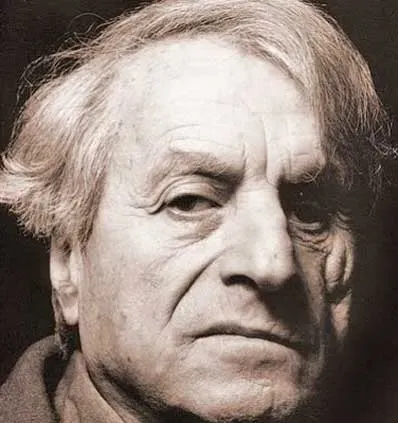
Musgrave inherited the idea of location-as-music from a lineage that runs back over four centuries. Giovanni Gabrieli, organist at Venice's Basilica San Marco in the late 1500s, wrote for choirs split across the building's two opposing balconies — cori spezzati — so a phrase sung on one side would be answered, echo-like, from the other: the earliest known instance of a composer treating a building's own geometry as an instrument. Three and a half centuries later, Charles Ives revived the idea in The Unanswered Question (1908), putting a solo trumpet offstage entirely so its five-note question kept interrupting the onstage strings from a world the audience couldn't see into. The American composer Henry Brant built a career on it: his 1953 Antiphony I, for five orchestral groups positioned around a hall, predates Karlheinz Stockhausen's better-known Gruppen — three full orchestras, three conductors, surrounding the Cologne audience at its 1958 premiere — by five years. Brant kept going for another half-century, winning the 2002 Pulitzer for Ice Field, scored for over a hundred players split into groups spread through the hall. Iannis Xenakis pushed the same idea to its logical extreme in 1966's Terretektorh, seating all 88 musicians in a ring with the audience placed among them, erasing the stage-versus-seats divide entirely.
Musgrave's corner of that lineage stays distinct because her spatial devices always attach to a specific dramatic question rather than function as sound-design for its own sake. In the Clarinet Concerto, the question was literally about hearing each other. In Out of the Darkness, it's about whether a single voice, starting alone in the dark, can physically reach the light everyone else is already standing in. Musgrave, who studied under Nadia Boulanger in Paris in the early 1950s and has long described the shape of her own music as dramatic-abstract, is still writing pieces that dramatize an argument rather than just orchestrating one — at 98, with a new opera already announced for Buxton International Festival in 2027.
Also Worth Noting
Trump Considers Demolishing Kennedy Center — the violin channel
Critics of Bayreuth's AI staging say 'Disney could do it better', and perhaps they're right. — van magazine.
Metropolitan Opera Announces 2026-27 Lindemann Young Artists — operawire
The Wire
Recent Articles