Stradisphere — July 16, 2026
Edition #132 · Friday, July 17, 2026
Editor's Brief
This week's obituary and this week's industry announcement turn out to be the same story. Jürgen Kesting's death retires a kind of listening no algorithm has replicated — a loss the new AI-labeling scheme quietly concedes by requiring no ear at all. Edward Gardner's American campaign reads differently once you notice the exit date already stamped on his London podium. The Proms, meanwhile, is rebuilding itself as a commissioning engine rather than a museum. And Herbert von Karajan's anniversary today is a reminder that "human" recording was never as unmediated as nostalgia prefers.
Analytical Piece
The Widening Circuit of Edward Gardner
Slippedisc
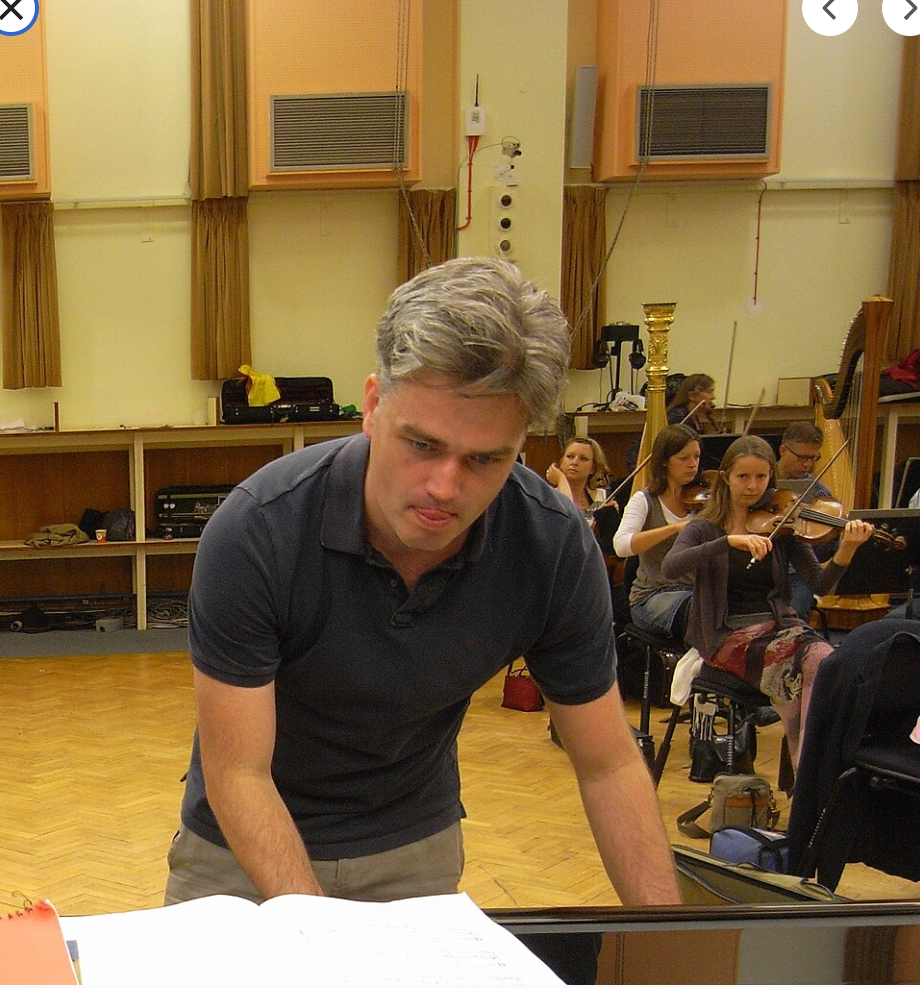
Edward Gardner's Pittsburgh Symphony debut on May 15th and 17th — Knussen's Flourish with Fireworks, Beethoven's First Piano Concerto with Behzod Abduraimov, Tchaikovsky's Pathétique — closed out the busiest run of American guest engagements a British conductor has assembled in a single season. Chicago came the week before, with Joyce DiDonato. Before that: the National Symphony, the Dallas Symphony, the San Francisco Symphony. Five major U.S. orchestras within a year is not a courtesy circuit. It is a conductor building a second constituency, one debut at a time.
The timing gives the pattern its shape. In March, the London Philharmonic announced that Paavo Järvi will take over as chief conductor from the 2028–29 season, concluding what the orchestra is calling Gardner's seven-year term. Slippedisc, reporting the announcement, noted that "no reason has been given why Gardner is leaving" and that he had "been linked lately with a couple of US vacancies." Gardner himself struck a different note, calling the remaining two and a half seasons a continuation rather than a countdown.
Nothing about the departure is unusual on its face — seven years is close to the average tenure of an LPO chief conductor going back to Beecham. What stands out is the American buildup running alongside it. This is a conductor with a 2025 Sibelius Prize, a second season as Music Director of the Norwegian Opera and Ballet, and a Telegraph notice as "the finest British opera conductor of his generation." None of that requires five U.S. debuts in a single year. He is doing it anyway, and doing it now.
Read against the LPO's own announcement, the American campaign looks less like ambition than like insurance — a conductor extending his reach abroad exactly as his flagship post at home already has a closing date attached.
The Bayreuth Festival Institutionalizes Populism for its 150th Anniversary
DPA (via Onetz)
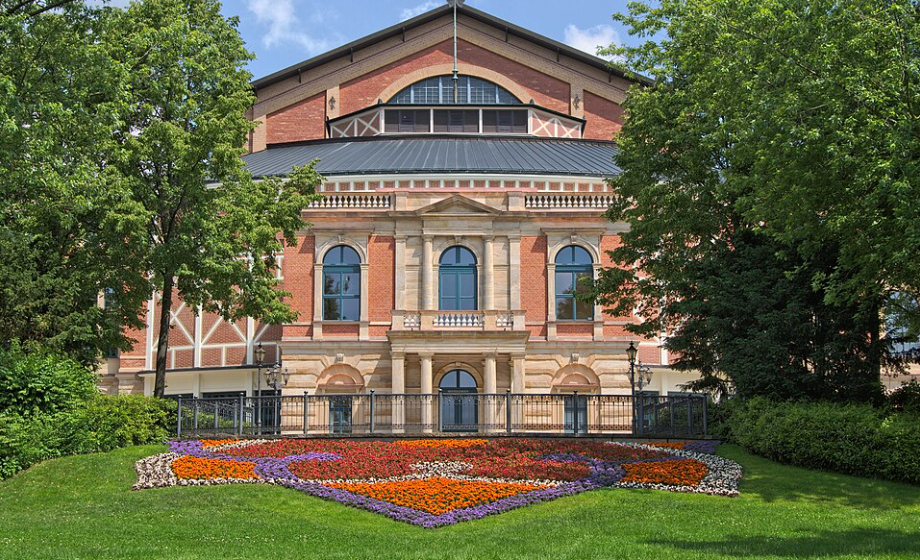
On August 2nd, up to 1,000 guests will gather backstage at the Bayreuth Festspielhaus for a DJ set by Frans Zimmer, known professionally as Alle Farben, built from motifs drawn out of Wagner's operas. Intendantin Katharina Wagner is unambiguous about the intent: "We're actually mixing electronic sounds with Wagner motifs," she said, calling it a "unique event" designed to "make people curious who normally don't count among our regular audience" (DPA/Onetz). Zimmer, who has worked with classical material before but never with Wagner, called the booking "a very short-notice undertaking" and said he hopes to "build a bridge to Wagner" for a crowd that wouldn't otherwise cross the festival's threshold.
The party did not appear from nowhere. Bayreuth's 150th-anniversary programme was scaled back from eleven Wagner operas to seven months before the DJ set was announced, a reduction the festival attributed to rising personnel costs it could not cover despite a self-financing rate above 55 percent (Opera Online). Tannhäuser, Lohengrin, Tristan und Isolde, and Die Meistersinger were all cut. Rienzi — the opera Wagner himself excluded from the Bayreuth canon — was added instead, receiving its first-ever staging at the Festspielhaus this year. An institution too constrained to mount its own core repertoire found room, in the same season, for an electronic set built around that repertoire's motifs.
It also found the anniversary harder to manage than its programming alone suggests. A memorial event for Jewish musicians persecuted under National Socialism was cancelled and then reinstated only after public protest, led by the scheduled speaker, Michel Friedman (Slippedisc). Both the memorial and the DJ party required separate sign-off from the Bayreuth Stiftungsrat — an unusual amount of oversight for what the festival is otherwise calling a straightforward crossover booking.
Whether this is outside influence bending an institution or an institution evolving on its own terms depends on which precedent gets weighted. Bayreuth has bent before: Wieland Wagner's postwar stagings, stripped of nationalist iconography, were themselves a controversial reinvention forced by circumstance rather than pure aesthetic conviction. Read that way, a DJ set aimed at people who "don't count among our regular audience" is continuous with a festival that has repeatedly adjusted itself to survive. Read the other way, it is a canon-holding institution outsourcing its authority to draw a crowd it can no longer draw on the strength of Wagner alone.
What isn't yet available is an answer from the audience. The event is still two weeks off; German coverage so far (Onetz, Abendzeitung München, Main-Echo) has been announcement, not review, and none of it registers the kind of visible backlash that met the memorial cancellation. Call this what it is: an institution's own bet on its reasoning, not yet a verdict.
🔒 The full analysis — including the reaction threads it triggered and the case for why institutional health and artistic purity aren't the same axis — is available to Stradisphere Insider members. Subscribe to unlock it: https://www.stradispheremusic.com/member-site-homepage-1-2-1
The Violin Channel
On July 10th, a coalition of the music industry's major bodies — IFPI, RIAA, the Grammys, SAG-AFTRA among them — agreed on a voluntary label splitting "AI-Generated" tracks from merely "AI-Assisted" ones. The timing isn't incidental: Deezer says 44 percent of the new tracks it now receives are AI-made; Apple Music puts a third of its uploads in the same category.
The label needs no ear at all — a track is one category or the other by declaration, not by listening. That is precisely the judgment the German critic Kesting spent his career making without any label to help him. Tributes to him are still arriving this week. He built his reputation on being able to listen to a single recording and identify exactly where a singer's technique gave way to strain, where breath control had started to fail — a diagnostic skill built over decades that no AI detector currently matches. His writing on Maria Callas is remembered for exactly this: distinguishing, recording by recording, where her control was a choice and where it was cost.
Herbert von Karajan, who died on this date in 1989, is a reminder that "human" and "engineered" have been tangled for longer than AI has existed. His 1963 recording of Beethoven's Ninth Symphony with the Berlin Philharmonic was built from microphone placement and spliced tape, not from a single performance in a single room. Critics of Kesting's generation were among the last people equipped to hear exactly where that construction happened.
Nobody left can hear it the way he did. The industry's new label exists because that skill is gone, and a checkbox is what's left to replace it.
Newsbag
The BBC Proms Enters the Premiere Pipeline
The Guardian Classical Music
The 2026 BBC Proms season represents a strategic shift back toward the BBC's historic role as a massive commissioning engine. This focus on first performances mirrors the William Glock era of the 1960s, which repositioned the festival from a populist summary of the repertoire into a primary site of contemporary musical production and stylistic evolution. Under current programming logic, new works are frequently treated as ceremonial additions rather than the cantus firmus underneath the whole season — the fixed line the rest of the music is written to answer. The 2026 initiative disrupts this by re-establishing something closer to a collegium, musicians gathering by shared purpose rather than job title, applied now to the premiere pipeline. This redirection occurs against a backdrop of domestic funding constraints, suggesting the institution seeks to reclaim its international relevance through aesthetic risk-taking. 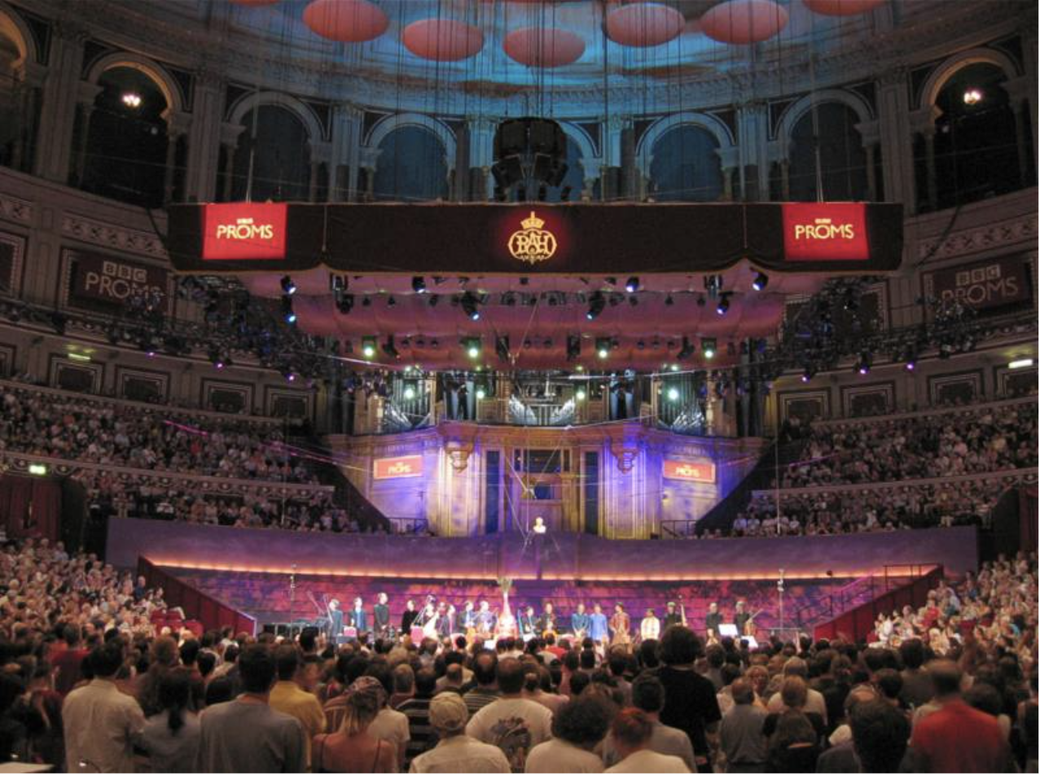
The Passing of Jürgen Kesting and the End of the Great Critical Consensus
Neue Musikzeitung (NMZ)

The death of Jürgen Kesting marks the exhaustion of a specific German critical lineage that prioritized the technical mechanics of the vocal apparatus above ephemeral interpretive trends. Kesting's work functioned as a diagnostic against the physiological decline of modern singing, rooted in a precise understanding of appoggio — breath held and spent exactly as slowly as a phrase demands, never faster. His monumental study of Maria Callas did not dwell on the hagiographical; it analyzed the portamento, the slide from one pitch into the next with nothing hidden along the way, and the registration choices that defined her early success and later vocal stress. Kesting's presence in the Hanseatic salon culture of Hamburg provided him a vantage point similar to that of the 19th-century feuilletonists, where music was discussed as a physical craft and an intellectual discipline. His departure leaves a vacancy in the critical landscape for an analysis that begins with the throat rather than the branding campaign.
On This Day
On This Day: Herbert von Karajan
Herbert von Karajan died on July 16, 1989 (born 1908), in Anif, Austria, concluding an era defined by the consolidation of the orchestral recording aesthetic. At the time of his death, Karajan possessed a private pilot's license and a dedicated recording studio in his basement, reflecting a lifelong fixation with technical precision and the absolute control of acoustic space. His legacy is found in the pursuit of the legato (a musical performance technique that connects notes smoothly and continuously) as a structural principle, transforming the Berliner Philharmoniker from a post-war ensemble into a global sonic brand. Unlike the analytical transparency of his contemporary Pierre Boulez at the BBC Symphony, Karajan sought a seamless industrial sheen—the 'Karajan-Klang'—that prioritised textural homogeneity over pointillistic detail. This was most evident in his 1963 recording of Beethoven's Ninth Symphony, where the orchestral internal balance was achieved through microphone placement and multi-track editing rather than purely through the players' physical projection.  In the 1960s and 70s, Karajan operated within a culture of high-budget analog recording that had no historical precedent and has no modern equivalent. While his contemporaries like Karl Böhm maintained the late-Romantic Austro-German tradition through rhythmic rigor, Karajan leveraged the rise of the Compact Disc to codify a specific, polished standard of perfection. This relentless focus on the mechanical delivery of sound mirrored the broader European economic miracle, positioning the conductor not as a mere interpreter, but as a technocratic architect of culture.
Also Worth Noting
The Wire
Julian MacKay Commences Legal Action Against Bavarian State Ballet — The Violin Channel
Winner Announced for Sumi Jo International Singing Competition — ResMusica
Opera Carolina Appoints Stefano Vignati as General Director — Pizzicato
Sueye Park Signs with HarrisonParrott — The Violin Channel