Stradisphere — July 28, 2026
Edition #154 · Wednesday, July 29, 2026
Editor's Brief
Tonight's issue is unusually thick with festival season under strain. Bayreuth finally staged Rienzi -- a hundred fifty years and one Hitler-owned, still-missing manuscript later -- as an anniversary opener that reads current politics onto Wagner's earliest opera. Salzburg's starrier casting couldn't rescue its Carmen from an unfocused pit, and even the Vienna Philharmonic had an off night in the Mahler that was supposed to be the safe choice. Gloucester's Three Choirs Festival, by contrast, opened on the strength of exactly the kind of unglamorous institutional continuity that keeps a three-century-old festival circuit alive.
Two significant losses bookend the issue: Joel Cohen, who spent forty-five years building Boston Camerata into an early-music institution, and Bill McGlaughlin, whose public-radio programs did more than almost anyone's to make serious listening feel like an invitation rather than a test.
Analytical Piece
Rienzi Finally Reaches Bayreuth — as an Election Drama
The Guardian
Bayreuth's board has kept Rienzi off its stage for a century and a half for good reason: the complete manuscript passed into Adolf Hitler's hands and never resurfaced, leaving no authoritative version of Wagner's longest opera, and its status as the Fuhrer's favorite score made it the one work the festival could not touch without answering for it. That embargo ended this week, when the 150th-anniversary season opened with a Rienzi built for 2026 rather than fourteenth-century Rome.
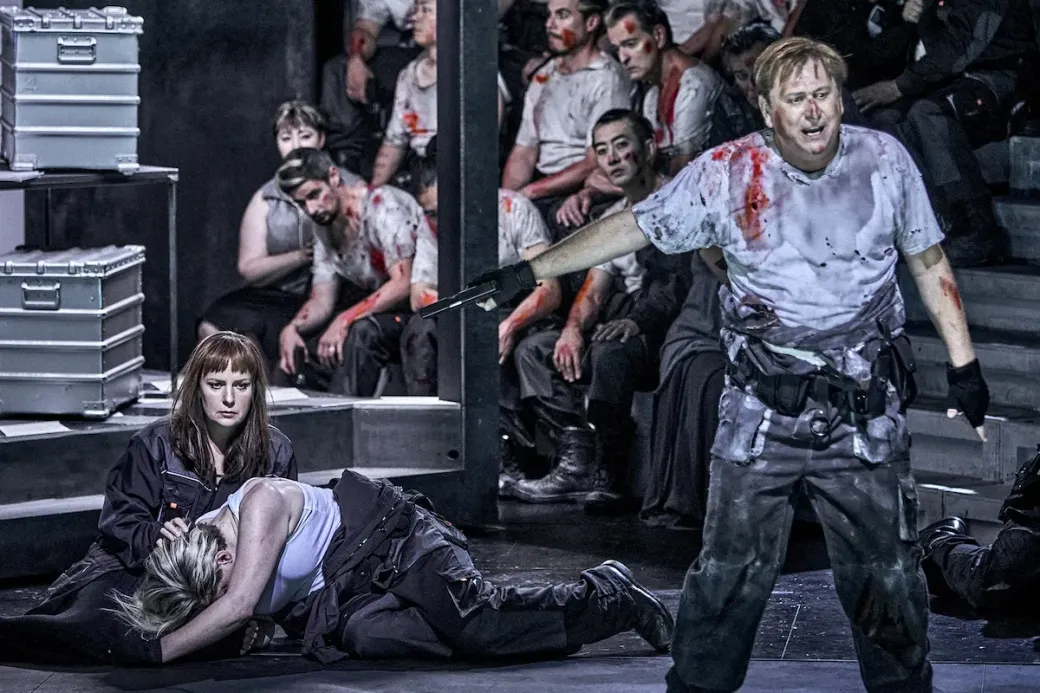
Directors Alexandra Szemeredy and Magdolna Parditka transplant the plot's rise and fall of a populist tribune into an abstract near-future thick with smartphones, live video feeds labeled 'live from the Capitol,' and placards reading 'lock him up' and 'bringing Rome back.' The staging wants credit, implicitly, for a capitalism critique: spectacle politics as a symptom of the market. That claim is shakier than it looks. What the production actually stages is a figure who rises by claiming to stand above faction, speaking for 'the people' through spectacle rather than through any coherent program -- a pattern that shows up whenever factional conflict stalls into deadlock and a vacuum opens for personality and stagecraft to substitute for argument, market economy or no. That kind of opportunist isn't a product of commerce; he's a symptom of political paralysis, a distinction the smartphones and live feeds blur every time they get read as an indictment of capitalism rather than of gridlock.
It also skips past an inconvenient history. The system that preceded the market wasn't obviously kinder to musicians: Bach was a salaried servant of the Leipzig town council, and Haydn wore livery in the Esterhazy household for three decades. Patronage bought funding and stability at the cost of literal bondage. The market that replaced it gave musicians freedom and precarity in roughly equal measure -- and yet the thing most working musicians chase today, 'career' in the sense of visibility, reputation, brand, is itself a market invention. No patron ever offered a court composer a career; he offered a post. Wagner is not an innocent bystander to that contradiction; he is its clearest specimen. The same man who fought beside Bakunin on the Dresden barricades in 1849, and who wrote Art and Revolution that same year to argue commerce had degraded art into a commodity, spent the rest of his career as the most successfully self-mythologized brand in nineteenth-century music -- bankrolled by a besotted king, then selling Bayreuth itself as a pilgrimage. He never resolved that tension. He built a festival out of not resolving it.
Conductor Nathalie Stutzmann, leading the pit in a role historically reserved for men on this stage, drew a performance that alternated chamber-scaled intimacy with the score's more bombastic marches — no small feat, given that Rienzi's reputation for structural bloat (well over four hours, in a work Wagner himself later disowned as juvenilia) makes pacing the real technical problem a conductor inherits here, more than any interpretive one. Andreas Schager sang the title role with the clarion, high-wattage tenor that has made him Bayreuth's default heavy-lifter in recent seasons; the more striking performance, by most accounts, came from Jennifer Holloway, recast as Adriano — reimagined here not as Wagner's original trouser role but as an openly gay woman — whose singing carried an emotional register the surrounding production's crowded visual noise couldn't quite match.
Whatever the staging's politics settle out to mean, the more durable story is a budgetary one. Bayreuth had originally planned to pair Rienzi's premiere with stagings of all ten other canonical Wagner operas across the anniversary season, finally closing a gap the festival spent a century and a half maintaining on purpose. Money intervened: Tannhauser, Lohengrin, Tristan und Isolde and Die Meistersinger were all cut before rehearsals began, leaving Rienzi to open alongside just the Ring, Der Fliegende Hollander and Parsifal -- seven operas instead of eleven. The festival that spent 150 years refusing to stage its most politically radioactive opera on principle now can't quite afford the completist gesture either.
Sources
The Three Choirs Festival Maintains its English Choral Hegemony
Bachtrack
The Three Choirs Festival has been meeting in some combination of Gloucester, Hereford, and Worcester cathedrals since roughly 1715, which makes it not merely older than Bayreuth or Salzburg but older than most of the concert halls that would eventually compete with it; it was founded, in fact, as a charity for the widows and orphans of clergy in the three dioceses, and only picked up its now-official name in Gloucester in 1838. The 2026 edition opened in Gloucester with a programming logic that treats that inheritance as a living mechanism rather than a museum piece.
Artistic Director Adrian Partington used the cathedral's long reverberation time -- a space that historically dictated the soaring melismatic curves of the Tudor school, the same acoustic that shaped the choral writing of Thomas Tallis and William Byrd three centuries before anyone thought to call it 'atmospheric' -- to anchor a weekend of Elgar, Walton, and the UK premiere of Gavin Higgins's latest large-scale work.
Gloucester Cathedral has done this kind of thing before, with mixed results at the time. On 6 September 1910, Ralph Vaughan Williams stood in that same nave and conducted the premiere of his Fantasia on a Theme by Thomas Tallis, a piece written explicitly to exploit the cathedral's reverberation, splitting the orchestra into separate groups so the sound would arrive from different points in the stone. It was, by most accounts, upstaged that same evening: the program also included the first full performance of Elgar's The Dream of Gerontius, and the only note the local press could spare for the other premiere was that 'Dr Vaughan Williams also conducted a new work.' The cathedral's own organist was blunter, dismissing it afterward as 'a queer, mad work by an odd fellow from Chelsea.' In the audience that night was a seventeen-year-old named Herbert Howells, who would go on to become one of English church music's defining voices and, eventually, a Three Choirs regular in his own right. The festival's whole case for itself is built on that kind of accident: a work too strange for its first night becoming, a century later, one of the most recorded pieces in the English repertoire, performed at a festival that never stopped being willing to risk the next strange thing.
This year's version of that risk is Higgins. The juxtaposition of Walton's jagged syncopation with Higgins's industrial-inflected brass writing extends what regulars here call the 'Cathedral style': the rhythmic grit of the modern pieces arrives hard and is then, almost physically, softened and folded back into the stone 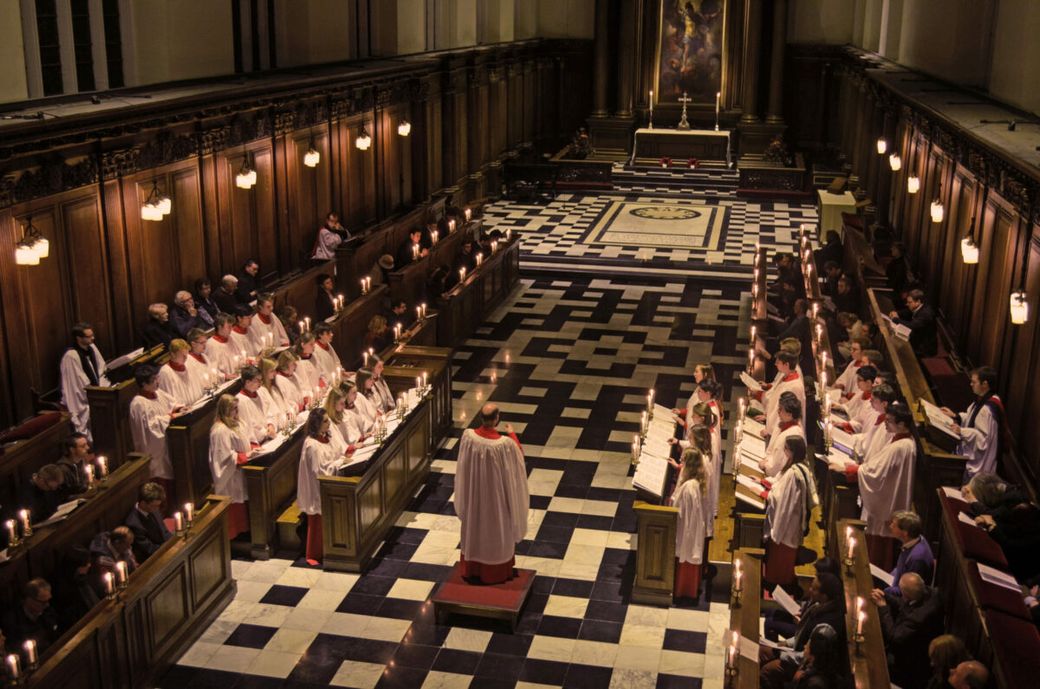 -- the building doing to Higgins roughly what it once did to Vaughan Williams, smoothing a composer's sharper edges into something closer to plainchant, whether he intended it or not.
None of this happens by accident of taste alone. The British arts funding model has spent two decades pivoting toward decentralized, project-based grants that reward exactly the kind of flexible, portable programming the Three Choirs was never built to do. It survives anyway, on the same logic that keeps a single-purpose workshop in business after the department store down the street closes: it does one thing -- build a program around what a Gothic nave's acoustics can do to a chorus -- that no generic concert hall can replicate at any price, and three hundred years of institutional memory in how to do it.
Salzburg’s Carmen Succumbs to Institutional Inertia
Neue Musikzeitung (NMZ)
The Salzburg Festival’s 2026 production of Carmen marks the points of friction between Teodor Currentzis’s chamber-oriented extremism and the cavernous demands of the Grosses Festspielhaus. In the Karajan era, this stage was the laboratory for a 'luxury' sonic profile characterized by seamless legato and massive orchestral weight; under Mortier, it became a site for radical dramaturgical deconstruction. Currentzis attempts a middle path of idiosyncratic agogic shifts and extreme dynamic contrasts that frequently vanish into the five-thousand-seat void. Asmik Grigorian’s transition to the mezzo title role and Jonathan Tetelman’s Don Jos) exhibit individual vocal security Grigorian and Tetelman, but the performance lacks a unified institutional vision. The failure is not in the casting but in the dramaturgical logic that assumes a collection of high-profile names can substitute for the rigorous house-style rehearsals that once defined the festival’s identity. Salzburg remains the world's most expensive operatic laboratory, yet here the experiment fails to produce a stable compound.
Newsbag
Joel Cohen, Who Gave Boston Camerata Its International Voice, Dies at 84
ResMusica
Joel Cohen, the American lutenist, conductor, and musicologist who ran Boston Camerata for forty-five years and turned a regional early-music ensemble into one of the field's defining international voices, died July 26 in the Boston area at 84. His wife, the soprano Anne Azema, who succeeded him as the Camerata's artistic director, announced the death.
Cohen took over the Camerata in 1963, when 'early music' barely existed as a professional specialty in the United States outside a handful of university curiosities, and used the ensemble as his instrument for four and a half decades, building an approach to medieval and Renaissance repertoire grounded in what would later be formalized as historically informed performance: playing the period's music with the period's own instruments, tunings, and performing conventions, rather than translating it into a modern orchestral idiom.
His reach extended well past his own ensemble's stage. Through the 1970s he worked as a broadcaster and producer for American public radio and for Radio France, and at the French network he originated a concept he called the 'Saturnales de la musique' -- later credited as one of the conceptual seeds for France's Fete de la Musique, the nationwide June 21 music festival that has since been adopted by cities worldwide. It is a strange kind of legacy: the format outlived and outgrew the man who first sketched it, to the point that most of the millions who now spill into the streets for it each summer have never heard his name.
His discography carries its own historical footnotes -- a 1979 Harmonia Mundi recording of Purcell's Dido and Aeneas that was among the first to use period instruments, 1978's Musique judeo-baroque, and a 1989 Erato account of Jean Gilles's Requiem. He remained the Camerata's director emeritus after handing over the ensemble in 2008, present enough at its edges that its current identity is still, in large part, an argument he started sixty years ago.
Bill McGlaughlin, Who Taught a Radio Audience How to Listen, Dies at 82
NYT Music
Bill McGlaughlin, the composer, conductor, and public-radio host whose programs 'Saint Paul Sunday' and 'Exploring Music' spent decades doing the unglamorous work of actually explaining classical music to listeners who had never been formally taught how to hear it, died July 21 at his home in Manhattan. He was 82. His wife, the jazz vocalist Karrin Allyson, said the cause was sudden cardiac arrest.
McGlaughlin came to broadcasting as a working musician rather than a critic by training -- a trombonist in the Philadelphia Orchestra under Eugene Ormandy and later the Pittsburgh Symphony under William Steinberg, with music degrees from Temple University (B.A. 1967, M.A. 1969). It was Steinberg who first pushed him toward the podium, and Georg Solti who gave him the blunter, more useful advice: that conducting was a skill that atrophied without a standing orchestra to practice on, not a talent that simply switched on.
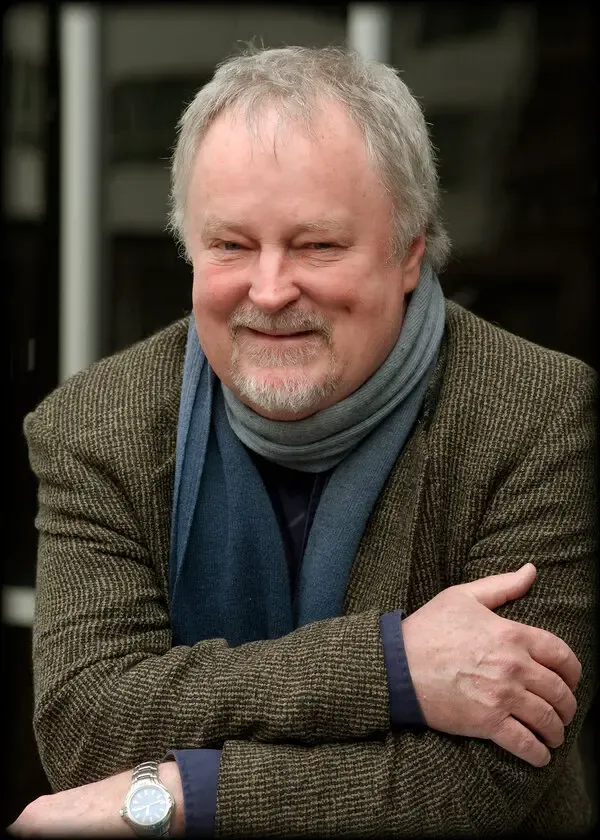
What set his radio work apart, colleagues said, was less any particular expertise than a refusal to gatekeep. 'His range of musical enthusiasms was enormous,' the pianist and teacher Paul Orgel said. 'His manner was straightforward, kind and unpretentious. And, most importantly, he played vast amounts of serious music, always in well-chosen performances. He didn't shy away from vocal music, challenging new music or obscure works that deserve exposure.' Orgel put it more bluntly elsewhere: McGlaughlin had 'almost single-handedly kept alive a sophisticated approach to what used to be called music appreciation' -- a genre most broadcasters had long since written off as too slow, too unglamorous, or too hard to sell.
At its height, 'Saint Paul Sunday' reached hundreds of thousands of listeners a week, a scale public classical radio rarely manages today, achieved less through polish than through McGlaughlin's own evident comfort moving between jazz, folk, literature, and the standard repertoire without treating any one of them as the serious one. The format he built outlasted the assumption, common when he started, that a mass audience for that kind of listening no longer existed.
On This Day
On This Day: Antonio Vivaldi
Picture Venice on a Sunday morning in the 1710s: gondolas stacked three deep outside a plain church called the Pietà, and inside, an audience of visiting European nobility craning toward a wooden gallery, straining to see through an iron grille. Behind it, an orchestra is playing something ferocious — and every musician in it is a girl, an orphan, known to the crowd only by a first name, invisible by design because the sight of a woman playing with that kind of fire was considered, officially, too dangerous to look at directly.
That was Vivaldi's day job. Not the church he was ordained into in 1703 — he all but gave up saying Mass within a year of his ordination, because incense and asthma turned every service into a coughing fit, which is its own small comedy: a priest too breathless for the pulpit who then built a career on breath, on the exact physics of how a bow crosses a string. His congregants nicknamed him for his hair instead of his calling — il Prete Rosso, the Red Priest — which tells you which vocation actually stuck.
His real pulpit was the Ospedale della Pietà, an orphanage-conservatory where Vivaldi spent three decades as violin master, composer, and de facto talent director for an all-female orchestra that became, quite literally, a stop on the Grand Tour — the 18th-century equivalent of a must-see Vegas residency, except the audience couldn't see the performers at all, only hear them, which only sharpened the appetite. Vivaldi wrote for that hidden orchestra the way a director writes for a star he can't put on a poster: the concertos don't hold back, don't gesture at modesty. If anything they push the players harder, as though he were trying to make the sound itself argue for what the grille was hiding.
It's from that same instinct — sound as argument, sound as picture — that The Four Seasons came out of him in 1725, four violin concertos each shipped with its own sonnet, so the audience knew exactly what they were meant to see with their ears: a shepherd's dog barking through Spring, a peasant sweating through Summer's heat before the storm breaks, hunters and gunfire cutting through Autumn's drunken harvest dance, and in Winter, teeth chattering in the cold before feet go sliding and cracking through the ice. It is program music before the term existed — Vivaldi handing you the subtitles two hundred years before anyone thought a symphony needed them, and somehow the effect isn't quaint, it's total: put the piece on today and a violin still sounds unmistakably like weather.
He did this, by most estimates, more than five hundred times — over five hundred concertos across a working life that also produced operas, sacred music, sinfonias — and it is exactly that volume that has always been used against him. Stravinsky's line, still repeated two centuries later, is that Vivaldi didn't write five hundred concertos, he wrote one concerto five hundred times. It's a good joke and a bad argument — the same complaint, pointed at Bach's cantatas or Shakespeare's sonnets, would call both men one-trick hacks for working for a living inside a form. Vivaldi wasn't repeating himself; he was running the same experiment five hundred times with the conditions changed, the way a scientist doesn't get accused of repetition for running more trials. The sacred music makes the point even more plainly: in the Dixit Dominus , the same rigor that built five hundred concertos drives ten movements of choral architecture, momentum built from harmonic logic rather than repetition for its own sake.
Venice, eventually, stopped listening anyway. Tastes moved on before he did; by his fifties the commissions were thinning, and in 1740 he did what a composer running out of local road does — he left, betting everything on the patronage of the Holy Roman Emperor Charles VI in Vienna. Charles died within months of Vivaldi's arrival. No emperor, no post, no income, no plan B. Vivaldi died in a saddler's widow's rented room the night of July 27 into July 28, 1741, and was buried the same day in an ordinary hospital burial ground — no grand funeral, no state mourning, a composer who'd once been the loudest sound in Venice going into the ground almost unnoticed in a foreign city.
And then, for nearly two hundred years: nothing. Not neglect exactly — erasure. His manuscripts scattered, sold, boxed, forgotten in libraries and private collections, his name reduced to a footnote and a punchline, until 1926, when a scholar named Alberto Gentili was called in to appraise a pile of old bound manuscripts a school in Turin was thinking of selling off. Inside: hundreds of Vivaldi's own scores, thought lost for two centuries, the raw material for a revival that eventually made The Four Seasons one of the most recorded pieces of music that has ever existed. For proof the rigor was never just in the famous pieces, the 1993 recording of the Manchester Sonatas by Andrew Manze and Romanesca Vivaldi Manchester Sonatas, Romanesca catches exactly the friction the "same concerto" critics missed: strict phrasing pulling against the improvisatory freedom of the Italian school, in a dozen sonatas nobody outside specialists had ever heard of.
That's the actual ending, and it's a strange one to sit with: a man who died broke and overlooked, buried without ceremony in a city that wasn't his, wrote a thunderstorm so vivid it outlasted the two centuries that tried to forget him.
Also Worth Noting
Kazuki Yamada pairs John Adams and Poulenc at the Proms — The Guardian
Morton Feldman’s Crippled Symmetry Challenges Proms Audiences — Bachtrack
Vienna Philharmonic Stumbles in Mahler’s Second at Salzburg — Slippedisc
Nielsen’s Piano Music Receives Definitive New Recording — MusicWeb International
The Wire
Trending